
Lucinda
Anthony Hope
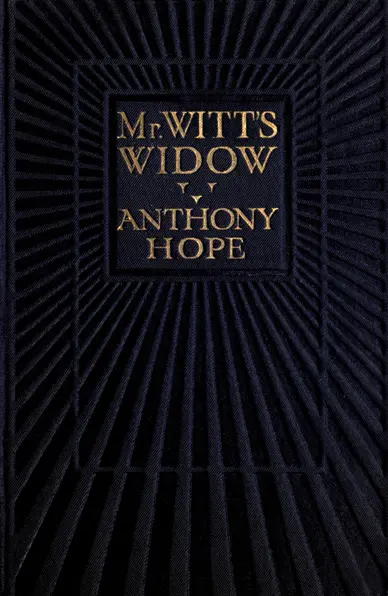
THE CLASSIC COLLECTION · 1892
"Mr. Witt's Widow: A Frivolous Tale" by Anthony Hope is a novel written in the early 20th century, specifically in 1912. It depicts the social dynamics and romantic entanglements of the Neston family following the engagement of Gerald Neston to Neaera Witt, a wealthy widow. Central to the plot is George Neston, Gerald’s cousin, whose discovery of a hidden past involving Neaera leads to tension and conflict within the family. At the start of the story, we are introduced to the Neston family and their newly elevated social standing due to the ascension of Lord Tottlebury, bringing the attention on Gerald Neston's courtship of Neaera Witt. As the opening unfolds during a dinner at Lord Tottlebury's house, George becomes increasingly intrigued by Neaera, whom he recognizes as a young woman he defended in a theft case many years ago. This revelation sparks a moral dilemma for George, compelling him to confront Neaera and ultimately decide whether to reveal her past to Gerald, a conflict that sets the stage for escalating tension and drama amongst the characters. The initial chapters establish the balance between romance and societal expectations, while hinting at deeper themes of identity and reputation.
Introduction adapted from the source catalogue; source summaries may be automatically generated.
Free to read · English · 39,724 words · No account needed
MAKE TIME FOR A GOOD BOOK
On by default. Untick to stop anonymous reading totals. Each page counts after 10 seconds in view. How this works.
Anonymous counting is on unless you have switched it off.
"And I will ask you, what I have never condescended to ask yet, dearest, if there's a word of truth in it all?" Gerald, still playfully, took one of her hands and raised it aloft. "Now look at me and say--what shall be your oath?"
Neaera was silent. This passed words; every time she spoke she made it
worse.
"I know," pursued Gerald, who was much pleased with his little comedy. "Say this, 'On my honour and love, I am not the girl.'"
Why hadn't she let him alone with his nonsense about her eyes? That was not, to Neaera's thinking, as bad as a lie direct. "On her honour and love!" She could not help hesitating for just a moment.
"I am not the girl, on my honour and love." Her words came almost with a sob, a stifled sob, that made Gerald full of remorse and penitence, and loud in imprecations on his own stupidity.
"It was all a joke, sweetest," he pleaded; "but it was a stupid joke, and it has distressed you. Did you dream I doubted you?"
"No."
"Well, then, say you knew it was a joke."
"Yes, dear, I know it was,--of course it was; but it--it rather
frightened me."
"Poor child! Never mind; you'll be amused when you think of it presently. And, my darling, it really, seriously, does make me happier. I never doubted, but it is pleasant to hear the truth from your own sweet lips. Now I am ready for all the world. And what about the day?"
"The day?"
"Of course you don't know what day! Shall it be directly?"
"What does 'directly' mean?" asked Neaera, mustering a rather watery
smile.
"In a week."
"Gerald!"
But, after the usual negotiations, Neaera was brought to consent to that day three weeks, provided Lord Tottlebury's approval was obtained.
"And, please, don't quarrel with your cousin any more!"
"I can afford to let him alone now."
"And---- Are you going, Gerald?"
"No time to lose. I'm off to see the governor, and I shall come back and fetch you to dine in Portman Square. Good-bye for an hour, darling!"
"Gerald, suppose----"
"Well!"
"If--if---- No, nothing. Good-bye, dear; and----"
"What is it, sweet?"
"Nothing--well, and don't be long."
Gerald departed in raptures. As soon as he was out of the room, the tailless cat emerged from under the sofa. He hated violent motion of all kinds, and lovers are restless beings. Now, thank heaven! there was a chance of lying on the hearth-rug without being trodden upon!
"Did you hear that, Bob?" asked Neaera. "I--I went the whole hog, didn't
I?"
Your reading position is saved on this browser. Take it to another device with a library code. Reading pages adapt to text, rather than matching a printed edition.
Anthony Hope

Anthony Hope

Anthony Hope

Anthony Hope
BEHIND THE BOOK
This eBook is for the use of anyone anywhere in the United States and most other parts of the world at no cost and with almost no restrictions whatsoever. You may copy it, give it away or re-use it under the terms of the Project Gutenberg License included with this eBook or online at www.gutenberg.org. If you are not located in the United States, you will have to check the laws of the country where you are located before using this eBook. Read the source licence.
The original source file, including credits and licence, is retained by this library. Request an original-format copy at no charge. Please include the book title and Project Gutenberg identifier #41599.
KEEP YOUR CURIOSITY GOING
Coulson Kernahan

Maurice Baring
Frances Wright
Cécile Tormay

Frederic Jesup Stimson

W. H. P. (William Henry Pope) Jarvis