
The Book of Clever Beasts: Studies in Unnatural History
Myrtle Reed
THE CLASSIC COLLECTION · 1910
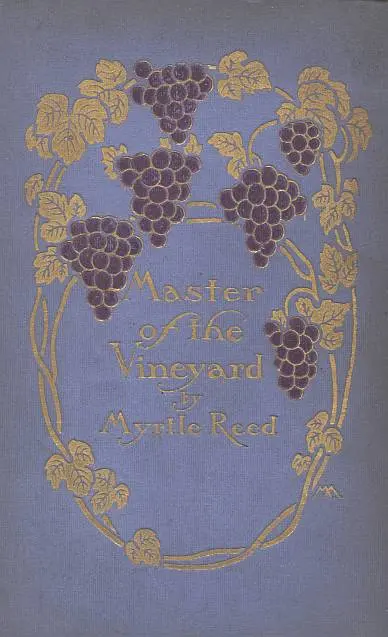
"Master of the Vineyard" by Myrtle Reed is a novel written in the early 20th century. The story follows Rosemary, a young woman reflecting on her life and circumstances while navigating a world shaped by familial obligations and unfulfilled dreams. It explores themes of love, duty, and personal aspiration against the backdrop of a vineyard that symbolizes both entrapment and legacy. The opening of the novel depicts Rosemary as she seeks solace on the Hill of the Muses, a place where she feels a sense of escape from her mundane existence. As she observes the valley, the river, and the vineyards belonging to the Marsh family, she reminisces about the weight of her thirty years, characterized by toil and emotional detachment. The narrative introduces Alden Marsh, a complex character frustrated with his role in the vineyard and his responsibilities, establishing a connection between them. Their interactions mix feelings of yearning for freedom with a budding emotional bond, hinting at the themes of love and sacrifice that will permeate the narrative.
Introduction adapted from the source catalogue; source summaries may be automatically generated.
Free to read · English · 80,142 words · No account needed
MAKE TIME FOR A GOOD BOOK
On by default. Untick to stop anonymous reading totals. Each page counts after 10 seconds in view. How this works.
Anonymous counting is on unless you have switched it off.
The task of keeping up the conversation fell to Edith and Alden, for Madame had unconsciously withdrawn into herself as some small animals shut themselves into their shells. All were relieved, though insensibly, when Rosemary said she must go.
Alden went into the hall with her, to help her with her coat and hat, and, as opportunity offered, to kiss her twice, shyly, on her cheek. He wanted to go part way home with her, but Rosemary refused.
"You'd better not," she said, "but thank you just as much."
"Won't you even let me go to the corner with you?"
"No," said Rosemary, with trembling lips, "please don't."
So she went on alone, while Alden returned to the living-room. Edith was saying to Madame: "Poor little brown mouse! How one longs to take a girl like that and give her all the pretty things she needs!"
[Sidenote: Edith's Desire for Rosemary]
Madame took the crystal ball, wrapped it in its bit of velvet, and put it on the highest shelf of the bookcase, rolling it back behind the books, out of sight.
"Why do you do that, Mother?" asked Alden, curiously. "Because,"
returned Madame, grimly, "it's all nonsense. I won't have it around any
more."
Alden laughed, but Edith went on, thoughtfully: "I'd like to do her hair for her, and see that all her under-things were right, and then put her into a crepe gown of dull blue--a sort of Chinese blue, with a great deal of deep-toned lace for trimming, and give her a topaz pendant set in dull silver, and a big picture hat of ecru net, with a good deal of the lace on it, and one long plume, a little lighter than the gown."
"I would, too," said Alden, smiling at Edith. He did not in the least know what she was talking about, but he knew that she felt kindly toward Rosemary, and was grateful for it.
Rosemary, at home, went about her duties mechanically. There was a far-away look in her eyes which did not escape the notice of Grandmother and Aunt Matilda, but they forebore to comment upon it as long as she performed her tasks acceptably. At supper she ate very little, and that little was as dust and ashes in her mouth.
[Sidenote: Heartburns]
Before her, continually, was a heart-breaking contrast. She, awkward, ugly, ill at ease in brown alpaca made according to the fashion of ten or fifteen years ago, and Mrs. Lee, beautiful, exquisite, dainty to her finger-tips, richly dowered with every conceivable thing that she herself lacked.
Your reading position is saved on this browser. Take it to another device with a library code. Reading pages adapt to text, rather than matching a printed edition.
Myrtle Reed
Myrtle Reed
Myrtle Reed
Myrtle Reed
BEHIND THE BOOK
This eBook is for the use of anyone anywhere in the United States and most other parts of the world at no cost and with almost no restrictions whatsoever. You may copy it, give it away or re-use it under the terms of the Project Gutenberg License included with this eBook or online at www.gutenberg.org. If you are not located in the United States, you will have to check the laws of the country where you are located before using this eBook. Read the source licence.
The original source file, including credits and licence, is retained by this library. Request an original-format copy at no charge. Please include the book title and Project Gutenberg identifier #27661.
KEEP YOUR CURIOSITY GOING
Coulson Kernahan

Maurice Baring
Frances Wright
Cécile Tormay

Frederic Jesup Stimson

W. H. P. (William Henry Pope) Jarvis