
The Book of Clever Beasts: Studies in Unnatural History
Myrtle Reed
THE CLASSIC COLLECTION · 1910
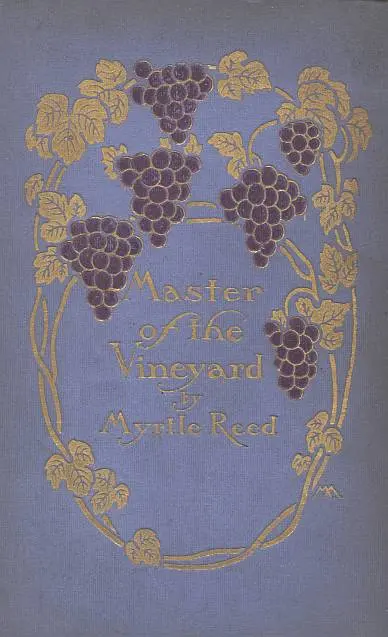
"Master of the Vineyard" by Myrtle Reed is a novel written in the early 20th century. The story follows Rosemary, a young woman reflecting on her life and circumstances while navigating a world shaped by familial obligations and unfulfilled dreams. It explores themes of love, duty, and personal aspiration against the backdrop of a vineyard that symbolizes both entrapment and legacy. The opening of the novel depicts Rosemary as she seeks solace on the Hill of the Muses, a place where she feels a sense of escape from her mundane existence. As she observes the valley, the river, and the vineyards belonging to the Marsh family, she reminisces about the weight of her thirty years, characterized by toil and emotional detachment. The narrative introduces Alden Marsh, a complex character frustrated with his role in the vineyard and his responsibilities, establishing a connection between them. Their interactions mix feelings of yearning for freedom with a budding emotional bond, hinting at the themes of love and sacrifice that will permeate the narrative.
Introduction adapted from the source catalogue; source summaries may be automatically generated.
Free to read · English · 80,142 words · No account needed
MAKE TIME FOR A GOOD BOOK
On by default. Untick to stop anonymous reading totals. Each page counts after 10 seconds in view. How this works.
Anonymous counting is on unless you have switched it off.
However, the most carping critic could have found no fault with Edith's manner. If she felt any superiority, she did not show it. She accorded to Rosemary the same perfect courtesy she showed Madame, and, apparently, failed to notice that the girl had not spoken since the moment of introduction.
She confined the conversation wholly to things Rosemary must have been familiar with--the country, the cool winds that sometimes came when one thought it was almost Summer, the perfect blend of Madame's tea, the quaint Chinese pot, and the bad manners of the canary, who seemed to take a fiendish delight in scattering the seed that was given him to eat.
[Sidenote: Looking into the Crystal Ball]
Rosemary merely sat in the corner, tried to smile, and said, as required, "Yes," or "No." Alden, pitying her from the depths of his heart and yet secretly ashamed, tried unsuccessfully, now and then, to draw her into the conversation.
Edith drained her cup, affected disappointment at finding no stray leaves by which she might divine the future, then went to Rosemary, and took the empty cup which she sat holding with pathetic awkwardness.
"You have none, either, Miss Starr," she said, sweetly. "Suppose we try the crystal ball? I've been wanting to do it ever since I came, but was afraid to venture, alone."
Rosemary, her senses whirling, followed her over to the table, where the ball lay on its bit of black velvet.
"How do you do it?" asked Edith, of Madame.
"Just get into a good light, shade your eyes, and look in."
"That's easy," Edith said. She bent over the table, shaded her eyes with her white, beautifully-kept hands, and peered into the crystalline depths. "There's nothing here," she continued, somewhat fretfully, to Alden, "except you. By some trick of reflection, I could see you as plainly as though it were a mirror. You try, Miss Starr."
Madame's heart contracted suddenly as she remembered the day she had looked into the crystal ball, and had seen not only Alden, but a woman with flaming red hair, clasped closely in his arms. "It's all nonsense," she tried to say, but her stiff lips would not move.
[Sidenote: A Black Cloud]
Rosemary left the table and went back to her corner. "What did you see?" queried Edith. "Did you have any better luck than I did?"
"No," Rosemary answered, with a degree more of self-possession than she had shown previously. "There was nothing there but a black cloud."
Your reading position is saved on this browser. Take it to another device with a library code. Reading pages adapt to text, rather than matching a printed edition.
Myrtle Reed
Myrtle Reed
Myrtle Reed
Myrtle Reed
BEHIND THE BOOK
This eBook is for the use of anyone anywhere in the United States and most other parts of the world at no cost and with almost no restrictions whatsoever. You may copy it, give it away or re-use it under the terms of the Project Gutenberg License included with this eBook or online at www.gutenberg.org. If you are not located in the United States, you will have to check the laws of the country where you are located before using this eBook. Read the source licence.
The original source file, including credits and licence, is retained by this library. Request an original-format copy at no charge. Please include the book title and Project Gutenberg identifier #27661.
KEEP YOUR CURIOSITY GOING
Coulson Kernahan

Maurice Baring
Frances Wright
Cécile Tormay

Frederic Jesup Stimson

W. H. P. (William Henry Pope) Jarvis