
The Book of Clever Beasts: Studies in Unnatural History
Myrtle Reed
THE CLASSIC COLLECTION · 1910
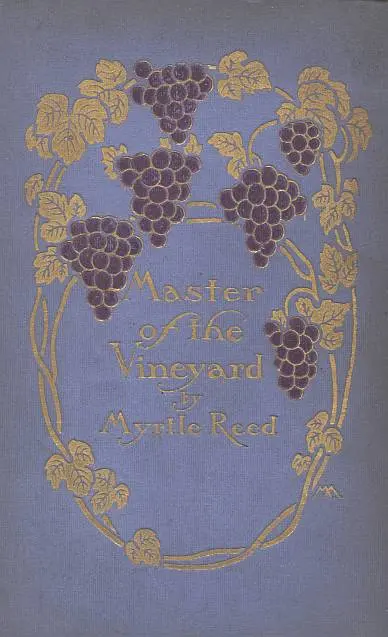
"Master of the Vineyard" by Myrtle Reed is a novel written in the early 20th century. The story follows Rosemary, a young woman reflecting on her life and circumstances while navigating a world shaped by familial obligations and unfulfilled dreams. It explores themes of love, duty, and personal aspiration against the backdrop of a vineyard that symbolizes both entrapment and legacy. The opening of the novel depicts Rosemary as she seeks solace on the Hill of the Muses, a place where she feels a sense of escape from her mundane existence. As she observes the valley, the river, and the vineyards belonging to the Marsh family, she reminisces about the weight of her thirty years, characterized by toil and emotional detachment. The narrative introduces Alden Marsh, a complex character frustrated with his role in the vineyard and his responsibilities, establishing a connection between them. Their interactions mix feelings of yearning for freedom with a budding emotional bond, hinting at the themes of love and sacrifice that will permeate the narrative.
Introduction adapted from the source catalogue; source summaries may be automatically generated.
Free to read · English · 80,142 words · No account needed
MAKE TIME FOR A GOOD BOOK
On by default. Untick to stop anonymous reading totals. Each page counts after 10 seconds in view. How this works.
Anonymous counting is on unless you have switched it off.
A Letter and a Guest
[Sidenote: An Unexpected Missive]
"A letter for you, Mother," Alden tossed a violet-scented envelope into the old lady's lap as he spoke, and stood there, waiting.
"For me!" she exclaimed. Letters for either of them were infrequent. She took it up curiously, scrutinised the address, sniffed at the fragrance the missive carried, noted the postmark, which was that of the town near by, and studied the waxen purple seal, stamped with indistinguishable initials.
"I haven't the faintest idea whom it's from," she said, helplessly.
"Why not open it and see?" he suggested, with kindly sarcasm. His assumed carelessness scarcely veiled his own interest in it.
"You always were a bright boy, Alden," she laughed. Another woman might have torn it open rudely, but Madame searched through her old mahogany desk until she found a tarnished silver letter-opener, thus according due courtesy to her unknown correspondent.
Having opened it, she discovered that she could not read the
handwriting, which was angular and involved beyond the power of words to
indicate.
[Sidenote: A Woman's Writing]
"Here," she said. "Your eyes are better than mine."
Alden took it readily. "My eyes may be good," he observed, after a long pause, "but my detective powers are not. The m's and n's are all alike, and so are most of the other letters. She's an economical person--she makes the same hieroglyphic do duty for both a g and a y."
"It's from a woman, then?"
"Certainly. Did you ever know a man to sprawl a note all over two sheets of paper, with nothing to distinguish the end from the beginning? In the nature of things, you'd expect her to commence at the top of a sheet, and, in a careless moment, she may have done so. Let me see--yes, here it is: 'My dear Mrs. Marsh.'"
"Go on, please," begged Madame, after a silence. "It was just beginning
to be interesting."
"'During my mother's last illness,'" Alden read, with difficulty, "'she told me that if I were ever in trouble, I should go to you--that you would stand in her place to me. I write to ask if I may come, for I can no longer see the path ahead of me, and much less do I know the way in which I should go.
[Sidenote: A Schoolmate's Daughter]
"'You surely remember her. She was Louise Lane before her marriage to my
father, Edward Archer.
"'Please send me a line or two, telling me I may come, if only for a day. Believe me, no woman ever needed a friendly hand to guide her more than
"'Yours unhappily,
Your reading position is saved on this browser. Take it to another device with a library code. Reading pages adapt to text, rather than matching a printed edition.
Myrtle Reed
Myrtle Reed
Myrtle Reed
Myrtle Reed
BEHIND THE BOOK
This eBook is for the use of anyone anywhere in the United States and most other parts of the world at no cost and with almost no restrictions whatsoever. You may copy it, give it away or re-use it under the terms of the Project Gutenberg License included with this eBook or online at www.gutenberg.org. If you are not located in the United States, you will have to check the laws of the country where you are located before using this eBook. Read the source licence.
The original source file, including credits and licence, is retained by this library. Request an original-format copy at no charge. Please include the book title and Project Gutenberg identifier #27661.
KEEP YOUR CURIOSITY GOING
Coulson Kernahan

Maurice Baring
Frances Wright
Cécile Tormay

Frederic Jesup Stimson

W. H. P. (William Henry Pope) Jarvis