
The Book of Clever Beasts: Studies in Unnatural History
Myrtle Reed
THE CLASSIC COLLECTION · 1910
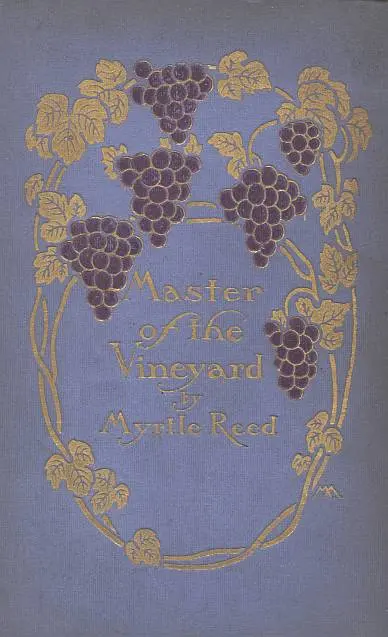
"Master of the Vineyard" by Myrtle Reed is a novel written in the early 20th century. The story follows Rosemary, a young woman reflecting on her life and circumstances while navigating a world shaped by familial obligations and unfulfilled dreams. It explores themes of love, duty, and personal aspiration against the backdrop of a vineyard that symbolizes both entrapment and legacy. The opening of the novel depicts Rosemary as she seeks solace on the Hill of the Muses, a place where she feels a sense of escape from her mundane existence. As she observes the valley, the river, and the vineyards belonging to the Marsh family, she reminisces about the weight of her thirty years, characterized by toil and emotional detachment. The narrative introduces Alden Marsh, a complex character frustrated with his role in the vineyard and his responsibilities, establishing a connection between them. Their interactions mix feelings of yearning for freedom with a budding emotional bond, hinting at the themes of love and sacrifice that will permeate the narrative.
Introduction adapted from the source catalogue; source summaries may be automatically generated.
Free to read · English · 80,142 words · No account needed
MAKE TIME FOR A GOOD BOOK
On by default. Untick to stop anonymous reading totals. Each page counts after 10 seconds in view. How this works.
Anonymous counting is on unless you have switched it off.
The Hour of the Turning Night
[Sidenote: Awake in the Night]
The darkness was vibrant, keen, alive. It throbbed with consciousness, with mysterious fibres of communication. There was no sense of a presence in the room, nor even the possibility of a presence. It was vague, abstract, yet curiously definite.
Edith woke from a troubled dream with a start. For a moment she lay quietly and listened, not afraid, but interested, as though upon the threshold of some new experience. The scurrying feet of mice made a ghostly patter in the attic, above her room, and a vagrant wind, in passing, tapped at her window with the fairy-like fingers of the vine that clung to the wall.
Otherwise all was still, and yet the darkness trembled with expectancy. Something hitherto unknown seemed to have entered her consciousness, some thought, emotion, instinct, or what? Wide awake, staring into space, she lay there, wondering, waiting, not in the least frightened, but assured of shelter and of peace.
[Sidenote: Another Personality]
Gradually she had lost consciousness of her body. She had relaxed completely and her mind soared, free. She moved one foot, cautiously, to see whether her body was still there, and smiled when she was reassured by the cool smoothness of the linen sheet, and the other warm little foot she touched in moving.
Somewhere, in this same darkness, was another personality. Of so much she eventually became sure. It was not in the room, perhaps not even in the house, but for someone else, somewhere, was this same sense--of communication? No, but rather the possibility of it.
Someone else had also lost consciousness of the body. Another mind, released for the moment from its earthly prison, sought communion with hers. Was this death, and had she wakened in another world? She moved her foot again, pressed her hand to the warm softness of her breast, felt her breath come and go, and even the steady beating of her heart. Not death, then, only a pause, in which for once the body, clamorous and imperious with its thousand needs, had given way to the soul.
The curious sense of another personality persisted. Was this other person dead, and striving mutely for expression? No, surely not, for this other mind was on the same plane as hers, subject to the same conditions. Not disembodied entirely, but only relaxed, as she was, this other personality had wakened and found itself gloriously free.
[Sidenote: A New Self]
Your reading position is saved on this browser. Take it to another device with a library code. Reading pages adapt to text, rather than matching a printed edition.
Myrtle Reed
Myrtle Reed
Myrtle Reed
Myrtle Reed
BEHIND THE BOOK
This eBook is for the use of anyone anywhere in the United States and most other parts of the world at no cost and with almost no restrictions whatsoever. You may copy it, give it away or re-use it under the terms of the Project Gutenberg License included with this eBook or online at www.gutenberg.org. If you are not located in the United States, you will have to check the laws of the country where you are located before using this eBook. Read the source licence.
The original source file, including credits and licence, is retained by this library. Request an original-format copy at no charge. Please include the book title and Project Gutenberg identifier #27661.
KEEP YOUR CURIOSITY GOING
Coulson Kernahan

Maurice Baring
Frances Wright
Cécile Tormay

Frederic Jesup Stimson

W. H. P. (William Henry Pope) Jarvis