
The Book of Clever Beasts: Studies in Unnatural History
Myrtle Reed
THE CLASSIC COLLECTION · 1910
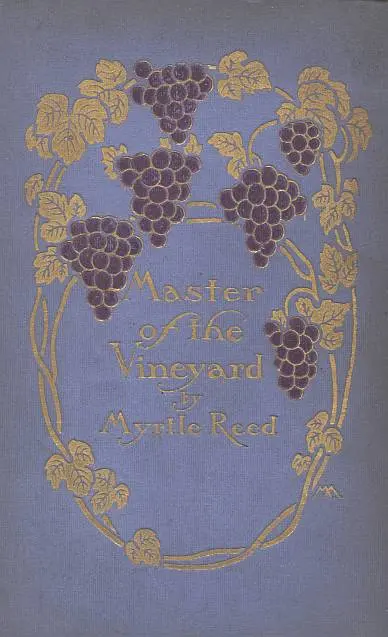
"Master of the Vineyard" by Myrtle Reed is a novel written in the early 20th century. The story follows Rosemary, a young woman reflecting on her life and circumstances while navigating a world shaped by familial obligations and unfulfilled dreams. It explores themes of love, duty, and personal aspiration against the backdrop of a vineyard that symbolizes both entrapment and legacy. The opening of the novel depicts Rosemary as she seeks solace on the Hill of the Muses, a place where she feels a sense of escape from her mundane existence. As she observes the valley, the river, and the vineyards belonging to the Marsh family, she reminisces about the weight of her thirty years, characterized by toil and emotional detachment. The narrative introduces Alden Marsh, a complex character frustrated with his role in the vineyard and his responsibilities, establishing a connection between them. Their interactions mix feelings of yearning for freedom with a budding emotional bond, hinting at the themes of love and sacrifice that will permeate the narrative.
Introduction adapted from the source catalogue; source summaries may be automatically generated.
Free to read · English · 80,142 words · No account needed
MAKE TIME FOR A GOOD BOOK
On by default. Untick to stop anonymous reading totals. Each page counts after 10 seconds in view. How this works.
Anonymous counting is on unless you have switched it off.
"Really?" cried Rosemary, gratefully. "Oh, thank you! Do you suppose that--that they'll ever look like yours?"
"Wait and see," Madame temporised. She was fond of saying that it took three generations of breeding to produce the hand of a lady.
The kettle began to sing and the cover danced cheerily. Tiny clouds of steam trailed off into space, disappearing in the late afternoon sunshine like a wraith at dawn. Madame filled the blue china tea-pot and the subtle fragrance permeated the room.
[Sidenote: A Cup of Tea]
"Think," she said, as she waited the allotted five minutes for it to steep, "of all I give you in a cup of tea. See the spicy, sunlit fields, where men, women, and children, in little jackets of faded blue, pick it while their queues bob back and forth. Think of all the chatter that goes in with the picking--marriage and birth and death and talk of houses and worldly possessions, and everything else that we speak of here.
"Then the long, sweet drying, and the packing in dim storehouses, and then the long journey. Sand and heat and purple dusk, tinkle of bells and scent of myrrh, the rustle of silks and the gleam of gold. Then the open sea, with infinite spaces of shining blue, and a wake of pearl and silver following the ship. Dreams and moonbeams and starry twilights, from the other side of the world--here, my dear, I give them all to you."
She offered Rosemary the cup as she concluded and the girl smiled back at her happily. This was all so different from the battered metal tea-pot that always stood on the back of the stove at Grandmother's, to be boiled and re-boiled until the colour was gone from the leaves. Alden was looking into his cup with assumed anxiety.
[Sidenote: In the Bottom of the Cup]
"What's the matter, dear?" asked his mother. "Isn't it right?"
"I was looking for the poem," he laughed, "and I see nothing but a
stranger."
"Coming?" she asked, idly.
"Of course. See?"
"You're right--a stranger and trouble. What is there in your cup,
Rosemary?"
"Nothing at all," she answered, with a smile, "but a little bit of
sugar--just a few grains."
Alden came and looked over her shoulder. Then, with his arm over the back of her chair, he pressed his cheek to hers. "I hope, my dear, that whenever you come to the dregs, you'll always have that much sweetness left."
Rosemary, flushed and embarrassed, made her adieus awkwardly. "Come again very soon, dear, won't you?" asked Madame.
"Yes, indeed, if I may, and thank you so much. Good-bye, Mrs. Marsh."
Your reading position is saved on this browser. Take it to another device with a library code. Reading pages adapt to text, rather than matching a printed edition.
Myrtle Reed
Myrtle Reed
Myrtle Reed
Myrtle Reed
BEHIND THE BOOK
This eBook is for the use of anyone anywhere in the United States and most other parts of the world at no cost and with almost no restrictions whatsoever. You may copy it, give it away or re-use it under the terms of the Project Gutenberg License included with this eBook or online at www.gutenberg.org. If you are not located in the United States, you will have to check the laws of the country where you are located before using this eBook. Read the source licence.
The original source file, including credits and licence, is retained by this library. Request an original-format copy at no charge. Please include the book title and Project Gutenberg identifier #27661.
KEEP YOUR CURIOSITY GOING
Coulson Kernahan

Maurice Baring
Frances Wright
Cécile Tormay

Frederic Jesup Stimson

W. H. P. (William Henry Pope) Jarvis