
The Book of Clever Beasts: Studies in Unnatural History
Myrtle Reed
THE CLASSIC COLLECTION · 1910
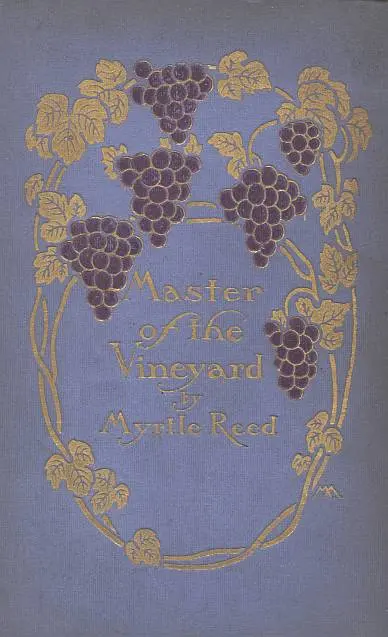
"Master of the Vineyard" by Myrtle Reed is a novel written in the early 20th century. The story follows Rosemary, a young woman reflecting on her life and circumstances while navigating a world shaped by familial obligations and unfulfilled dreams. It explores themes of love, duty, and personal aspiration against the backdrop of a vineyard that symbolizes both entrapment and legacy. The opening of the novel depicts Rosemary as she seeks solace on the Hill of the Muses, a place where she feels a sense of escape from her mundane existence. As she observes the valley, the river, and the vineyards belonging to the Marsh family, she reminisces about the weight of her thirty years, characterized by toil and emotional detachment. The narrative introduces Alden Marsh, a complex character frustrated with his role in the vineyard and his responsibilities, establishing a connection between them. Their interactions mix feelings of yearning for freedom with a budding emotional bond, hinting at the themes of love and sacrifice that will permeate the narrative.
Introduction adapted from the source catalogue; source summaries may be automatically generated.
Free to read · English · 80,142 words · No account needed
MAKE TIME FOR A GOOD BOOK
On by default. Untick to stop anonymous reading totals. Each page counts after 10 seconds in view. How this works.
Anonymous counting is on unless you have switched it off.
Rosemary said nothing, but she felt a strange softening of her heart toward Aunt Matilda. "I don't know as you'll believe me," the older woman went on after a pause, "but I never knew nothin' about that money."
[Sidenote: Pity for Aunt Matilda]
"I know you didn't, Aunt Matilda. It's behind a loose brick in the chimney, in the attic, on the right-hand side. You have to stand on a chair to reach it. If you want any of it, go and help yourself. It's mine, and you're welcome to it, as far as I'm concerned."
"I don't know what I'd want," returned Matilda, gloomily. "I ain't never had nothin', and I've sort of got out of the habit. I did used to think that if it ever come my way, I'd like a white straw hat with red roses on it, but I'm too old for it now."
Tears of pity filled Rosemary's eyes and a lump rose in her throat. Aunt Matilda's deprivations had been as many as her own, and had extended over a much longer period. The way of escape was open for Rosemary, but the older woman must go on, hopelessly, until the end.
"It was sixteen years ago to-night," said Aunt Matilda, dreamily, "that the minister come to call."
"Was it?" asked Rosemary. She did not know what else to say.
"I thought maybe you'd remember it, but I guess you was too little. You was only nine, and you used to go to bed at half-past seven. It was five minutes of eight when he come."
[Sidenote: The Minister Asks to Call]
"Was it?" asked Rosemary, again.
"Yes. Don't you remember hearin' the door bell ring?"
"No--I must have been asleep."
"Children go to sleep awful quick. It was five minutes of eight when he
come."
"Were you expecting him?"
"No, I wasn't. He'd said to me once, on the way out of church after Sunday-school: 'Miss Matilda, I must be comin' over to see you some one of these pleasant evenings, with your kind permission,' Just like that, he says, 'with your kind permission,' I was so flustered I couldn't say much, but I did manage to tell him that Ma and me would be pleased to see him any time, and what do you suppose he said?"
"I don't know," answered Rosemary.
"He said: 'It's you I'm comin' to see--not your Ma,' Just like that--'It's you!'" Her voice had a new note in it--a strange thrill of tenderness.
Your reading position is saved on this browser. Take it to another device with a library code. Reading pages adapt to text, rather than matching a printed edition.
Myrtle Reed
Myrtle Reed
Myrtle Reed
Myrtle Reed
BEHIND THE BOOK
This eBook is for the use of anyone anywhere in the United States and most other parts of the world at no cost and with almost no restrictions whatsoever. You may copy it, give it away or re-use it under the terms of the Project Gutenberg License included with this eBook or online at www.gutenberg.org. If you are not located in the United States, you will have to check the laws of the country where you are located before using this eBook. Read the source licence.
The original source file, including credits and licence, is retained by this library. Request an original-format copy at no charge. Please include the book title and Project Gutenberg identifier #27661.
KEEP YOUR CURIOSITY GOING
Coulson Kernahan

Maurice Baring
Frances Wright
Cécile Tormay

Frederic Jesup Stimson

W. H. P. (William Henry Pope) Jarvis