
The Book of Clever Beasts: Studies in Unnatural History
Myrtle Reed
THE CLASSIC COLLECTION · 1910
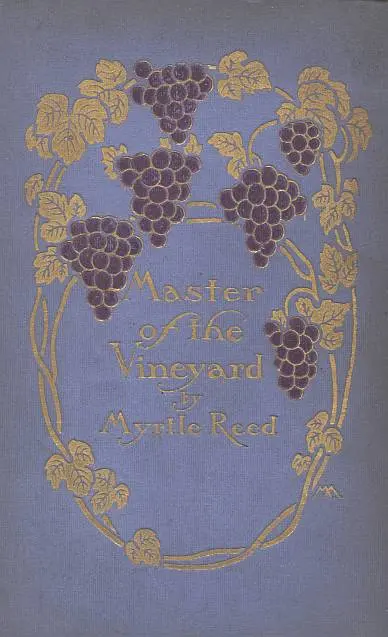
"Master of the Vineyard" by Myrtle Reed is a novel written in the early 20th century. The story follows Rosemary, a young woman reflecting on her life and circumstances while navigating a world shaped by familial obligations and unfulfilled dreams. It explores themes of love, duty, and personal aspiration against the backdrop of a vineyard that symbolizes both entrapment and legacy. The opening of the novel depicts Rosemary as she seeks solace on the Hill of the Muses, a place where she feels a sense of escape from her mundane existence. As she observes the valley, the river, and the vineyards belonging to the Marsh family, she reminisces about the weight of her thirty years, characterized by toil and emotional detachment. The narrative introduces Alden Marsh, a complex character frustrated with his role in the vineyard and his responsibilities, establishing a connection between them. Their interactions mix feelings of yearning for freedom with a budding emotional bond, hinting at the themes of love and sacrifice that will permeate the narrative.
Introduction adapted from the source catalogue; source summaries may be automatically generated.
Free to read · English · 80,142 words · No account needed
MAKE TIME FOR A GOOD BOOK
On by default. Untick to stop anonymous reading totals. Each page counts after 10 seconds in view. How this works.
Anonymous counting is on unless you have switched it off.
She conveyed her wishes through Matilda, as a sort of human telephone. "Matilda," she would say, "will you ask Rosemary to fill the tea-pot with hot water?" And, again: "Matilda, will you tell Rosemary to put out the milk pitcher and to lock the back door?" It was not necessary; however, for Matilda to tell Rosemary. The girl accepted the requests as though they had been given directly--with her head held high and the faintest shadow of an ironical smile upon her face.
[Sidenote: Left in the Dark]
After supper, while Rosemary was washing the dishes, Grandmother took the lamp. She was half-way to the door when Matilda inquired: "Where are you goin', Ma?"
"I'm goin' up to my room, to set and read a spell."
"But--but the lamp?"
"I need it to read by," Grandmother announced, with considerable asperity, "and you don't need to hunt around for no more lamps, neither. I've got 'em all put away."
"But," Matilda objected; "me and Rosemary----."
"You and Rosemary! Humph! You can set in the dark or anywhere else you please." With that she slammed the door and was gone. Rosemary came in, after a little, humming to herself with an assumed cheerfulness she was far from feeling. Then she went out into the kitchen and came back with a match. The feeble flicker of it revealed only Aunt Matilda--and no lamp.
"Where's Grandmother?" asked Rosemary, in astonishment. "And what has
become of the lamp?"
"She's gone up to her room and she's took the lamp with her," Matilda
laughed, hysterically.
[Sidenote: Aunt Matilda's Troubles]
Rosemary brought in the candle from the kitchen. As it happened, it was the last candle and was nearly gone, but it would burn for an hour or two.
"I'm sorry, Aunt Matilda," said Rosemary, kindly, "if you want to read,
or anything----."
"I don't," she interrupted. "I'd like to sit and talk a spell. I don't know as we need the candle. If she should happen to come back, she'd be mad. She said she'd put away the lamps, and I reckon she'd have took the candle, too, if she'd thought."
"Very well," answered Rosemary, blowing out the candle. "I'm not afraid of the dark." Moreover, it was not the general policy of the household to ruffle Grandmother's temper unnecessarily.
"Rosemary," said Aunt Matilda, a little later; "Ma's a hard woman--she
always has been."
"Yes," the girl agreed, listlessly.
"I ain't never said much, but I've had my own troubles. I've tried to bear 'em patiently, but sometimes I ain't been patient--she's always made me feel so ugly."
Your reading position is saved on this browser. Take it to another device with a library code. Reading pages adapt to text, rather than matching a printed edition.
Myrtle Reed
Myrtle Reed
Myrtle Reed
Myrtle Reed
BEHIND THE BOOK
This eBook is for the use of anyone anywhere in the United States and most other parts of the world at no cost and with almost no restrictions whatsoever. You may copy it, give it away or re-use it under the terms of the Project Gutenberg License included with this eBook or online at www.gutenberg.org. If you are not located in the United States, you will have to check the laws of the country where you are located before using this eBook. Read the source licence.
The original source file, including credits and licence, is retained by this library. Request an original-format copy at no charge. Please include the book title and Project Gutenberg identifier #27661.
KEEP YOUR CURIOSITY GOING
Coulson Kernahan

Maurice Baring
Frances Wright
Cécile Tormay

Frederic Jesup Stimson

W. H. P. (William Henry Pope) Jarvis