
The Wound Dresser A Series of Letters Written from the Hospitals in Washington during the War of the Rebellion
Walt Whitman
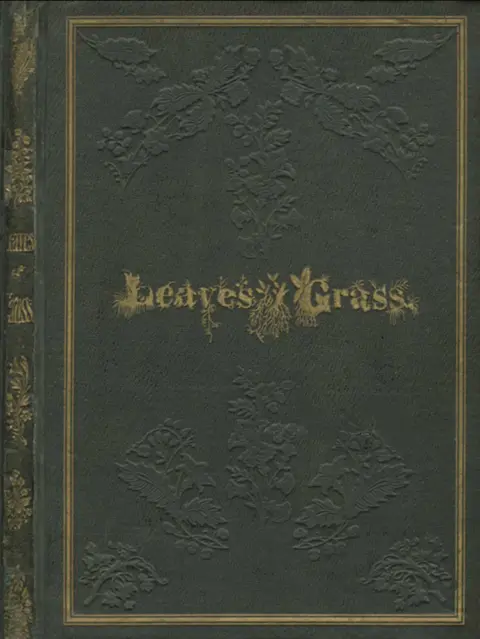
THE CLASSIC COLLECTION · 1855
"Leaves of Grass" by Walt Whitman is a poetry collection first published in 1855. Beginning with just twelve poems, Whitman continuously revised and expanded this work throughout his life, eventually creating a collection of over four hundred poems. He celebrates American democracy, nature, the human body, and sensual pleasure in verse that breaks traditional rules of rhyme and meter. The book's explicit content sparked controversy and condemnation, yet it ultimately became recognized as one of the central works of American poetry.
Introduction adapted from the source catalogue; source summaries may be automatically generated.
Free to read · English · 123,719 words · No account needed
MAKE TIME FOR A GOOD BOOK
On by default. Untick to stop anonymous reading totals. Each page counts after 10 seconds in view. How this works.
Anonymous counting is on unless you have switched it off.
To the garden the world anew ascending, Potent mates, daughters, sons, preluding, The love, the life of their bodies, meaning and being, Curious here behold my resurrection after slumber, The revolving cycles in their wide sweep having brought me again, Amorous, mature, all beautiful to me, all wondrous, My limbs and the quivering fire that ever plays through them, for reasons, most wondrous, Existing I peer and penetrate still, Content with the present, content with the past, By my side or back of me Eve following, Or in front, and I following her just the same.
From Pent-Up Aching Rivers
From pent-up aching rivers, From that of myself without which I were nothing, From what I am determin’d to make illustrious, even if I stand sole among men, From my own voice resonant, singing the phallus, Singing the song of procreation, Singing the need of superb children and therein superb grown people, Singing the muscular urge and the blending, Singing the bedfellow’s song, (O resistless yearning! O for any and each the body correlative attracting! O for you whoever you are your correlative body! O it, more than all else, you delighting!) From the hungry gnaw that eats me night and day, From native moments, from bashful pains, singing them, Seeking something yet unfound though I have diligently sought it many a long year, Singing the true song of the soul fitful at random, Renascent with grossest Nature or among animals, Of that, of them and what goes with them my poems informing, Of the smell of apples and lemons, of the pairing of birds, Of the wet of woods, of the lapping of waves, Of the mad pushes of waves upon the land, I them chanting, The overture lightly sounding, the strain anticipating, The welcome nearness, the sight of the perfect body, The swimmer swimming naked in the bath, or motionless on his back lying and floating, The female form approaching, I pensive, love-flesh tremulous aching, The divine list for myself or you or for any one making, The face, the limbs, the index from head to foot, and what it arouses, The mystic deliria, the madness amorous, the utter abandonment, (Hark close and still what I now whisper to you, I love you, O you entirely possess me, O that you and I escape from the rest and go utterly off, free and lawless, Two hawks in the air, two fishes swimming in the sea not more lawless than we;) The furious storm through me careering, I passionately trembling. The oath of the inseparableness of two together, of the woman that loves me and whom I love more than my life, that oath swearing, (O I willingly stake all for you, O let me be lost if it must be so! O you and I! what is it to us what the rest do or think? What is all else to us? only that we enjoy each other and exhaust each other if it must be so;) From the master, the pilot I yield the vessel to, The general commanding me, commanding all, from him permission taking, From time the programme hastening, (I have loiter’d too long as it is,) From sex, from the warp and from the woof, From privacy, from frequent repinings alone, From plenty of persons near and yet the right person not near, From the soft sliding of hands over me and thrusting of fingers through my hair and beard, From the long sustain’d kiss upon the mouth or bosom, From the close pressure that makes me or any man drunk, fainting with excess, From what the divine husband knows, from the work of fatherhood, From exultation, victory and relief, from the bedfellow’s embrace in the night, From the act-poems of eyes, hands, hips and bosoms, From the cling of the trembling arm, From the bending curve and the clinch, From side by side the pliant coverlet off-throwing, From the one so unwilling to have me leave, and me just as unwilling to leave, (Yet a moment O tender waiter, and I return,) From the hour of shining stars and dropping dews, From the night a moment I emerging flitting out, Celebrate you act divine and you children prepared for, And you stalwart loins.
Your reading position is saved on this browser. Take it to another device with a library code. Reading pages adapt to text, rather than matching a printed edition.
Walt Whitman

Anne (Anne Burrows) Gilchrist & Walt Whitman
Walt Whitman
Walt Whitman
BEHIND THE BOOK
This eBook is for the use of anyone anywhere in the United States and most other parts of the world at no cost and with almost no restrictions whatsoever. You may copy it, give it away or re-use it under the terms of the Project Gutenberg License included with this eBook or online at www.gutenberg.org. If you are not located in the United States, you will have to check the laws of the country where you are located before using this eBook. Read the source licence.
The original source file, including credits and licence, is retained by this library. Request an original-format copy at no charge. Please include the book title and Project Gutenberg identifier #1322.
KEEP YOUR CURIOSITY GOING

Eric Mackay
Edmund Gosse
Sophia Margaretta Hensley
Gilbert Parker
George MacDonald

Elizabeth Bibesco