
The Wound Dresser A Series of Letters Written from the Hospitals in Washington during the War of the Rebellion
Walt Whitman
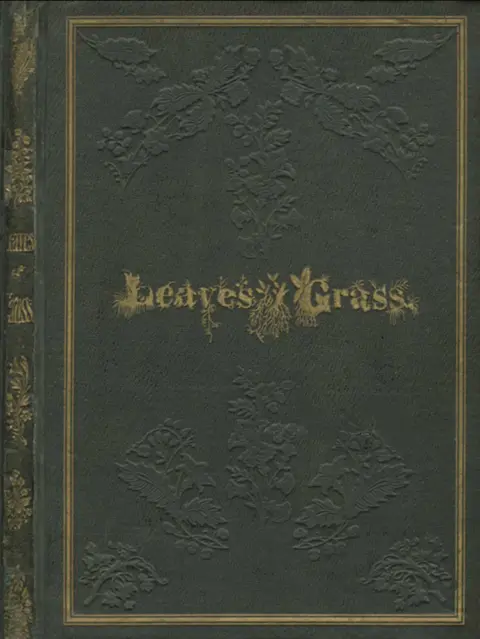
THE CLASSIC COLLECTION · 1855
"Leaves of Grass" by Walt Whitman is a poetry collection first published in 1855. Beginning with just twelve poems, Whitman continuously revised and expanded this work throughout his life, eventually creating a collection of over four hundred poems. He celebrates American democracy, nature, the human body, and sensual pleasure in verse that breaks traditional rules of rhyme and meter. The book's explicit content sparked controversy and condemnation, yet it ultimately became recognized as one of the central works of American poetry.
Introduction adapted from the source catalogue; source summaries may be automatically generated.
Free to read · English · 123,719 words · No account needed
MAKE TIME FOR A GOOD BOOK
On by default. Untick to stop anonymous reading totals. Each page counts after 10 seconds in view. How this works.
Anonymous counting is on unless you have switched it off.
First O songs for a prelude, Lightly strike on the stretch’d tympanum pride and joy in my city, How she led the rest to arms, how she gave the cue, How at once with lithe limbs unwaiting a moment she sprang, (O superb! O Manhattan, my own, my peerless! O strongest you in the hour of danger, in crisis! O truer than steel!) How you sprang--how you threw off the costumes of peace with indifferent hand, How your soft opera-music changed, and the drum and fife were heard in their stead, How you led to the war, (that shall serve for our prelude, songs of soldiers,) How Manhattan drum-taps led.
Forty years had I in my city seen soldiers parading, Forty years as a pageant, till unawares the lady of this teeming and turbulent city, Sleepless amid her ships, her houses, her incalculable wealth, With her million children around her, suddenly, At dead of night, at news from the south, Incens’d struck with clinch’d hand the pavement.
A shock electric, the night sustain’d it, Till with ominous hum our hive at daybreak pour’d out its myriads.
From the houses then and the workshops, and through all the doorways, Leapt they tumultuous, and lo! Manhattan arming.
To the drum-taps prompt, The young men falling in and arming, The mechanics arming, (the trowel, the jack-plane, the blacksmith’s hammer, tost aside with precipitation,) The lawyer leaving his office and arming, the judge leaving the court, The driver deserting his wagon in the street, jumping down, throwing the reins abruptly down on the horses’ backs, The salesman leaving the store, the boss, book-keeper, porter, all leaving; Squads gather everywhere by common consent and arm, The new recruits, even boys, the old men show them how to wear their accoutrements, they buckle the straps carefully, Outdoors arming, indoors arming, the flash of the musket-barrels, The white tents cluster in camps, the arm’d sentries around, the sunrise cannon and again at sunset, Arm’d regiments arrive every day, pass through the city, and embark from the wharves, (How good they look as they tramp down to the river, sweaty, with their guns on their shoulders! How I love them! how I could hug them, with their brown faces and their clothes and knapsacks cover’d with dust!) The blood of the city up-arm’d! arm’d! the cry everywhere, The flags flung out from the steeples of churches and from all the public buildings and stores, The tearful parting, the mother kisses her son, the son kisses his mother, (Loth is the mother to part, yet not a word does she speak to detain him,) The tumultuous escort, the ranks of policemen preceding, clearing the way, The unpent enthusiasm, the wild cheers of the crowd for their favorites, The artillery, the silent cannons bright as gold, drawn along, rumble lightly over the stones, (Silent cannons, soon to cease your silence, Soon unlimber’d to begin the red business;) All the mutter of preparation, all the determin’d arming, The hospital service, the lint, bandages and medicines, The women volunteering for nurses, the work begun for in earnest, no mere parade now; War! an arm’d race is advancing! the welcome for battle, no turning away! War! be it weeks, months, or years, an arm’d race is advancing to welcome it.
Your reading position is saved on this browser. Take it to another device with a library code. Reading pages adapt to text, rather than matching a printed edition.
Walt Whitman

Anne (Anne Burrows) Gilchrist & Walt Whitman
Walt Whitman
Walt Whitman
BEHIND THE BOOK
This eBook is for the use of anyone anywhere in the United States and most other parts of the world at no cost and with almost no restrictions whatsoever. You may copy it, give it away or re-use it under the terms of the Project Gutenberg License included with this eBook or online at www.gutenberg.org. If you are not located in the United States, you will have to check the laws of the country where you are located before using this eBook. Read the source licence.
The original source file, including credits and licence, is retained by this library. Request an original-format copy at no charge. Please include the book title and Project Gutenberg identifier #1322.
KEEP YOUR CURIOSITY GOING

Eric Mackay
Edmund Gosse
Sophia Margaretta Hensley
Gilbert Parker
George MacDonald

Elizabeth Bibesco