
The Wound Dresser A Series of Letters Written from the Hospitals in Washington during the War of the Rebellion
Walt Whitman
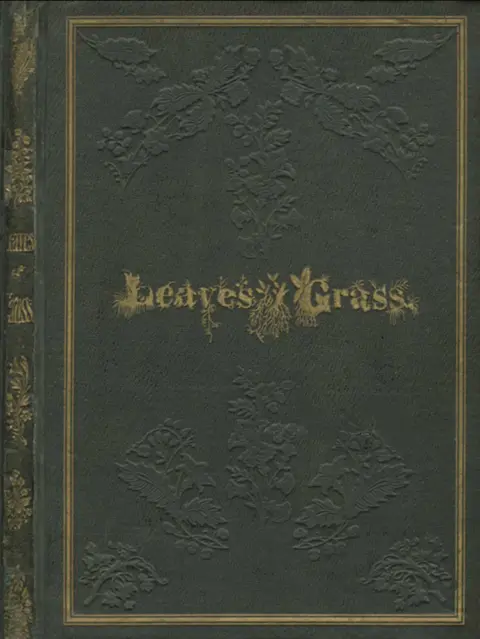
THE CLASSIC COLLECTION · 1855
"Leaves of Grass" by Walt Whitman is a poetry collection first published in 1855. Beginning with just twelve poems, Whitman continuously revised and expanded this work throughout his life, eventually creating a collection of over four hundred poems. He celebrates American democracy, nature, the human body, and sensual pleasure in verse that breaks traditional rules of rhyme and meter. The book's explicit content sparked controversy and condemnation, yet it ultimately became recognized as one of the central works of American poetry.
Introduction adapted from the source catalogue; source summaries may be automatically generated.
Free to read · English · 123,719 words · No account needed
MAKE TIME FOR A GOOD BOOK
On by default. Untick to stop anonymous reading totals. Each page counts after 10 seconds in view. How this works.
Anonymous counting is on unless you have switched it off.
I Sing the Body Electric
1
I sing the body electric,
The armies of those I love engirth me and I engirth them,
They will not let me off till I go with them, respond to them,
And discorrupt them, and charge them full with the charge of the soul.
Was it doubted that those who corrupt their own bodies conceal themselves? And if those who defile the living are as bad as they who defile the dead? And if the body does not do fully as much as the soul? And if the body were not the soul, what is the soul?
2
The love of the body of man or woman balks account, the body itself
balks account,
That of the male is perfect, and that of the female is perfect.
The expression of the face balks account, But the expression of a well-made man appears not only in his face, It is in his limbs and joints also, it is curiously in the joints of his hips and wrists, It is in his walk, the carriage of his neck, the flex of his waist and knees, dress does not hide him, The strong sweet quality he has strikes through the cotton and broadcloth, To see him pass conveys as much as the best poem, perhaps more, You linger to see his back, and the back of his neck and shoulder-side.
The sprawl and fulness of babes, the bosoms and heads of women, the folds of their dress, their style as we pass in the street, the contour of their shape downwards, The swimmer naked in the swimming-bath, seen as he swims through the transparent green-shine, or lies with his face up and rolls silently to and from the heave of the water, The bending forward and backward of rowers in row-boats, the horse-man in his saddle, Girls, mothers, house-keepers, in all their performances, The group of laborers seated at noon-time with their open dinner-kettles, and their wives waiting, The female soothing a child, the farmer’s daughter in the garden or cow-yard, The young fellow hosing corn, the sleigh-driver driving his six horses through the crowd, The wrestle of wrestlers, two apprentice-boys, quite grown, lusty, good-natured, native-born, out on the vacant lot at sundown after work, The coats and caps thrown down, the embrace of love and resistance, The upper-hold and under-hold, the hair rumpled over and blinding the eyes; The march of firemen in their own costumes, the play of masculine muscle through clean-setting trowsers and waist-straps, The slow return from the fire, the pause when the bell strikes suddenly again, and the listening on the alert, The natural, perfect, varied attitudes, the bent head, the curv’d neck and the counting; Such-like I love--I loosen myself, pass freely, am at the mother’s breast with the little child, Swim with the swimmers, wrestle with wrestlers, march in line with the firemen, and pause, listen, count.
Your reading position is saved on this browser. Take it to another device with a library code. Reading pages adapt to text, rather than matching a printed edition.
Walt Whitman

Anne (Anne Burrows) Gilchrist & Walt Whitman
Walt Whitman
Walt Whitman
BEHIND THE BOOK
This eBook is for the use of anyone anywhere in the United States and most other parts of the world at no cost and with almost no restrictions whatsoever. You may copy it, give it away or re-use it under the terms of the Project Gutenberg License included with this eBook or online at www.gutenberg.org. If you are not located in the United States, you will have to check the laws of the country where you are located before using this eBook. Read the source licence.
The original source file, including credits and licence, is retained by this library. Request an original-format copy at no charge. Please include the book title and Project Gutenberg identifier #1322.
KEEP YOUR CURIOSITY GOING

Eric Mackay
Edmund Gosse
Sophia Margaretta Hensley
Gilbert Parker
George MacDonald

Elizabeth Bibesco