
The Wound Dresser A Series of Letters Written from the Hospitals in Washington during the War of the Rebellion
Walt Whitman
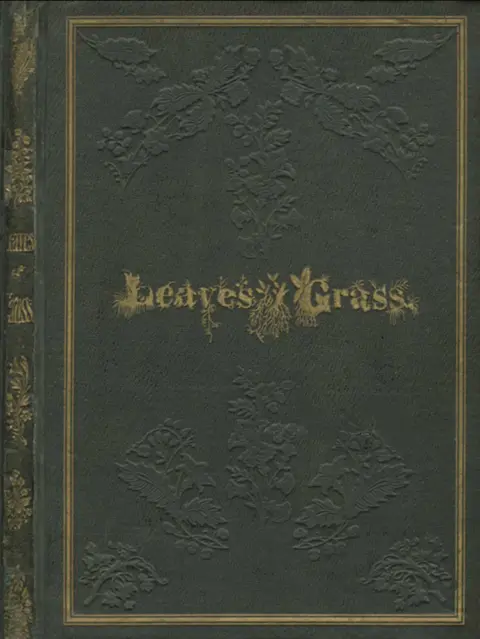
THE CLASSIC COLLECTION · 1855
"Leaves of Grass" by Walt Whitman is a poetry collection first published in 1855. Beginning with just twelve poems, Whitman continuously revised and expanded this work throughout his life, eventually creating a collection of over four hundred poems. He celebrates American democracy, nature, the human body, and sensual pleasure in verse that breaks traditional rules of rhyme and meter. The book's explicit content sparked controversy and condemnation, yet it ultimately became recognized as one of the central works of American poetry.
Introduction adapted from the source catalogue; source summaries may be automatically generated.
Free to read · English · 123,719 words · No account needed
MAKE TIME FOR A GOOD BOOK
On by default. Untick to stop anonymous reading totals. Each page counts after 10 seconds in view. How this works.
Anonymous counting is on unless you have switched it off.
In paths untrodden, In the growth by margins of pond-waters, Escaped from the life that exhibits itself, From all the standards hitherto publish’d, from the pleasures, profits, conformities, Which too long I was offering to feed my soul, Clear to me now standards not yet publish’d, clear to me that my soul, That the soul of the man I speak for rejoices in comrades, Here by myself away from the clank of the world, Tallying and talk’d to here by tongues aromatic, No longer abash’d, (for in this secluded spot I can respond as I would not dare elsewhere,) Strong upon me the life that does not exhibit itself, yet contains all the rest, Resolv’d to sing no songs to-day but those of manly attachment, Projecting them along that substantial life, Bequeathing hence types of athletic love, Afternoon this delicious Ninth-month in my forty-first year, I proceed for all who are or have been young men, To tell the secret my nights and days, To celebrate the need of comrades.
Scented Herbage of My Breast
Scented herbage of my breast, Leaves from you I glean, I write, to be perused best afterwards, Tomb-leaves, body-leaves growing up above me above death, Perennial roots, tall leaves, O the winter shall not freeze you delicate leaves, Every year shall you bloom again, out from where you retired you shall emerge again; O I do not know whether many passing by will discover you or inhale your faint odor, but I believe a few will; O slender leaves! O blossoms of my blood! I permit you to tell in your own way of the heart that is under you, O I do not know what you mean there underneath yourselves, you are not happiness, You are often more bitter than I can bear, you burn and sting me, Yet you are beautiful to me you faint tinged roots, you make me think of death, Death is beautiful from you, (what indeed is finally beautiful except death and love?) O I think it is not for life I am chanting here my chant of lovers, I think it must be for death, For how calm, how solemn it grows to ascend to the atmosphere of lovers, Death or life I am then indifferent, my soul declines to prefer, (I am not sure but the high soul of lovers welcomes death most,) Indeed O death, I think now these leaves mean precisely the same as you mean, Grow up taller sweet leaves that I may see! grow up out of my breast! Spring away from the conceal’d heart there! Do not fold yourself so in your pink-tinged roots timid leaves! Do not remain down there so ashamed, herbage of my breast! Come I am determin’d to unbare this broad breast of mine, I have long enough stifled and choked; Emblematic and capricious blades I leave you, now you serve me not, I will say what I have to say by itself, I will sound myself and comrades only, I will never again utter a call only their call, I will raise with it immortal reverberations through the States, I will give an example to lovers to take permanent shape and will through the States, Through me shall the words be said to make death exhilarating, Give me your tone therefore O death, that I may accord with it, Give me yourself, for I see that you belong to me now above all, and are folded inseparably together, you love and death are, Nor will I allow you to balk me any more with what I was calling life, For now it is convey’d to me that you are the purports essential, That you hide in these shifting forms of life, for reasons, and that they are mainly for you, That you beyond them come forth to remain, the real reality, That behind the mask of materials you patiently wait, no matter how long, That you will one day perhaps take control of all, That you will perhaps dissipate this entire show of appearance, That may-be you are what it is all for, but it does not last so very long, But you will last very long.
Your reading position is saved on this browser. Take it to another device with a library code. Reading pages adapt to text, rather than matching a printed edition.
Walt Whitman

Anne (Anne Burrows) Gilchrist & Walt Whitman
Walt Whitman
Walt Whitman
BEHIND THE BOOK
This eBook is for the use of anyone anywhere in the United States and most other parts of the world at no cost and with almost no restrictions whatsoever. You may copy it, give it away or re-use it under the terms of the Project Gutenberg License included with this eBook or online at www.gutenberg.org. If you are not located in the United States, you will have to check the laws of the country where you are located before using this eBook. Read the source licence.
The original source file, including credits and licence, is retained by this library. Request an original-format copy at no charge. Please include the book title and Project Gutenberg identifier #1322.
KEEP YOUR CURIOSITY GOING

Eric Mackay
Edmund Gosse
Sophia Margaretta Hensley
Gilbert Parker
George MacDonald

Elizabeth Bibesco