THE CLASSIC COLLECTION✦Thorns of regretCLASSIC FREE BOOKS
Thorns of regret
Alex. McVeigh, Mrs. Miller
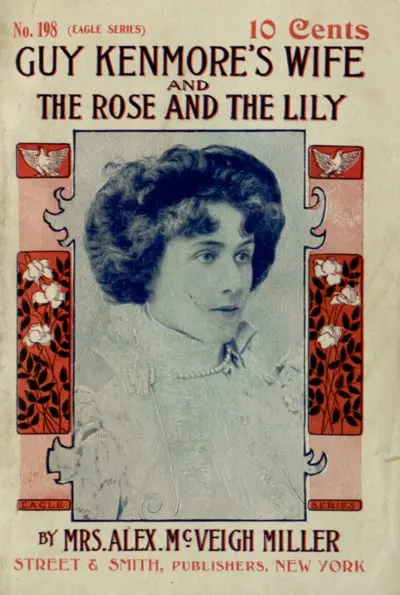
THE CLASSIC COLLECTION · 1883
"Guy Kenmore's Wife, and The Rose and the Lily" by Mrs. Alex. McVeigh Miller is a romantic novel written in the late 19th century. The narrative revolves around the central character, Irene Brooke, who is caught in the complexities of family pressures, societal expectations, and her emerging feelings for Guy Kenmore amid her family's turmoil. The novel unfolds within a domestic setting, highlighting themes of love, rebellion, and family secrets that could impact Irene's destiny. At the start of the book, the scene is set on a moonlit night, where Irene is distraught over being denied the opportunity to attend a ball with her family. Despite her father's promise to take her, he is unexpectedly called away to business, prompting Irene to concoct a plan to attend the ball with her sister's suitor, Guy Kenmore. This decision leads to a series of events, including a mock wedding that spirals into a real and binding commitment, unveiling devastating family secrets about her lineage and the repercussions of their actions. The opening chapters throw Irene into a whirlwind of emotions as she grapples with her individuality against the backdrop of her family's pressures and secrets, setting the stage for the dramatic unfoldings to come.
Introduction adapted from the source catalogue; source summaries may be automatically generated.
Free to read · English · 105,266 words · No account needed
MAKE TIME FOR A GOOD BOOK
On by default. Untick to stop anonymous reading totals. Each page counts after 10 seconds in view. How this works.
Anonymous counting is on unless you have switched it off.
"He began it," mutters Reine, with a childish petulance.
"You should have known better than to tease the child, Vane," says Miss Langton. "If you are in fault, you must apologize, of course."
"I'll be shot if I do," he begins, stoutly, then stops at her look of dignified amaze, and says, with a gleam of tender relenting: "Very well, Maud. Of course I can refuse you nothing on this day of all days. See here, Reine, I beg your pardon for what I said. Will you forgive me?"
"No, I won't--so there!" she flashes, with some wrathful tears splashing
down her cheeks.
"Reine!" Miss Langton cries, horrified.
"Reine!" mimics the girl, provokingly.
"Ah, me!" with a pretty sigh of resignation, "I see it is no use trying to train you," but Reine Langton is already out of hearing. They catch the distant gleam of her white dress among the trees.
Vane Charteris rises from his indolent pose in the hammock-chair and installs his blonde angel in his place. Tall, graceful, with the fair beauty of a Greek god, he might hold any woman's heart, but as he stands by her side, lightly swaying the chair, Miss Langton's large, blue eyes wander from him to the line of the distant hills that stand around about her beautiful home in a glorious green wooded circle.
"Ah, Maud, my beautiful, gentle darling," he says, "how hard it is to believe that Reine Langton is your cousin. You are so utterly unlike. You are so calm and sweet and gracious, she is so rude, so pettish, so like a chestnut burr!"
"Poor Reine," she says, not disputing him, yet a little apologetically, "she has had no training. Her mother died in Reine's infancy, and her father brought her up after his own fashion, dying two years ago, and leaving her to get her own living. You cannot expect an underpaid teacher to have the manners of a lady."
"She is rather young to teach others, isn't she?" he says.
"Rather," she replies. "Sixteen or seventeen at the most, I should say. But now, Vane, I really must go in; I have fifty things to attend to. All my bride's-maids will be coming presently."
"My sweetest, how shy you are," he laughs; "you will barely look at me, yet in a few hours more you will be my own. Mine to love and caress as much as I please. Do you realize it, my dignified darling?"
A slight, a very slight shiver passes over the imperially-molded form. She looks at him, then, half-fearfully, half-questioningly--
"Vane, tell me the truth," she says. "Is it me you love or is it my
uncle's money?"
Your reading position is saved on this browser. Take it to another device with a library code. Reading pages adapt to text, rather than matching a printed edition.
Alex. McVeigh, Mrs. Miller
Alex. McVeigh, Mrs. Miller

Alex. McVeigh, Mrs. Miller

Alex. McVeigh, Mrs. Miller
BEHIND THE BOOK
This eBook is for the use of anyone anywhere in the United States and most other parts of the world at no cost and with almost no restrictions whatsoever. You may copy it, give it away or re-use it under the terms of the Project Gutenberg License included with this eBook or online at www.gutenberg.org. If you are not located in the United States, you will have to check the laws of the country where you are located before using this eBook. Read the source licence.
The original source file, including credits and licence, is retained by this library. Request an original-format copy at no charge. Please include the book title and Project Gutenberg identifier #43037.
KEEP YOUR CURIOSITY GOING
Coulson Kernahan

Maurice Baring
Frances Wright
Cécile Tormay

Frederic Jesup Stimson

W. H. P. (William Henry Pope) Jarvis