THE CLASSIC COLLECTION✦Thorns of regretCLASSIC FREE BOOKS
Thorns of regret
Alex. McVeigh, Mrs. Miller
THE CLASSIC COLLECTION · 1883
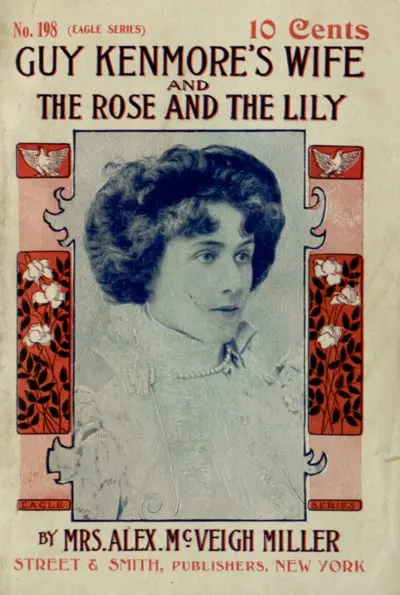
"Guy Kenmore's Wife, and The Rose and the Lily" by Mrs. Alex. McVeigh Miller is a romantic novel written in the late 19th century. The narrative revolves around the central character, Irene Brooke, who is caught in the complexities of family pressures, societal expectations, and her emerging feelings for Guy Kenmore amid her family's turmoil. The novel unfolds within a domestic setting, highlighting themes of love, rebellion, and family secrets that could impact Irene's destiny. At the start of the book, the scene is set on a moonlit night, where Irene is distraught over being denied the opportunity to attend a ball with her family. Despite her father's promise to take her, he is unexpectedly called away to business, prompting Irene to concoct a plan to attend the ball with her sister's suitor, Guy Kenmore. This decision leads to a series of events, including a mock wedding that spirals into a real and binding commitment, unveiling devastating family secrets about her lineage and the repercussions of their actions. The opening chapters throw Irene into a whirlwind of emotions as she grapples with her individuality against the backdrop of her family's pressures and secrets, setting the stage for the dramatic unfoldings to come.
Introduction adapted from the source catalogue; source summaries may be automatically generated.
Free to read · English · 105,266 words · No account needed
MAKE TIME FOR A GOOD BOOK
On by default. Untick to stop anonymous reading totals. Each page counts after 10 seconds in view. How this works.
Anonymous counting is on unless you have switched it off.
A dusky, piquante face, arch, sparkling, bright, as only brunette faces can be, dark, waving hair, and pansy-dark eyes with golden lights in their soft depth, delicious lips, tinted with the velvety crimson of the rose, a slight girlish figure, unformed as yet, but with a willowy grace all its own--Reine Langton.
She comes singing along the graveled path between the trim borders of bright verbenas, velvety pansies and fragrant pinks, swinging her large straw hat by its scarlet ribbons. The golden light of the summer day falls on the uncovered head, and on the fair, low forehead with its silky rings of clustering hair, and its slender, straight, black brows. She sings shrilly, but sweetly
"'Love not--love not, ye hapless sons of clay; Hope's gayest wreaths are made of earthly flowers; Things that were made to fade and fall away When they have blossomed but a few short hours; Love not--love not.'"
The handsome, blonde face of a young man lifts itself from the reclining depths of a hammock-chair, swung under a wide-spreading tree; as she draws nearer, he breaks out with careless raillery:
"Pray forbear, Miss Langton! your shrill soprano has frightened me from a charming dream. I do not believe your match could be found for keeping one's nerves continually on edge."
"Men have no business with nerves," she retorts, coolly. "For shame, Mr. Vane Charteris. Get out of that hammock and stir yourself. I can't abide a lazy man."
He looks at her with sleepy, half-shut eyes that mirror the deep, beautiful blue of the sky overhead.
"Fortunately you do not have to abide me," he says, bruskly. "After to-morrow I shall forever be out of reach of your shrill voice and scolding tongue!"
A strange look comes into her dark eyes a moment. Some of the golden
light dies out of them, they grow darker and vaguely sad, but she
laughs.
"A pity for you, too. My influence and example might rouse you otherwise from your stupid inertia. Tennyson must have had a lazy man in his mind's eye when he wrote the Lotos-Eaters."
He smiles, and quotes with careless good-nature:
"'In the hollow Lotos-land to live and lie reclined On the hills, like gods together, careless of mankind.'"
"Is not that an idyllic life, Reine?"
"No," she says, promptly. "I have no patience with the dolce far niente of some people. It is a pity you are to marry Maud Langton!"
He colors, and asks:
"Why?"
"Because she is as lazy as you are. When you marry her and come into Uncle Langton's money, you'll both be too lazy to breathe, just that! You will die for lack of energy to live."
Your reading position is saved on this browser. Take it to another device with a library code. Reading pages adapt to text, rather than matching a printed edition.
Alex. McVeigh, Mrs. Miller
Alex. McVeigh, Mrs. Miller

Alex. McVeigh, Mrs. Miller

Alex. McVeigh, Mrs. Miller
BEHIND THE BOOK
This eBook is for the use of anyone anywhere in the United States and most other parts of the world at no cost and with almost no restrictions whatsoever. You may copy it, give it away or re-use it under the terms of the Project Gutenberg License included with this eBook or online at www.gutenberg.org. If you are not located in the United States, you will have to check the laws of the country where you are located before using this eBook. Read the source licence.
The original source file, including credits and licence, is retained by this library. Request an original-format copy at no charge. Please include the book title and Project Gutenberg identifier #43037.
KEEP YOUR CURIOSITY GOING
Coulson Kernahan

Maurice Baring
Frances Wright
Cécile Tormay

Frederic Jesup Stimson

W. H. P. (William Henry Pope) Jarvis