THE CLASSIC COLLECTION✦Thorns of regretCLASSIC FREE BOOKS
Thorns of regret
Alex. McVeigh, Mrs. Miller
THE CLASSIC COLLECTION · 1883
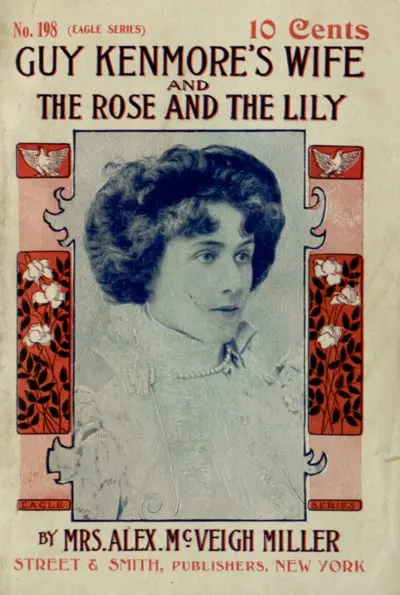
"Guy Kenmore's Wife, and The Rose and the Lily" by Mrs. Alex. McVeigh Miller is a romantic novel written in the late 19th century. The narrative revolves around the central character, Irene Brooke, who is caught in the complexities of family pressures, societal expectations, and her emerging feelings for Guy Kenmore amid her family's turmoil. The novel unfolds within a domestic setting, highlighting themes of love, rebellion, and family secrets that could impact Irene's destiny. At the start of the book, the scene is set on a moonlit night, where Irene is distraught over being denied the opportunity to attend a ball with her family. Despite her father's promise to take her, he is unexpectedly called away to business, prompting Irene to concoct a plan to attend the ball with her sister's suitor, Guy Kenmore. This decision leads to a series of events, including a mock wedding that spirals into a real and binding commitment, unveiling devastating family secrets about her lineage and the repercussions of their actions. The opening chapters throw Irene into a whirlwind of emotions as she grapples with her individuality against the backdrop of her family's pressures and secrets, setting the stage for the dramatic unfoldings to come.
Introduction adapted from the source catalogue; source summaries may be automatically generated.
Free to read · English · 105,266 words · No account needed
MAKE TIME FOR A GOOD BOOK
On by default. Untick to stop anonymous reading totals. Each page counts after 10 seconds in view. How this works.
Anonymous counting is on unless you have switched it off.
She has stopped beside the hammock-chair, and leaning against the tree looks down into the handsome, debonair face with a gleam of audacious levity in the dusky eyes. He starts up to a sitting posture, thoroughly aggravated.
"Thank you," he remarks, with immense dignity. "I understand," with cutting irony, "the reason of your spite. You wanted Mr. Langton's money yourself."
"Not a bit of it," decidedly. "Thank goodness, I know how to earn my own living. Not but that Uncle Langton has treated me unfairly, though. I am as near kin to him as Maud. My father was his own brother. Why should he make her his heiress, and marry her to the son of his old sweetheart, cutting me off with a beggarly invitation to spend three weeks, and be her bride's-maid?"
"Why don't you tell him that?" he queries, watching the rich color
deepen on the delicate cheek.
"I don't care to," with careless indifference. "I don't want his money."
"No--do you mean to say you do not care for all this?" He glances around him at the spacious white villa, set in the midst of a green, flower-gemmed lawn, shaded by stately trees. "Only think, my lady disdain: A summer home in these grand old mountains, a winter palace in Washington, a cottage by the sea, and a fabulous bank account; does it all count for nothing in your eyes?"
"Yes," pertly, "if, like poor Maud, I had to take you as an
incumbrance with it all!"
He flushes with wounded vanity and anger.
"The feeling is mutual," he retorts, under the spur of pride. "If I had to take you with Mr. Langton's money, it might go to found an idiot asylum."
"Vane Charteris, I hate you!" she exclaims, with a flash of childish
passion.
"I take it as a compliment," he replies, with a profound bow.
"Quarreling as usual," says a clear, sweetly modulated voice, and both
turn with a start.
A tall, imperially stately woman has come sauntering down the path from the house. You think of Tennyson's description:
"A daughter of the gods, divinely tall.
And most divinely fair."
Vane Charteris' face lights with languid pleasure. It is Maud Langton, his betrothed. This very night she is to be his bride.
"Ah, Maud," he says, "I am glad you are come. Perhaps you will deliver me from this little vixen!"
There is a grave, far-away look in the light blue eyes of the
bride-elect. She looks at Reine, not at her lover, as she answers
lightly:
"It is very undignified to call names, Vane, and how often have I told you, Reine, that you must bridle that sharp tongue of yours?"
Your reading position is saved on this browser. Take it to another device with a library code. Reading pages adapt to text, rather than matching a printed edition.
Alex. McVeigh, Mrs. Miller
Alex. McVeigh, Mrs. Miller

Alex. McVeigh, Mrs. Miller

Alex. McVeigh, Mrs. Miller
BEHIND THE BOOK
This eBook is for the use of anyone anywhere in the United States and most other parts of the world at no cost and with almost no restrictions whatsoever. You may copy it, give it away or re-use it under the terms of the Project Gutenberg License included with this eBook or online at www.gutenberg.org. If you are not located in the United States, you will have to check the laws of the country where you are located before using this eBook. Read the source licence.
The original source file, including credits and licence, is retained by this library. Request an original-format copy at no charge. Please include the book title and Project Gutenberg identifier #43037.
KEEP YOUR CURIOSITY GOING
Coulson Kernahan

Maurice Baring
Frances Wright
Cécile Tormay

Frederic Jesup Stimson

W. H. P. (William Henry Pope) Jarvis