THE CLASSIC COLLECTION✦Thorns of regretCLASSIC FREE BOOKS
Thorns of regret
Alex. McVeigh, Mrs. Miller
THE CLASSIC COLLECTION · 1883
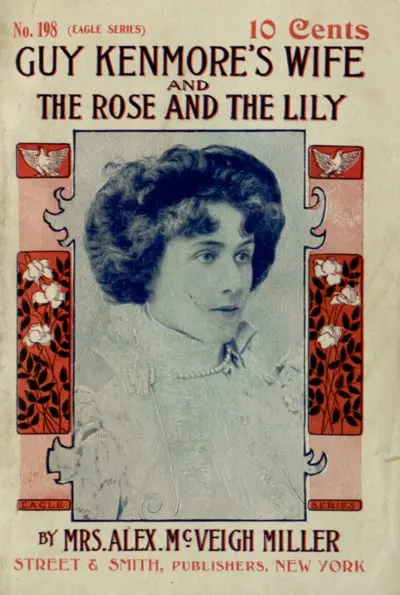
"Guy Kenmore's Wife, and The Rose and the Lily" by Mrs. Alex. McVeigh Miller is a romantic novel written in the late 19th century. The narrative revolves around the central character, Irene Brooke, who is caught in the complexities of family pressures, societal expectations, and her emerging feelings for Guy Kenmore amid her family's turmoil. The novel unfolds within a domestic setting, highlighting themes of love, rebellion, and family secrets that could impact Irene's destiny. At the start of the book, the scene is set on a moonlit night, where Irene is distraught over being denied the opportunity to attend a ball with her family. Despite her father's promise to take her, he is unexpectedly called away to business, prompting Irene to concoct a plan to attend the ball with her sister's suitor, Guy Kenmore. This decision leads to a series of events, including a mock wedding that spirals into a real and binding commitment, unveiling devastating family secrets about her lineage and the repercussions of their actions. The opening chapters throw Irene into a whirlwind of emotions as she grapples with her individuality against the backdrop of her family's pressures and secrets, setting the stage for the dramatic unfoldings to come.
Introduction adapted from the source catalogue; source summaries may be automatically generated.
Free to read · English · 105,266 words · No account needed
MAKE TIME FOR A GOOD BOOK
On by default. Untick to stop anonymous reading totals. Each page counts after 10 seconds in view. How this works.
Anonymous counting is on unless you have switched it off.
"Italia, oh, Italia, thou who hast
The fatal gift of beauty which became
A funeral dower of present woes and past."
The words fell softly from the lips of Irene as she walked beneath the shade of the orange and olive and lemon trees in the villa garden. The balmy air was sweet with the breath of countless flowers, the birds sang sweetly in the boughs above her head, and the blue waves of the Arno ebbed and flowed at her feet with a pleasant murmur. Overhead the clear blue sky of Italy, which poets have painted in deathless verse and artists on immortal canvas, sparkled and glanced in all its radiant sapphire beauty.
She was musing on the beauty and the sorrow of this lovely hapless land, and the famous words of Byron came aptly to her lips. She repeated them softly and sadly, and someone who had stolen upon her unaware answered musingly:
"Do you believe with Byron that the gift of beauty is always fatal, Miss
Berlin?"
She started and flushed with annoyance. It was Julius Revington. He had become her very shadow, seeming unable to exist out of her sight.
The beautiful girl in her white dress with the roses and myrtles in her small hand, turned her face away pettishly.
"How you startled me, Mr. Revington," she said, in a tone of displeasure. "I thought myself alone."
"You are very cruel to hide yourself out here in the orange ground," said the gentleman, sentimentally. "Do you know that I have been searching for you everywhere?"
"No, I did not know it. If I had, I should have hidden myself in a securer place than this," she replied, with all the frank cruelty of a young girl.
"Miss Berlin, you are very cruel," complained the lover. "Sometimes I really wonder whether you say such sharp things in earnest, or if you are only coquetting."
The blue eyes flashed.
"I know nothing of coquetry," said Irene, sharply. "I mean everything
that I say."
He came nearer and looked under the brim of the shady hat at the lovely, irritated face and sparkling eyes.
"Oh, Miss Berlin, why will you treat me so coldly when you know that I love the very ground you walk upon?" he exclaimed, almost abjectly.
"I do not want your love," she answered, stamping her little foot impatiently on the turf, as if the love he confessed for her lay veritably beneath her feet.
His weakly, handsome face grew pale at her impetuous words.
"Wait, Irene, before you so cruelly reject me," he exclaimed. "You are young, but not too young to know that it is wrong to trifle with the human heart."
Your reading position is saved on this browser. Take it to another device with a library code. Reading pages adapt to text, rather than matching a printed edition.
Alex. McVeigh, Mrs. Miller
Alex. McVeigh, Mrs. Miller

Alex. McVeigh, Mrs. Miller

Alex. McVeigh, Mrs. Miller
BEHIND THE BOOK
This eBook is for the use of anyone anywhere in the United States and most other parts of the world at no cost and with almost no restrictions whatsoever. You may copy it, give it away or re-use it under the terms of the Project Gutenberg License included with this eBook or online at www.gutenberg.org. If you are not located in the United States, you will have to check the laws of the country where you are located before using this eBook. Read the source licence.
The original source file, including credits and licence, is retained by this library. Request an original-format copy at no charge. Please include the book title and Project Gutenberg identifier #43037.
KEEP YOUR CURIOSITY GOING
Coulson Kernahan

Maurice Baring
Frances Wright
Cécile Tormay

Frederic Jesup Stimson

W. H. P. (William Henry Pope) Jarvis