THE CLASSIC COLLECTION✦Thorns of regretCLASSIC FREE BOOKS
Thorns of regret
Alex. McVeigh, Mrs. Miller
THE CLASSIC COLLECTION · 1883
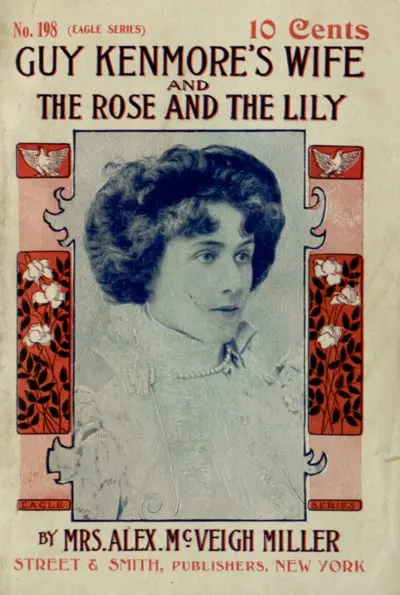
"Guy Kenmore's Wife, and The Rose and the Lily" by Mrs. Alex. McVeigh Miller is a romantic novel written in the late 19th century. The narrative revolves around the central character, Irene Brooke, who is caught in the complexities of family pressures, societal expectations, and her emerging feelings for Guy Kenmore amid her family's turmoil. The novel unfolds within a domestic setting, highlighting themes of love, rebellion, and family secrets that could impact Irene's destiny. At the start of the book, the scene is set on a moonlit night, where Irene is distraught over being denied the opportunity to attend a ball with her family. Despite her father's promise to take her, he is unexpectedly called away to business, prompting Irene to concoct a plan to attend the ball with her sister's suitor, Guy Kenmore. This decision leads to a series of events, including a mock wedding that spirals into a real and binding commitment, unveiling devastating family secrets about her lineage and the repercussions of their actions. The opening chapters throw Irene into a whirlwind of emotions as she grapples with her individuality against the backdrop of her family's pressures and secrets, setting the stage for the dramatic unfoldings to come.
Introduction adapted from the source catalogue; source summaries may be automatically generated.
Free to read · English · 105,266 words · No account needed
MAKE TIME FOR A GOOD BOOK
On by default. Untick to stop anonymous reading totals. Each page counts after 10 seconds in view. How this works.
Anonymous counting is on unless you have switched it off.
No one can recall without a shudder of horror the midnight burning of the steamer Hesperus in mid-ocean in 188-, and the terrible loss of life consequent upon that marine disaster.
She had been five days out, with fair skies and smooth seas, and every prospect of a prosperous and speedy voyage, when that disastrous fire stole upon her like a thief in the night, and wrapped her noble and majestic form in a winding sheet of flame.
Fifty souls perished miserably, including the captain and a part of
crew.
In that terrible holocaust of fire and water, Reine Charteris was
lost.
Her husband was saved--saved through such a tragedy of horror as sowed silvery threads in his fair, clustering locks, and almost broke his heart with remorse and pain.
We will hear him tell the story in his own words, as he told it that day when seated in the gloomy prison-cell, where Maud Langton was expiating her folly in bitterness of soul, he placed in her hands a small metallic case, locked with a tiny key, and said, solemnly and slowly:
"This means freedom and release to you, Maud. It is a legacy to you from
the dead."
The beautiful, queenly-looking girl, wasted and worn from long confinement, and sickening dread and terror, looks up at the man's pale, haggard face, at the deep crape band on his hat, and shudders.
"You mean----" she says, then pauses, struck dumb by the white agony of
his face.
"I mean I have lost my wife; Reine is dead."
"Dead!" the beautiful prisoner cries in wonder--not sorrow.
That is so plain to his senses, sharpened by grief, that he cries out
bitterly:
"Yes, dead! But look at your legacy, Maud. That is all your selfish soul
will care for!"
She gives him one look of cold surprise, and then turns eagerly to her
treasure.
The small key grates in the lock, the lid of the box flies open.
Within lies a package wrapped in oil silk. Undoing this with eager fingers, Maud comes upon the precious note that means so much to her in this terrible plight, the note poor Reine had crossed the seas to win from the vengeful grasp of Vane Charteris.
All of Maud's cold, superb dignity breaks down at sight of that little slip of paper. She weeps and laughs together.
"This means hope, freedom, happiness to me," she cries, tearfully. "And you had it all the time, Vane. And Reine knew. It was for that she crossed the seas?"
"Yes," he answers, "and it was for that she died."
Your reading position is saved on this browser. Take it to another device with a library code. Reading pages adapt to text, rather than matching a printed edition.
Alex. McVeigh, Mrs. Miller
Alex. McVeigh, Mrs. Miller

Alex. McVeigh, Mrs. Miller

Alex. McVeigh, Mrs. Miller
BEHIND THE BOOK
This eBook is for the use of anyone anywhere in the United States and most other parts of the world at no cost and with almost no restrictions whatsoever. You may copy it, give it away or re-use it under the terms of the Project Gutenberg License included with this eBook or online at www.gutenberg.org. If you are not located in the United States, you will have to check the laws of the country where you are located before using this eBook. Read the source licence.
The original source file, including credits and licence, is retained by this library. Request an original-format copy at no charge. Please include the book title and Project Gutenberg identifier #43037.
KEEP YOUR CURIOSITY GOING
Coulson Kernahan

Maurice Baring
Frances Wright
Cécile Tormay

Frederic Jesup Stimson

W. H. P. (William Henry Pope) Jarvis