THE CLASSIC COLLECTION✦John March, SouthernerCLASSIC FREE BOOKS
John March, Southerner
George Washington Cable
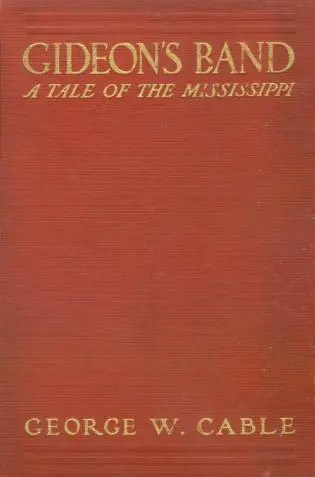
THE CLASSIC COLLECTION · 1914
"Gideon's Band: A Tale of the Mississippi" by George Washington Cable is a historical novel written in the early 20th century. The story explores life along the Mississippi River, particularly focusing on the experiences and interactions of various characters aboard a steamboat named the "Votaress". Key figures include Ramsey Hayle, a young woman navigating her way through a world filled with both vibrant human drama and the harsh realities of a society influenced by immigration and commerce. The opening of "Gideon's Band" vividly depicts the bustling scene at a steamboat levee in New Orleans, where numerous individuals and colorful characters converge. The narrative introduces us to the "Votaress", preparing for its journey upriver, and illustrates its significance as a new vessel while highlighting the diverse passengers waiting to board. Among these passengers, young Ramsey Hayle stands out as she interacts with her surroundings, filled with curiosity and excitement about the journey ahead. The dynamics between various characters, including the Hayle twins and the passengers of different backgrounds, hint at the central conflicts and themes that will unfold throughout the novel. This slow build in the opening chapters sets the stage for deeper explorations of identity, class, and the tensions of the antebellum South.
Introduction adapted from the source catalogue; source summaries may be automatically generated.
Free to read · English · 111,383 words · No account needed
MAKE TIME FOR A GOOD BOOK
On by default. Untick to stop anonymous reading totals. Each page counts after 10 seconds in view. How this works.
Anonymous counting is on unless you have switched it off.
The youth whom we have called short, square, and so on crossed to the starboard derrick post. Several passengers had come up to the roof, and one who, he noticed, seemed, by the many kind glances cast upon her, to be already winning favor, was the tallish lass with the red curls.
The nurse was still at her back. She drew close up beside him and stood in the wind that ruffled her hat and pressed her draperies against her form. Her servant betrayed a faint restiveness to be so near him, but the girl, watching the steamer's watery path as it seemed of its own volition to glide under the boat's swift tread, ignored him as completely as if he were a part of the woodwork. The very good-looking man who was "taking out" the boat returned from a short tour of the deck and halted by the great bell over the foremost skylights; but soon he moved away again in mild preoccupation. The maiden's frank scrutiny followed him a step or two and then turned squarely to the youth. Her attendant stirred uncomfortably and breathed some inarticulate protest, but in a tone of faultless composure the girl spoke out:
"Is that the captain yonder?"
"No," he said, equally composed, though busy thinking that but for his eye she would at this moment be lying, in all these dainty draperies, as deep beneath the boiling flood as she now stood above it. "That's not the captain."
"Then why is he running the boat?"
"He owns her."
"Oh!" The girl's soft laugh was at herself. Presently--"Where's her
captain?"
"Ashore, in the hospital."
"What's he got?"
"Missy!" murmured the dark woman beseechingly.
But missy gave her no heed. "Got cholera?" she ventured, "the Asiatic
cholera?"
"No, a broken leg."
"Oh! Is that all he's got?"
"No, he has another, not broken." The speaker was so solemn that, with mirth in every drop of her blood, the inquirer contrived to be grave, herself.
"How'd he get it--I mean get it broken?"
"He was superintending----"
"And fell? When'd he fall?"
"This afternoon, about----"
"Where'd it happen?"
"Down on the lower deck as he----"
"Which is the lower deck?"
"The deck you came aboard on."
"They told me that was the freight deck!"
"It is."
"Then, why--?" She ceased, pondered, and spoke again: "Is there any deck lower than the lower deck?"
"None."
She mused once more: "Why--that's strange."
"Yes," he said, "strange, but true."
"Then how could the captain fall----" Again she ceased and yet again pondered: "Are the boilers--on the boiler deck?"
"No, the boiler deck is just over the boilers."
"Then why do they--" Once more she pondered.
Your reading position is saved on this browser. Take it to another device with a library code. Reading pages adapt to text, rather than matching a printed edition.
George Washington Cable
George Washington Cable

George Washington Cable
George Washington Cable
BEHIND THE BOOK
This eBook is for the use of anyone anywhere in the United States and most other parts of the world at no cost and with almost no restrictions whatsoever. You may copy it, give it away or re-use it under the terms of the Project Gutenberg License included with this eBook or online at www.gutenberg.org. If you are not located in the United States, you will have to check the laws of the country where you are located before using this eBook. Read the source licence.
The original source file, including credits and licence, is retained by this library. Request an original-format copy at no charge. Please include the book title and Project Gutenberg identifier #19348.
KEEP YOUR CURIOSITY GOING
Cécile Tormay

Moritz Busch
Coulson Kernahan
John L. Ransom

Maurice Baring
Frances Wright