THE CLASSIC COLLECTION✦John March, SouthernerCLASSIC FREE BOOKS
John March, Southerner
George Washington Cable
THE CLASSIC COLLECTION · 1914
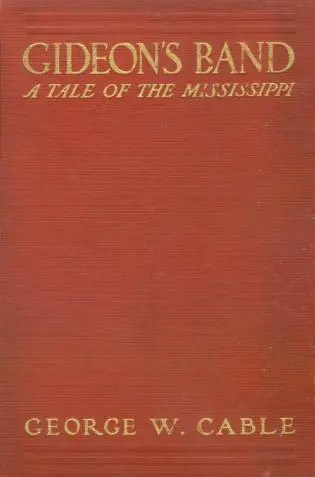
"Gideon's Band: A Tale of the Mississippi" by George Washington Cable is a historical novel written in the early 20th century. The story explores life along the Mississippi River, particularly focusing on the experiences and interactions of various characters aboard a steamboat named the "Votaress". Key figures include Ramsey Hayle, a young woman navigating her way through a world filled with both vibrant human drama and the harsh realities of a society influenced by immigration and commerce. The opening of "Gideon's Band" vividly depicts the bustling scene at a steamboat levee in New Orleans, where numerous individuals and colorful characters converge. The narrative introduces us to the "Votaress", preparing for its journey upriver, and illustrates its significance as a new vessel while highlighting the diverse passengers waiting to board. Among these passengers, young Ramsey Hayle stands out as she interacts with her surroundings, filled with curiosity and excitement about the journey ahead. The dynamics between various characters, including the Hayle twins and the passengers of different backgrounds, hint at the central conflicts and themes that will unfold throughout the novel. This slow build in the opening chapters sets the stage for deeper explorations of identity, class, and the tensions of the antebellum South.
Introduction adapted from the source catalogue; source summaries may be automatically generated.
Free to read · English · 111,383 words · No account needed
MAKE TIME FOR A GOOD BOOK
On by default. Untick to stop anonymous reading totals. Each page counts after 10 seconds in view. How this works.
Anonymous counting is on unless you have switched it off.
"No, sir, ordinarily it would not be, sir. But my father--I am the captain's son--knowing you were coming and what you were coming for, waited for you as long as he could. Just now he is extremely busy, sir, doing what he can--short-handed--for the sick and dying." The captain's son, in spite of himself, began to warm up. "Those hundreds of people down yonder, sir, are homeless, friendless, dumb--you may say--and in his personal care. He has left me here to see that your every proper wish has every attention. Gentlemen, will you please be seated?" He resumed his own chair and at top speed began again to write.
It was a performance not pleasant for any one. He felt himself culpably too full of the resentful conviction that this ferment, whose ultimate extent nobody could predict, was purely of those Hayle twins' brewing, and he knew he was speaking too much as though to them and them alone. He was the only Courteney who could do this thing so badly, yet it must be done. Still writing, he glanced up. Not a visitor had stooped to sit. He dipped his pen but rose up again. "What can I do for you, sirs?"
"We have told you," said the senator. "Send for the captain!"
"Will you please say what you want him for?"
"No, sir! We will tell him that when he comes!"
"He'll not come, sir. I shan't send."
The senator glared steadily into the youth's face, and the youth, forgetting their disparity of years, glared as steadily back. The bishop blandly spoke:
"Senator, will you allow me, for an instant--? Mr. Courteney, you will admit that this steamboat is not your property?"
"She's as much mine as anybody's, sir. I am one third owner of her."
The bishop's pause was lengthy. Then--"Oh, you are! Well, however that may be, sir, your father ought to realize--and so ought you, sir--that we cannot consent to conduct an affair like this in a second-handed way."
"It really isn't second-handed, sir; but if you think it is and if you're willing to put your request in writing and will dictate it to me, here and now----"
The senator exploded: "Damn the writing!" He whirled upon the bishop:
"Your pardon, sir!"
"Some one had to say it," jovially answered the bishop. Everybody laughed. Hugh dipped his pen once more.
"Shall I put that down, also?" he asked, looking to the bishop and the
senator by turns.
"Put what?--down where?" they asked. "What are you writing there,
anyhow?"
"Our conversation."
The senator stiffened high: "For what, sir?"
And the bishop asked, "A verbatim report to the captain?"
"Yes, sir, and the newspapers."
Your reading position is saved on this browser. Take it to another device with a library code. Reading pages adapt to text, rather than matching a printed edition.
George Washington Cable
George Washington Cable

George Washington Cable
George Washington Cable
BEHIND THE BOOK
This eBook is for the use of anyone anywhere in the United States and most other parts of the world at no cost and with almost no restrictions whatsoever. You may copy it, give it away or re-use it under the terms of the Project Gutenberg License included with this eBook or online at www.gutenberg.org. If you are not located in the United States, you will have to check the laws of the country where you are located before using this eBook. Read the source licence.
The original source file, including credits and licence, is retained by this library. Request an original-format copy at no charge. Please include the book title and Project Gutenberg identifier #19348.
KEEP YOUR CURIOSITY GOING
Cécile Tormay

Moritz Busch
Coulson Kernahan
John L. Ransom

Maurice Baring
Frances Wright