THE CLASSIC COLLECTION✦John March, SouthernerCLASSIC FREE BOOKS
John March, Southerner
George Washington Cable
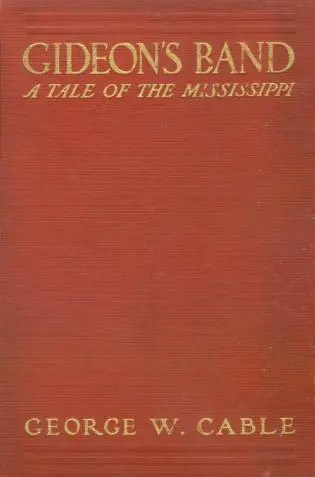
THE CLASSIC COLLECTION · 1914
"Gideon's Band: A Tale of the Mississippi" by George Washington Cable is a historical novel written in the early 20th century. The story explores life along the Mississippi River, particularly focusing on the experiences and interactions of various characters aboard a steamboat named the "Votaress". Key figures include Ramsey Hayle, a young woman navigating her way through a world filled with both vibrant human drama and the harsh realities of a society influenced by immigration and commerce. The opening of "Gideon's Band" vividly depicts the bustling scene at a steamboat levee in New Orleans, where numerous individuals and colorful characters converge. The narrative introduces us to the "Votaress", preparing for its journey upriver, and illustrates its significance as a new vessel while highlighting the diverse passengers waiting to board. Among these passengers, young Ramsey Hayle stands out as she interacts with her surroundings, filled with curiosity and excitement about the journey ahead. The dynamics between various characters, including the Hayle twins and the passengers of different backgrounds, hint at the central conflicts and themes that will unfold throughout the novel. This slow build in the opening chapters sets the stage for deeper explorations of identity, class, and the tensions of the antebellum South.
Introduction adapted from the source catalogue; source summaries may be automatically generated.
Free to read · English · 111,383 words · No account needed
MAKE TIME FOR A GOOD BOOK
On by default. Untick to stop anonymous reading totals. Each page counts after 10 seconds in view. How this works.
Anonymous counting is on unless you have switched it off.
"Me," said the pretty matron, "I was nearly ready to 'ave those twin', but Gideon Hayle he di'n' know they was goin' be twin', an' he di'n' know those twin' goin' be boys!" She gently laughed. The daughter stared as if in no light--or shade--could those twins be a laughing matter, but the mother spoke on gayly: "Never I 'ear my 'usband swear so hard--an' so manny way'--like that day--at everything--everybody. Not because that li'l babee--if that be all; but because he see that boat, that she's the mo' fine boat, that Quakerezz, an' when they ripport her run from Loui'ville, he's already affraid--to hisseff--that she's goin' to be the mo' fas'."
"And was she?" asked the girl.
"Barely," said the grandfather. "It took years to prove it and by that time your father had built another boat."
"The Chevalier!" she exclaimed.
"Yes, which beat the Quakeress once or twice nearly every season until the Quakeress burned."
"Burned!" cried Ramsey, while Hugh, stirred to rise, yet remained. "Was it the Quakeress that--?" But the old man was telling earlier history and she sank repiningly in her seat. "You're going backward," she softly whined.
"In 'sixteen," he said, "I built the Huntress, and----"
"We already know about that," sighed Ramsey, bracing her feet in old Joy's hands. "I know it from old nursie."
"Ramsey!" murmured her mother.
"In 'seventeen," said the chronicler, "Miss Ramsey's grandfather built the Hunter. In 'twenty he built the Charioteer----"
"Ain't we ever going to hear about the burning?" laughingly whimpered the girl, but the narrator kept on:
"In 'twenty-one I built the Shepherdess----"
Ramsey all at once revived. "And did the Shepherdess outrun the
Charioteer?"
"A trifle, yes."
"Humph!" she said to herself, and twice again, on a higher key and with a grimace at Hugh, "humph!"
"But in 'twenty-five the Charioteer was run into and sunk, and the Hayle boat that came next," continued the historian, "was the best ever seen till then on these waters, of the hundred and sixty-five steamers launched."
"Yes," said Madame Hayle, "and the firz' boat what my 'usband was
captain."
Ramsey started wildly. "The Admiral!" she cried at Hugh. She whisked round on his grandfather. "And then--to beat the Admiral--you built----?"
"My son built--the Abbess."
"And did the Abbess beat the Admiral?"
"Not for a long time. But in 'thirty-three the Conqueror's very first run broke the Abbess's record."
Your reading position is saved on this browser. Take it to another device with a library code. Reading pages adapt to text, rather than matching a printed edition.
George Washington Cable
George Washington Cable

George Washington Cable
George Washington Cable
BEHIND THE BOOK
This eBook is for the use of anyone anywhere in the United States and most other parts of the world at no cost and with almost no restrictions whatsoever. You may copy it, give it away or re-use it under the terms of the Project Gutenberg License included with this eBook or online at www.gutenberg.org. If you are not located in the United States, you will have to check the laws of the country where you are located before using this eBook. Read the source licence.
The original source file, including credits and licence, is retained by this library. Request an original-format copy at no charge. Please include the book title and Project Gutenberg identifier #19348.
KEEP YOUR CURIOSITY GOING
Cécile Tormay

Moritz Busch
Coulson Kernahan
John L. Ransom

Maurice Baring
Frances Wright