THE CLASSIC COLLECTION✦John March, SouthernerCLASSIC FREE BOOKS
John March, Southerner
George Washington Cable
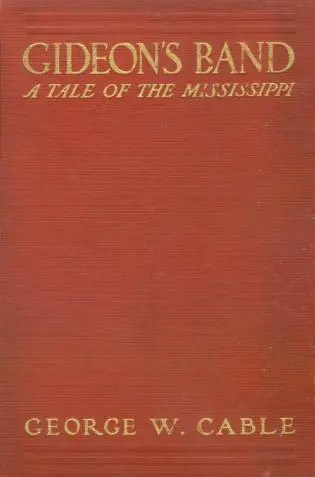
THE CLASSIC COLLECTION · 1914
"Gideon's Band: A Tale of the Mississippi" by George Washington Cable is a historical novel written in the early 20th century. The story explores life along the Mississippi River, particularly focusing on the experiences and interactions of various characters aboard a steamboat named the "Votaress". Key figures include Ramsey Hayle, a young woman navigating her way through a world filled with both vibrant human drama and the harsh realities of a society influenced by immigration and commerce. The opening of "Gideon's Band" vividly depicts the bustling scene at a steamboat levee in New Orleans, where numerous individuals and colorful characters converge. The narrative introduces us to the "Votaress", preparing for its journey upriver, and illustrates its significance as a new vessel while highlighting the diverse passengers waiting to board. Among these passengers, young Ramsey Hayle stands out as she interacts with her surroundings, filled with curiosity and excitement about the journey ahead. The dynamics between various characters, including the Hayle twins and the passengers of different backgrounds, hint at the central conflicts and themes that will unfold throughout the novel. This slow build in the opening chapters sets the stage for deeper explorations of identity, class, and the tensions of the antebellum South.
Introduction adapted from the source catalogue; source summaries may be automatically generated.
Free to read · English · 111,383 words · No account needed
MAKE TIME FOR A GOOD BOOK
On by default. Untick to stop anonymous reading totals. Each page counts after 10 seconds in view. How this works.
Anonymous counting is on unless you have switched it off.
"Well, Miss Hayles--you is Miss Hayles, ain't you? Yit, my Lawd! miss, ain't I dess now see you down in de cabin a-playin' in de play, an' a hund'ed people sayin': ''tis her, 'cose it is'?"
"Humph! no, I left as the curtain rose. How's the----?"
"Bishop? Oh, de bishop, he, eh--'bout five-six minute' ago--aw it mowt be ten--whilse I 'uz down dah--de bishop--I'm bleeds to say--breave his las'."
"While I--!" She tossed both arms.
"Ummmm, hmmmm!" droned old Joy; "gone to glory!"
"Yass, de good bishop gone to his good bishop!"
"Oh, who was with him?" cried the girl.
"Why, eh"--the three moved on their way--"de doctoh, he 'uz dah, and de bofe sis' o' charity; yass'm."
"The commodore--wasn't?--Nor the senator--nor----?"
"Oh, yass'm, de commodo', he 'uz dah--faw a spell. He didn' stay till de--finish. He couldn'. He git slightly indispose', hisseff, an' have to go to his own room."
The nurse made a meek show of despair and Ramsey turned upon her. "Now, mammy, this is no time--now--don't--cry."
The old woman braced up superbly. "Yass'm," persisted the waiter, "he dah now, in bed; slightly indispose'."
A rumble close below broke in upon the rhythm of the boat. "What's
that?" demanded Ramsey.
"Oh, dat's on'y de aujience a-stompin' de actohs."
The next moment, a step or two down the stair, with the skylight roof still in sight as much as hidden tears would let her see it, she stopped again, to stare anxiously at another trio, coming from the bell to the captain's room.
"Da'--dat's all right," the white-jacket reassured her. "Dat's dess de cap'm, wid Mr. Hugh an' a passengeh."
"Kentucky passenger?"
"Yass'm, 'zac'ly; f'om Ca'fawnia; dat's him."
She sprang back to the deck, and the servant went his way down the stair. Hugh had left his father to proceed on the arm of the Californian and was approaching. He murmured only a preoccupied greeting and would have taken the stair, but old Joy motioned eagerly to the girl. She spoke. He stopped. "Yes, Miss Ramsey?"
"Go on," she said, "we're going that way."
Down on the cabin guards the two paused at the bottom step, the old woman lingering at the top. "Mr. Hugh," said Ramsey, "mom-a's sending me for the twins." She drew a breath. "You know about the commodore?"
"Yes, Miss Ramsey."
"And the--the bishop?"
"I know, Miss Ramsey."
"Mr. Hugh, is your father--taken?"
"Yes, Miss Ramsey."
"Where are you going?"
"To bring the first clerk."
"The boat's command doesn't fall to him, does it?"
"It falls to the first mate."
"I don't see why. Who'll it fall to next? You?"
"No, the first clerk."
Your reading position is saved on this browser. Take it to another device with a library code. Reading pages adapt to text, rather than matching a printed edition.
George Washington Cable
George Washington Cable

George Washington Cable
George Washington Cable
BEHIND THE BOOK
This eBook is for the use of anyone anywhere in the United States and most other parts of the world at no cost and with almost no restrictions whatsoever. You may copy it, give it away or re-use it under the terms of the Project Gutenberg License included with this eBook or online at www.gutenberg.org. If you are not located in the United States, you will have to check the laws of the country where you are located before using this eBook. Read the source licence.
The original source file, including credits and licence, is retained by this library. Request an original-format copy at no charge. Please include the book title and Project Gutenberg identifier #19348.
KEEP YOUR CURIOSITY GOING
Cécile Tormay

Moritz Busch
Coulson Kernahan
John L. Ransom

Maurice Baring
Frances Wright