THE CLASSIC COLLECTION✦John March, SouthernerCLASSIC FREE BOOKS
John March, Southerner
George Washington Cable
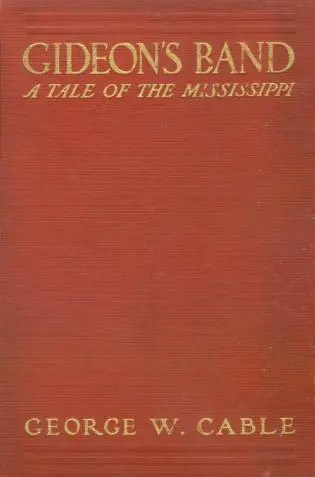
THE CLASSIC COLLECTION · 1914
"Gideon's Band: A Tale of the Mississippi" by George Washington Cable is a historical novel written in the early 20th century. The story explores life along the Mississippi River, particularly focusing on the experiences and interactions of various characters aboard a steamboat named the "Votaress". Key figures include Ramsey Hayle, a young woman navigating her way through a world filled with both vibrant human drama and the harsh realities of a society influenced by immigration and commerce. The opening of "Gideon's Band" vividly depicts the bustling scene at a steamboat levee in New Orleans, where numerous individuals and colorful characters converge. The narrative introduces us to the "Votaress", preparing for its journey upriver, and illustrates its significance as a new vessel while highlighting the diverse passengers waiting to board. Among these passengers, young Ramsey Hayle stands out as she interacts with her surroundings, filled with curiosity and excitement about the journey ahead. The dynamics between various characters, including the Hayle twins and the passengers of different backgrounds, hint at the central conflicts and themes that will unfold throughout the novel. This slow build in the opening chapters sets the stage for deeper explorations of identity, class, and the tensions of the antebellum South.
Introduction adapted from the source catalogue; source summaries may be automatically generated.
Free to read · English · 111,383 words · No account needed
MAKE TIME FOR A GOOD BOOK
On by default. Untick to stop anonymous reading totals. Each page counts after 10 seconds in view. How this works.
Anonymous counting is on unless you have switched it off.
"They say not. And, really, you know, some of the liveliest feuds along this river are founded on less cause. Gid Hayle, they claim, couldn't bring the Courteneys to law at the time because the only men he had to back him were his two in-laws. Now these twins are men and they feel honor-bound to throw down--no, to take up--the gage, thrown down to them every hour they've been on this boat."
"Shoo! They've been treated only too well."
"Tactfully, do you think?"
"Depends on what you call tact. Ordinary tact's the worst thing you could throw at 'em." The clerk spoke with both eyes on the general and the actor. His fellow clerk, second clerk, had nudged him. The general was raising his voice to the actor.
"They f-forbid your lady to chaperon their sister, since you both, last evening, all-llowed young Courteney to give her his account of the b-urning of the Quakeress."
"General!" the smiling senator cautioned him, "privately, if you please!
more privately!"
But the soldier persisted. "Th-they even suspect you, sir, of
s-s-piriting off to Canada their s-s-lave p-roperty, missing after that
event."
"Why, gentlemen," began the player, looking very professional but also very handsome, and with a flash of annoyance only when he noticed that the exhorter had joined the group, "I never in my--nonsense! fantastical nonsense! Why, I'll be--I'll see you later! At present, as I've already said, I'm overdue at that rehearsal."
"Yes, Mr. Gilmore," said the first clerk, "you are."
"A moment," interposed the senator. "Purely in the interest of peace,
Mr. Gilmore----"
"Oh, senator," the actor amiably laughed, "I don't question your good-will, or the general's; but you don't know, either of you, the interest of peace when you run against it--pardon! I take that back. My annoyance, at quite another thing, flew off the handle. I take it back. Excuse me, I'll make it a point to see you later." The three bowed. As he started away the exhorter blocked his path.
"Excuse me," said the zealot. "Fust tell us: Ef ye mowt sperit a niggeh off to Canady would ye aw wouldn't ye?"
For an instant the player stood mute and then he said only, in a preoccupied tone: "Please let me pass." But at the same time he laid his unexpected left hand lightly on the questioner and by some stage trick sent him stumbling aside along a line of chairs and toppling to the floor. The cub and the younger clerks had him up in a twinkling, while a dozen men appeared from the boiler deck as if by magic, and the player walked away down the cabin.
Your reading position is saved on this browser. Take it to another device with a library code. Reading pages adapt to text, rather than matching a printed edition.
George Washington Cable
George Washington Cable

George Washington Cable
George Washington Cable
BEHIND THE BOOK
This eBook is for the use of anyone anywhere in the United States and most other parts of the world at no cost and with almost no restrictions whatsoever. You may copy it, give it away or re-use it under the terms of the Project Gutenberg License included with this eBook or online at www.gutenberg.org. If you are not located in the United States, you will have to check the laws of the country where you are located before using this eBook. Read the source licence.
The original source file, including credits and licence, is retained by this library. Request an original-format copy at no charge. Please include the book title and Project Gutenberg identifier #19348.
KEEP YOUR CURIOSITY GOING
Cécile Tormay

Moritz Busch
Coulson Kernahan
John L. Ransom

Maurice Baring
Frances Wright