THE CLASSIC COLLECTION✦John March, SouthernerCLASSIC FREE BOOKS
John March, Southerner
George Washington Cable
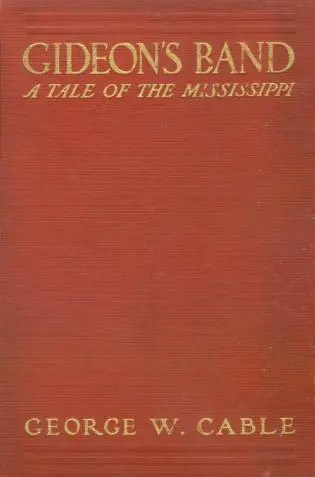
THE CLASSIC COLLECTION · 1914
"Gideon's Band: A Tale of the Mississippi" by George Washington Cable is a historical novel written in the early 20th century. The story explores life along the Mississippi River, particularly focusing on the experiences and interactions of various characters aboard a steamboat named the "Votaress". Key figures include Ramsey Hayle, a young woman navigating her way through a world filled with both vibrant human drama and the harsh realities of a society influenced by immigration and commerce. The opening of "Gideon's Band" vividly depicts the bustling scene at a steamboat levee in New Orleans, where numerous individuals and colorful characters converge. The narrative introduces us to the "Votaress", preparing for its journey upriver, and illustrates its significance as a new vessel while highlighting the diverse passengers waiting to board. Among these passengers, young Ramsey Hayle stands out as she interacts with her surroundings, filled with curiosity and excitement about the journey ahead. The dynamics between various characters, including the Hayle twins and the passengers of different backgrounds, hint at the central conflicts and themes that will unfold throughout the novel. This slow build in the opening chapters sets the stage for deeper explorations of identity, class, and the tensions of the antebellum South.
Introduction adapted from the source catalogue; source summaries may be automatically generated.
Free to read · English · 111,383 words · No account needed
MAKE TIME FOR A GOOD BOOK
On by default. Untick to stop anonymous reading totals. Each page counts after 10 seconds in view. How this works.
Anonymous counting is on unless you have switched it off.
"No, he might get there too soon," said the clerk. "My boys, sir, want to ask you a riddle. You know Gid Hayle. How can his daughter, here, be just like him for all the world and yet those twins be just like him for all the same identical world, too?"
"Well put!" was the prompt rejoinder. "My wife and I have been toying with that riddle these twenty-four hours. Those brothers are Gideon Hayle's sons if ever a man had sons; that daughter is his from the ground up; yet the two and the one are as unlike as night and noon."
The clerks and cub pilot agreed so approvingly that the actor, lover of lines, was inspired to go on at more length. He remarked, in effect, that he had never seen so striking an instance of a parent's natural traits growing into--blemishes--in one inheritor and into graces in another. Yet to know Gideon Hayle was to read the riddle. As quick to anger as his sons, as full of mirth as his daughter; open-hearted, wrong-headed, generous, tyrannous, valorous, contemptuous of all book wisdom yet an incessant, keen inquirer with a fantastical explanation of his own for everything in nature, science, politics, or religion. Implacable in his prejudices, he----
"Yes," interrupted the first clerk, with amazing irrelevancy, "but a man of Henry Clay's experience ought to have known better. Kossuth is a gentleman who--well, general, how are you now? Mr. Gilmore, you know the general? Senator, you know Mr. Gilmore?"
"Assuredly!" The condescending senator had known Mr. Gilmore, "a day by contact but long by fame."
The general was civil but not suave. He remembered the player's hard names for the committee's dead scheme. "Taking care of Henry Clay, too, sir?" he asked him. "With so many pleasanter cares"--that meant Ramsey--"you might let Henry Clay take care of himself."
"That's something," put in the second clerk, flushing defensively, while the senator, with cigar cocked one way and his silk hat another, drew Gilmore aside, "that's something Henry Clay never does."
"Right, young man. He merely tries. Th-there's no one in the nation has t-tried harder or f-failed worse!"
The youth turned to his work at the high desk. "Sir," said the general to the first clerk, who rose, "the senator and I have been up to your texas----"
"Contrary to orders," mildly said the first clerk.
"I admit it, sir, but our intentions were only th-the k-kindest. It seems to us, sir, or to me--us or me, sir, as you will--that th-those sons of our old friend Hayle are not getting justice."
"They ought to be mighty glad of that, general."
Your reading position is saved on this browser. Take it to another device with a library code. Reading pages adapt to text, rather than matching a printed edition.
George Washington Cable
George Washington Cable

George Washington Cable
George Washington Cable
BEHIND THE BOOK
This eBook is for the use of anyone anywhere in the United States and most other parts of the world at no cost and with almost no restrictions whatsoever. You may copy it, give it away or re-use it under the terms of the Project Gutenberg License included with this eBook or online at www.gutenberg.org. If you are not located in the United States, you will have to check the laws of the country where you are located before using this eBook. Read the source licence.
The original source file, including credits and licence, is retained by this library. Request an original-format copy at no charge. Please include the book title and Project Gutenberg identifier #19348.
KEEP YOUR CURIOSITY GOING
Cécile Tormay

Moritz Busch
Coulson Kernahan
John L. Ransom

Maurice Baring
Frances Wright