THE CLASSIC COLLECTION✦The haunts of menCLASSIC FREE BOOKS
The haunts of men
Robert W. (Robert William) Chambers
THE CLASSIC COLLECTION · 1922
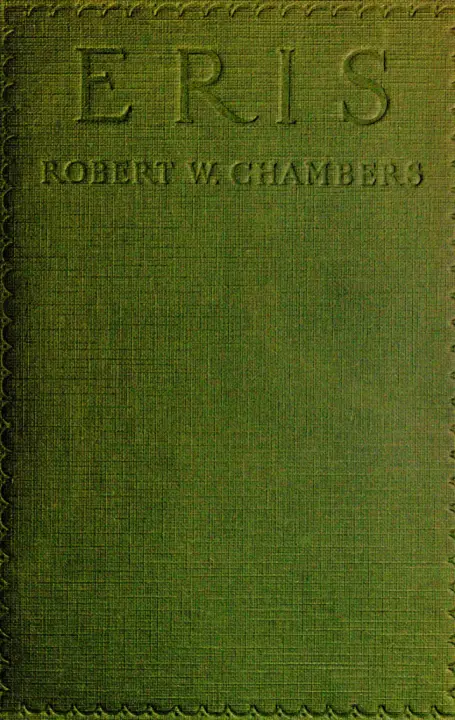
"Eris" by Robert W. Chambers is a novel written in the early 20th century. The narrative follows the life of a girl named Eris, who grapples with her identity and aspirations amidst the backdrop of her family, farm life, and societal expectations. The story begins with her birth and unfolds the tensions and struggles of her parents, particularly her father, Elmer Odell, who yearns for sons to help with the farm instead of the daughter he receives. At the start of the novel, we are introduced to the Odell family as Elmer navigates his disappointment with having a daughter after twenty years of marriage without children. After Fanny, Eris's mother, gives birth under difficult circumstances, she ultimately passes away, and Eris becomes a focal point for her father's frustrations and unfulfilled desires. As Eris grows, she exhibits a keen curiosity about the world beyond her rural life, and an aspiration to pursue the arts—a journey that leads her away from the constricting expectations of her family. The opening portion of the book establishes a tense family dynamic, hints at themes of discord and aspiration, and sets the stage for Eris's struggle between her identity as "the daughter of discord" and her ambition to learn and grow beyond her environment.
Introduction adapted from the source catalogue; source summaries may be automatically generated.
Free to read · English · 87,191 words · No account needed
MAKE TIME FOR A GOOD BOOK
On by default. Untick to stop anonymous reading totals. Each page counts after 10 seconds in view. How this works.
Anonymous counting is on unless you have switched it off.
In March a Betsy Blythe film was shown at The Looking Glass,--following that first film, parts of which he had seen the previous autumn in the projection room.
Once or twice he attempted to see the new picture--rather as a sort of obligation--but the place was crowded. Somehow time passed very swiftly for Annan; and when again he thought about it the picture was gone; and a new Betsy Blythe picture had replaced it,--playing to a crowded house as before;--and Annan went once, failed to get in, and let it slip his memory.
Not that his conscience did not meddle with his complacency at times.
It did.
Her last three letters still remained unanswered.
But his novel was the vital, supreme thing which crowded out all else--even the several pretty and receptive girls whose stellar orbits had intersected his during the winter and early spring.
The joy of literary achievement was his chiefest pleasure; its perils his excitement, its fatigue the principal sleep-inducer that sent him at last to a tardy pillow.
Coltfoot read a typed copy.
“It’ll be the making of you, I suppose,” he said, “but it’s all wrong, Barry. Popular and punk!”
“Why the devil do you say that?”
“It is wrong.”
They were dining at Annan’s à deux, and had strolled into the living-room with their cigars.
“You sit down, Mike, and tell me why my book is popular and punk!” said
Annan wrathfully.
Coltfoot dropped onto the piano stool, sounded a few dissonances evolved by a master-modernist; sneered.
“Barry,” he said, “if art isn’t wholesome it’s only near-art. What is good is also healthy. If art is good it is sane, always; and always beautiful.”
“I’ve heard that song you sing. It’s an ancient rag, Mike.”
“It’s real music, Barry--not this!--” he struck a series of dissonant, ugly, half-crazed chords from the most modern creation of the most modern of modernists. “That’s diseased,” he said. “There is no virtue, no beauty, no art in disease.”
“Of course,” remarked Annan, “I might mention ambergris, paté-de-fois-gras, the virtues of ergot, the play of colour, and the flower-like perfume of a dying grayling, and the----”
“If you’re going to be flippant----”
“No. Go on, Mike.”
“Barry, do you understand the origin of this modern ‘revolt’--this sinister cult of dullness, perversity, ugliness? It was born in Bolshevism. Which is degeneracy. It is the worship of ugliness. It is known to scientists as Satanism.
“Once the prisons and asylums were the ultimate destinations of the degenerate. Because degenerates, then, had no safe outlet in the fine arts. Their manifestations were matters for police control.
Your reading position is saved on this browser. Take it to another device with a library code. Reading pages adapt to text, rather than matching a printed edition.
Robert W. (Robert William) Chambers
Robert W. (Robert William) Chambers
Robert W. (Robert William) Chambers

Robert W. (Robert William) Chambers
BEHIND THE BOOK
This eBook is for the use of anyone anywhere in the United States and most other parts of the world at no cost and with almost no restrictions whatsoever. You may copy it, give it away or re-use it under the terms of the Project Gutenberg License included with this eBook or online at www.gutenberg.org. If you are not located in the United States, you will have to check the laws of the country where you are located before using this eBook. Read the source licence.
The original source file, including credits and licence, is retained by this library. Request an original-format copy at no charge. Please include the book title and Project Gutenberg identifier #67856.
KEEP YOUR CURIOSITY GOING
Coulson Kernahan

Maurice Baring
Frances Wright
Cécile Tormay

Frederic Jesup Stimson

W. H. P. (William Henry Pope) Jarvis