THE CLASSIC COLLECTION✦The haunts of menCLASSIC FREE BOOKS
The haunts of men
Robert W. (Robert William) Chambers
THE CLASSIC COLLECTION · 1922
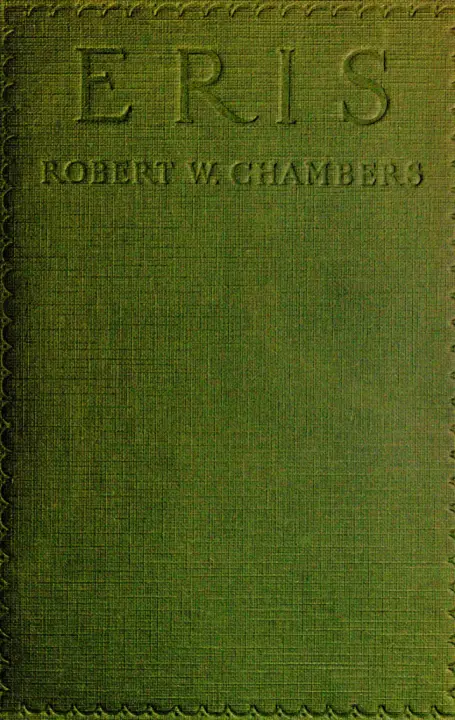
"Eris" by Robert W. Chambers is a novel written in the early 20th century. The narrative follows the life of a girl named Eris, who grapples with her identity and aspirations amidst the backdrop of her family, farm life, and societal expectations. The story begins with her birth and unfolds the tensions and struggles of her parents, particularly her father, Elmer Odell, who yearns for sons to help with the farm instead of the daughter he receives. At the start of the novel, we are introduced to the Odell family as Elmer navigates his disappointment with having a daughter after twenty years of marriage without children. After Fanny, Eris's mother, gives birth under difficult circumstances, she ultimately passes away, and Eris becomes a focal point for her father's frustrations and unfulfilled desires. As Eris grows, she exhibits a keen curiosity about the world beyond her rural life, and an aspiration to pursue the arts—a journey that leads her away from the constricting expectations of her family. The opening portion of the book establishes a tense family dynamic, hints at themes of discord and aspiration, and sets the stage for Eris's struggle between her identity as "the daughter of discord" and her ambition to learn and grow beyond her environment.
Introduction adapted from the source catalogue; source summaries may be automatically generated.
Free to read · English · 87,191 words · No account needed
MAKE TIME FOR A GOOD BOOK
On by default. Untick to stop anonymous reading totals. Each page counts after 10 seconds in view. How this works.
Anonymous counting is on unless you have switched it off.
Nothing ever had so appealed, so moved this sophisticated young man. And, add the girl’s beauty, and nascent talent to that, the total was too much for him--might have been too much for older and more level heads than Barry Annan’s.
“Thursday,” he whispered, as she slowly released her hand from his--freed it with a sort of winning reluctance.
“Yes,” she breathed, “at seven.”
“And many, many other hours together,” he added fervently.
“Oh, I hope so.... Thank you, Mr. Annan.”
Sitting in silence there he had a confused idea that never had he encountered a feminine mind so utterly purged of material sentiment.
“It behooves me to keep my own brain as clear,” he thought, vaguely,--seeming to realise that it was no longer entirely so.
Suddenly the drone of the machine ceased; the lights went on; the
screen faded.
All around him people stirred, rose, turned to exchange impressions,
congratulations.
The light sobered Annan. He turned almost apprehensively to look at
Eris.
Something radical happened to him as he met her grey eyes,--crystal-clear eyes, beautiful, unabashed.
“Good-bye,” he said in a voice that sounded odd in his own ears.
Once more he took her hand, and the contact stirred him to definite emotion. Had she been experienced she could have seen much to astonish and trouble her girl’s soul in this young man’s face.
“Good-bye,” she said with adorable frankness, “--and thank
you--always--Mr. Annan.”
As he went away toward the corridor where Coltfoot stood talking to Rosalind, he began to realise that something had happened to him.
Rosalind, seeing him, crinkled her eyes and wrinkled her fascinating
nose:
“Did you turn her head, Barry? Is that child to follow Betsy and myself? Everybody noticed you.”
He said, annoyed: “She wouldn’t consider that very humorous.”
Rosalind’s dark eyes widened lazily: “Did you suppose I meant it, Barry? You’re rather crude for a subtle novelist, aren’t you?”
“She wouldn’t understand it,” he repeated, annoyed. “She’s an unusually sensitive girl.”
He went on along the corridor to take leave of Frank Donnell.
Rosalind looked at Coltfoot, inclined to giggle.
“Don’t think it,” said Coltfoot with a shrug.
“I don’t know--” Rosalind turned and looked across at Eris. Smull had seated himself beside her in Annan’s chair. Other men gathered around her. Her beauty startled Rosalind.
“It would be funny,” she said. “That child has no heart. Neither has Barry Annan.... They’re merely a pair of minds.... It would be funny if they became entangled ... intellectually.”
Your reading position is saved on this browser. Take it to another device with a library code. Reading pages adapt to text, rather than matching a printed edition.
Robert W. (Robert William) Chambers
Robert W. (Robert William) Chambers
Robert W. (Robert William) Chambers

Robert W. (Robert William) Chambers
BEHIND THE BOOK
This eBook is for the use of anyone anywhere in the United States and most other parts of the world at no cost and with almost no restrictions whatsoever. You may copy it, give it away or re-use it under the terms of the Project Gutenberg License included with this eBook or online at www.gutenberg.org. If you are not located in the United States, you will have to check the laws of the country where you are located before using this eBook. Read the source licence.
The original source file, including credits and licence, is retained by this library. Request an original-format copy at no charge. Please include the book title and Project Gutenberg identifier #67856.
KEEP YOUR CURIOSITY GOING
Coulson Kernahan

Maurice Baring
Frances Wright
Cécile Tormay

Frederic Jesup Stimson

W. H. P. (William Henry Pope) Jarvis