THE CLASSIC COLLECTION✦The haunts of menCLASSIC FREE BOOKS
The haunts of men
Robert W. (Robert William) Chambers
THE CLASSIC COLLECTION · 1922
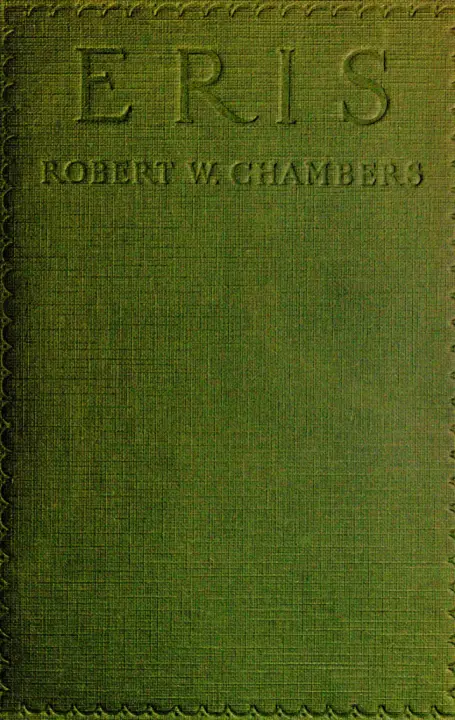
"Eris" by Robert W. Chambers is a novel written in the early 20th century. The narrative follows the life of a girl named Eris, who grapples with her identity and aspirations amidst the backdrop of her family, farm life, and societal expectations. The story begins with her birth and unfolds the tensions and struggles of her parents, particularly her father, Elmer Odell, who yearns for sons to help with the farm instead of the daughter he receives. At the start of the novel, we are introduced to the Odell family as Elmer navigates his disappointment with having a daughter after twenty years of marriage without children. After Fanny, Eris's mother, gives birth under difficult circumstances, she ultimately passes away, and Eris becomes a focal point for her father's frustrations and unfulfilled desires. As Eris grows, she exhibits a keen curiosity about the world beyond her rural life, and an aspiration to pursue the arts—a journey that leads her away from the constricting expectations of her family. The opening portion of the book establishes a tense family dynamic, hints at themes of discord and aspiration, and sets the stage for Eris's struggle between her identity as "the daughter of discord" and her ambition to learn and grow beyond her environment.
Introduction adapted from the source catalogue; source summaries may be automatically generated.
Free to read · English · 87,191 words · No account needed
MAKE TIME FOR A GOOD BOOK
On by default. Untick to stop anonymous reading totals. Each page counts after 10 seconds in view. How this works.
Anonymous counting is on unless you have switched it off.
“Anywhere you choose. The Ritz?”
“I haven’t--suitable clothes----”
“If you feel that way, will you dine with me at my house?”
“You’re so kind, Mr. Annan. I’d love to! When may I----”
Their whispering was making somebody in front restless. Annan’s slight pressure on her arm silenced her. He seemed to recollect that Mr. Smull sat directly in front of Eris; and, again, very vaguely he was conscious of irritation.
There was no use in attempting to guess at the story which the machine above was steadily unreeling. It all seemed an inconsequential jumble of repetitions, full of aggravating close-ups--which better taste, some day, will eliminate from the screen.
When he thought Mr. Smull was again quiescent, Annan placed his lips close to the unseen ear of the girl beside him:
“Come Thursday at seven.... Shall I ask anybody else?”
She shook her head. Then, turning impulsively to whisper to him, in the darkness her lips brushed his.
Instantly she recoiled, almost upsetting her chair, and he caught it
and steadied her.
His inclination to laugh subsided. He could not see her face, but, in the chilled silence, he was conscious of her dismay and of her rigid body beside him.
The shock of contact confused him, too. A delicate perfume of chaste youth seemed to cling to him, invade him, disturbing his natural ease and fluency. For the first time in his life, perhaps, he found nothing flippant to say.
For a long while they remained mute, unstirring, as the endless reel
droned on and on.
Finally,--and very careful not to touch her,--he ventured to whisper:
“Why not make it this evening--unless you are otherwise engaged?”
He could scarcely hear her reply: “Mr. Smull is giving a dinner for Betsy. I promised to go.”
“Who is giving the party?”
“Mr. Smull.”
Again he experienced a vague sense of irritation.
“I thought you had no dinner gown,” he said drily.
“Betsy offered me one of hers.”
After a silence he said cheerfully: “I hope you’ll have a gay evening, Eris. Call me up when you care to dine with me.”
They watched the screen for a while, not speaking. Presently, however, she whispered: “I wish I could, to-night. I’d rather be with you. I’ve waited so long.... And now--I can’t! And I’m heartbroken, Mr. Annan.”
He was beginning to realise that the candour of this girl held an unsuspected but unmistakable charm for him. He said under his breath:
“I’ll drive you home when this is over. We can plan things then.”
“I can’t, Mr. Annan. Mr. Smull has offered to drive me home.”
Your reading position is saved on this browser. Take it to another device with a library code. Reading pages adapt to text, rather than matching a printed edition.
Robert W. (Robert William) Chambers
Robert W. (Robert William) Chambers
Robert W. (Robert William) Chambers

Robert W. (Robert William) Chambers
BEHIND THE BOOK
This eBook is for the use of anyone anywhere in the United States and most other parts of the world at no cost and with almost no restrictions whatsoever. You may copy it, give it away or re-use it under the terms of the Project Gutenberg License included with this eBook or online at www.gutenberg.org. If you are not located in the United States, you will have to check the laws of the country where you are located before using this eBook. Read the source licence.
The original source file, including credits and licence, is retained by this library. Request an original-format copy at no charge. Please include the book title and Project Gutenberg identifier #67856.
KEEP YOUR CURIOSITY GOING
Coulson Kernahan

Maurice Baring
Frances Wright
Cécile Tormay

Frederic Jesup Stimson

W. H. P. (William Henry Pope) Jarvis