THE CLASSIC COLLECTION✦The haunts of menCLASSIC FREE BOOKS
The haunts of men
Robert W. (Robert William) Chambers
THE CLASSIC COLLECTION · 1922
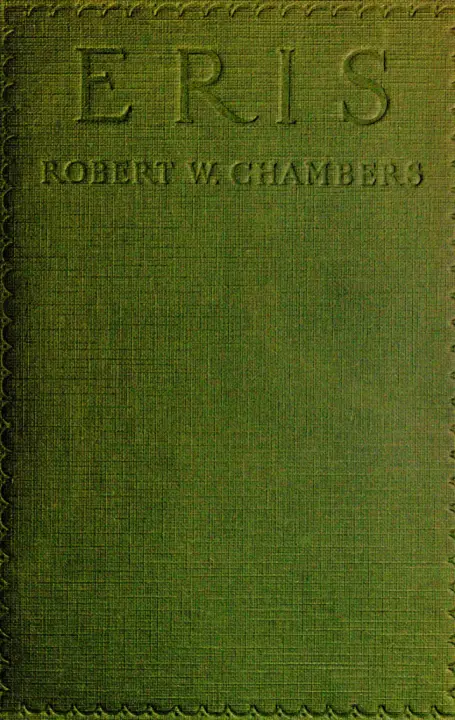
"Eris" by Robert W. Chambers is a novel written in the early 20th century. The narrative follows the life of a girl named Eris, who grapples with her identity and aspirations amidst the backdrop of her family, farm life, and societal expectations. The story begins with her birth and unfolds the tensions and struggles of her parents, particularly her father, Elmer Odell, who yearns for sons to help with the farm instead of the daughter he receives. At the start of the novel, we are introduced to the Odell family as Elmer navigates his disappointment with having a daughter after twenty years of marriage without children. After Fanny, Eris's mother, gives birth under difficult circumstances, she ultimately passes away, and Eris becomes a focal point for her father's frustrations and unfulfilled desires. As Eris grows, she exhibits a keen curiosity about the world beyond her rural life, and an aspiration to pursue the arts—a journey that leads her away from the constricting expectations of her family. The opening portion of the book establishes a tense family dynamic, hints at themes of discord and aspiration, and sets the stage for Eris's struggle between her identity as "the daughter of discord" and her ambition to learn and grow beyond her environment.
Introduction adapted from the source catalogue; source summaries may be automatically generated.
Free to read · English · 87,191 words · No account needed
MAKE TIME FOR A GOOD BOOK
On by default. Untick to stop anonymous reading totals. Each page counts after 10 seconds in view. How this works.
Anonymous counting is on unless you have switched it off.
That evening Annan made himself some black coffee and wrote his farewell article for Coltfoot. It took him only half an hour and it left him too much keyed up for sleep. He called his article: “The Great American Ass.”
“September flowers gone to seed,” it began, deceptively; “withering leaves and dry dirt--the Park and Fifth Avenue at their shabbiest. Streets torn up, piles of sand, escaping steam, puddles of mortar, red flag and red lantern crowning the débris, and the whole mess stinking of illuminating gas: heat, dirt, noise--unnecessary, incessant, hellish noise--seven million sweating people milling like maggots in the midst--your New York, fellow citizens, on an unwashed platter!
“Of the metropolis itself there is scarcely any beauty--a church here, an office-building there, one or two statues, a few dwellings:
“In the metropolis there is more beauty than anywhere else in the world. It is to be found in the faces and figures of its women and children.
“For the beauty of woman is as usual in New York as it is rare in the capitals of Europe. Without the charm, symmetry, vivacity of the faces of her women, New York would be, indeed, the ugliest, dingiest, and stupidest metropolis in the world.
“Flower-like her pretty women bloom all over the arid, treeless agglomeration of mortar and metal, serene amid the asinine clamour; smiling, piquant, nourished by suffocating heat, flourishing in arctic cold, hardy, healthy, wonderful in the vast abiding place of the Great American Ass,--New York.
“Here is his stronghold and he runs it to suit himself. Any woman manages her own flat far better.
“For your New Yorker comes of an untidy race, knowing neither civic nor national pride in the proper sense.
“His forefathers cleared forests and lived among charred stumps. He is aware of no inborn necessity for beauty.
“New York is the wastrel among states. Her sons pollute streams; her country roads are vistas of bill-boards; even the ‘eternal’ hills that line the Hudson crumble daily into cement. Here the Great American Ass found a Paradise and created a Dump. He ravages, stamps out, obliterates the lovely face of nature,--digs, burns, crushes, tramples. Hundreds of miles of ghastly, charred forests mark the trail of the Great American Ass among his mountains. Filthy sea-waves dash his refuse upon his shores.
“Loud, wanton, strident, and painted his metropolis sprawls, unbuttoned, on the island leering at ugliness and devastation. And, in her dirty ears, the ceaseless and complacent braying of the Great American Ass. Her lover, Bottom, the eternal New Yorker.
“Any woman’s kitchen is cleaner and her household run with greater
economy.
Your reading position is saved on this browser. Take it to another device with a library code. Reading pages adapt to text, rather than matching a printed edition.
Robert W. (Robert William) Chambers
Robert W. (Robert William) Chambers
Robert W. (Robert William) Chambers

Robert W. (Robert William) Chambers
BEHIND THE BOOK
This eBook is for the use of anyone anywhere in the United States and most other parts of the world at no cost and with almost no restrictions whatsoever. You may copy it, give it away or re-use it under the terms of the Project Gutenberg License included with this eBook or online at www.gutenberg.org. If you are not located in the United States, you will have to check the laws of the country where you are located before using this eBook. Read the source licence.
The original source file, including credits and licence, is retained by this library. Request an original-format copy at no charge. Please include the book title and Project Gutenberg identifier #67856.
KEEP YOUR CURIOSITY GOING
Coulson Kernahan

Maurice Baring
Frances Wright
Cécile Tormay

Frederic Jesup Stimson

W. H. P. (William Henry Pope) Jarvis