THE CLASSIC COLLECTION✦The haunts of menCLASSIC FREE BOOKS
The haunts of men
Robert W. (Robert William) Chambers
THE CLASSIC COLLECTION · 1922
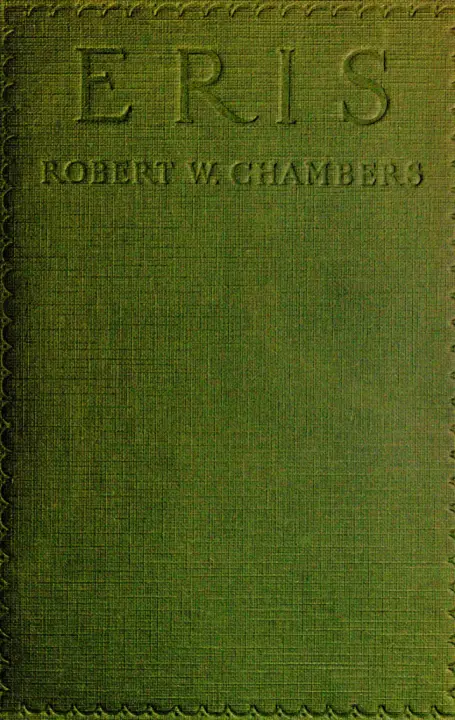
"Eris" by Robert W. Chambers is a novel written in the early 20th century. The narrative follows the life of a girl named Eris, who grapples with her identity and aspirations amidst the backdrop of her family, farm life, and societal expectations. The story begins with her birth and unfolds the tensions and struggles of her parents, particularly her father, Elmer Odell, who yearns for sons to help with the farm instead of the daughter he receives. At the start of the novel, we are introduced to the Odell family as Elmer navigates his disappointment with having a daughter after twenty years of marriage without children. After Fanny, Eris's mother, gives birth under difficult circumstances, she ultimately passes away, and Eris becomes a focal point for her father's frustrations and unfulfilled desires. As Eris grows, she exhibits a keen curiosity about the world beyond her rural life, and an aspiration to pursue the arts—a journey that leads her away from the constricting expectations of her family. The opening portion of the book establishes a tense family dynamic, hints at themes of discord and aspiration, and sets the stage for Eris's struggle between her identity as "the daughter of discord" and her ambition to learn and grow beyond her environment.
Introduction adapted from the source catalogue; source summaries may be automatically generated.
Free to read · English · 87,191 words · No account needed
MAKE TIME FOR A GOOD BOOK
On by default. Untick to stop anonymous reading totals. Each page counts after 10 seconds in view. How this works.
Anonymous counting is on unless you have switched it off.
“Mr. Barry,” she said in an oddly altered voice, “that child is sick. She couldn’t keep her breakfast down.”
“For heaven’s sake----”
“I made her some broth for luncheon. No use at all. She couldn’t keep
it.”
“What do you suppose is the matter with her?” he demanded nervously.
“Starvation. That’s my idea, sir. She’s that bony, Mr. Barry--no flesh on ’er except ’er ’ands and face,--and every rib to be seen plain as my nose!”
“You think she hasn’t had enough to eat?”
“That, and the stuff she did eat--and what with walking the streets in this ’eat and sleeping out in the Park----”
Mrs. Sniffen hauled up the dumb-waiter and lifted off a covered dish.
“Toasted biscuit,” she explained. “She can’t a-bear anything ’earty,
Mr. Barry.”
“Well,” he said, troubled, “what are we going to do with her?”
“That’s for you to say, sir. You brought ’er ’ere.”
He looked at Mrs. Sniffen and thought he detected a glimmer of
satisfaction at his predicament.
“Where is she?” he asked.
“In bed, sir. She wants to dress and go away but I wouldn’t ’ave it, Mr. Barry. Ambulance and ’ospital--that’s what would ’appen next. And I ’ad a time with her, Mr. Barry. She said she was in the way and didn’t want to give trouble. Hup she must get and h’off to the streets--But I ’ad ’er clothes I did, soaking in my tubs.... I let ’er cry. I don’t say it ’urt ’er, either. It ’elped, according to my way of thinking.”
“She can’t go if she’s ill,” he said; and looked at Mrs. Sniffen rather helplessly: “Do you think I’d better call in a doctor?”
“No, sir. I don’t mind looking out for her. A little care is all she
needs.”
After a moment’s frowning reflection: “It will be awkward to-night,” he
suggested.
Mrs. Sniffen’s nose went up: “The ladies will ’ave to powder their faces in your room, Mr. Barry, and keep their ’ands off the piano.”
He scowled at the prospect, then: “Here, give me that tray. I’ll feed
her myself.”
He went upstairs with the tray, knocked at the closed door.
“Tuck yourself in,” he called to her. “I’ve come to nourish you. All
set?”
After a few moments: “Yes,” she said calmly.
He went in. She sat huddled up in bed, swathed to the throat in a blue
crash bath-robe.
“Well”, he exclaimed gaily, “I hear unruly reports about you. What do you mean by demanding to get up and beat it?”
Your reading position is saved on this browser. Take it to another device with a library code. Reading pages adapt to text, rather than matching a printed edition.
Robert W. (Robert William) Chambers
Robert W. (Robert William) Chambers
Robert W. (Robert William) Chambers

Robert W. (Robert William) Chambers
BEHIND THE BOOK
This eBook is for the use of anyone anywhere in the United States and most other parts of the world at no cost and with almost no restrictions whatsoever. You may copy it, give it away or re-use it under the terms of the Project Gutenberg License included with this eBook or online at www.gutenberg.org. If you are not located in the United States, you will have to check the laws of the country where you are located before using this eBook. Read the source licence.
The original source file, including credits and licence, is retained by this library. Request an original-format copy at no charge. Please include the book title and Project Gutenberg identifier #67856.
KEEP YOUR CURIOSITY GOING
Coulson Kernahan

Maurice Baring
Frances Wright
Cécile Tormay

Frederic Jesup Stimson

W. H. P. (William Henry Pope) Jarvis