THE CLASSIC COLLECTION✦The haunts of menCLASSIC FREE BOOKS
The haunts of men
Robert W. (Robert William) Chambers
THE CLASSIC COLLECTION · 1922
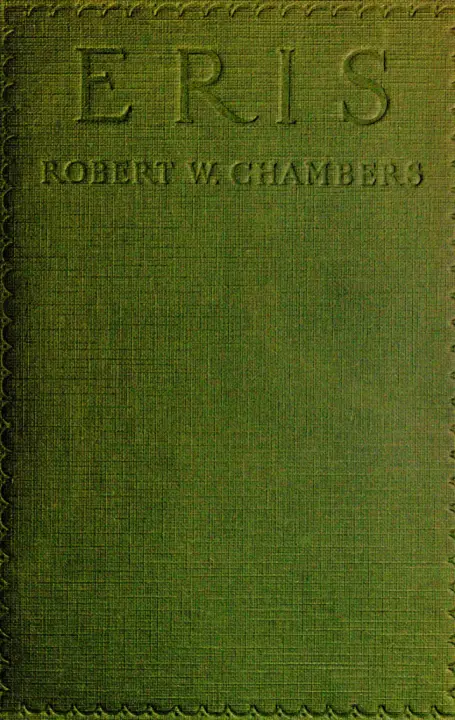
"Eris" by Robert W. Chambers is a novel written in the early 20th century. The narrative follows the life of a girl named Eris, who grapples with her identity and aspirations amidst the backdrop of her family, farm life, and societal expectations. The story begins with her birth and unfolds the tensions and struggles of her parents, particularly her father, Elmer Odell, who yearns for sons to help with the farm instead of the daughter he receives. At the start of the novel, we are introduced to the Odell family as Elmer navigates his disappointment with having a daughter after twenty years of marriage without children. After Fanny, Eris's mother, gives birth under difficult circumstances, she ultimately passes away, and Eris becomes a focal point for her father's frustrations and unfulfilled desires. As Eris grows, she exhibits a keen curiosity about the world beyond her rural life, and an aspiration to pursue the arts—a journey that leads her away from the constricting expectations of her family. The opening portion of the book establishes a tense family dynamic, hints at themes of discord and aspiration, and sets the stage for Eris's struggle between her identity as "the daughter of discord" and her ambition to learn and grow beyond her environment.
Introduction adapted from the source catalogue; source summaries may be automatically generated.
Free to read · English · 87,191 words · No account needed
MAKE TIME FOR A GOOD BOOK
On by default. Untick to stop anonymous reading totals. Each page counts after 10 seconds in view. How this works.
Anonymous counting is on unless you have switched it off.
Rereading it, he realised it had all the concentrated brilliancy of an epigram. Whether or not it would hold water did not bother him. The story of Eris was Barry Annan at his easiest and most persuasive. There was the characteristic and ungodly skill in it, the subtle partnership with a mindless public that seduces to mental speculation; the reassuring caress as reward for intellectual penetration; that inborn cleverness that makes the reader see, applaud, or pity him or herself in the sympathetic rôle of a plaything of Chance and Fate.
And always Barry Annan left the victim of his tact and technique agreeably trapped, suffering gratefully, excited by self-approval to the verge of sentimental tears.
“That’ll make ’em ruffle their plumage and gulp down a sob or two,” he reflected, his tongue in his cheek, a little intoxicated, as usual, by his own infernal facility.
He lit a cigarette, shuffled his manuscript, numbered the pages, and stuffed them into his pocket. The damned thing was done.
Walking to the window he looked out into Governor’s Place--one of those ancient and forgotten Greenwich streets, and now very still and deserted in the intense July sunshine.
Already the hazy morning threatened to be hotter than its humid predecessors. Nothing stirred in the street, not a cat, not an iceman, not even a sparrow.
Tall old trees, catalpa, maple, ailanthus,--remnants of those old-time double ranks that once lined both sidewalks,--spread solitary pools of shade over flagstone and asphalt. All else lay naked in the glare.
Mrs. Sniffen appeared, starched to the throat, crisp, unperspiring in
her calico.
“She’s ’ad her breakfast, sir.”
“Oh! How is she feeling?”
“Could you lend her a bath-robe and slippers, sir?”
He smiled: “Has she concluded to stay here indefinitely?”
“Her clothes are in the tub, Mr. Barry.”
“In the bath-tub?”
“In the laundry tub.”
“Oh. So you’re going to do her laundry for her!”
“It’s no trouble, sir. I can ’ave them for her by early afternoon.”
“You’re a duck, Xantippe. You look after her. I’m going down-town to the office. Give her some lunch.”
“Very good, sir.”
He followed Mrs. Sniffen to the corridor, where his straw hat and
malacca stick hung on a peg.
“Am I right, or is she a hussie?” he inquired, mischievously.
“She’s an idjit,” snapped Mrs. Sniffen. “Spanking is what she needs.”
“You give her one,” he suggested in guarded tones, glancing instinctively at the closed door beyond.
“Shall you be back to lunch, sir?”
He was descending the stairs, his story bulging in his coat pocket.
Your reading position is saved on this browser. Take it to another device with a library code. Reading pages adapt to text, rather than matching a printed edition.
Robert W. (Robert William) Chambers
Robert W. (Robert William) Chambers
Robert W. (Robert William) Chambers

Robert W. (Robert William) Chambers
BEHIND THE BOOK
This eBook is for the use of anyone anywhere in the United States and most other parts of the world at no cost and with almost no restrictions whatsoever. You may copy it, give it away or re-use it under the terms of the Project Gutenberg License included with this eBook or online at www.gutenberg.org. If you are not located in the United States, you will have to check the laws of the country where you are located before using this eBook. Read the source licence.
The original source file, including credits and licence, is retained by this library. Request an original-format copy at no charge. Please include the book title and Project Gutenberg identifier #67856.
KEEP YOUR CURIOSITY GOING
Coulson Kernahan

Maurice Baring
Frances Wright
Cécile Tormay

Frederic Jesup Stimson

W. H. P. (William Henry Pope) Jarvis