THE CLASSIC COLLECTION✦The haunts of menCLASSIC FREE BOOKS
The haunts of men
Robert W. (Robert William) Chambers
THE CLASSIC COLLECTION · 1922
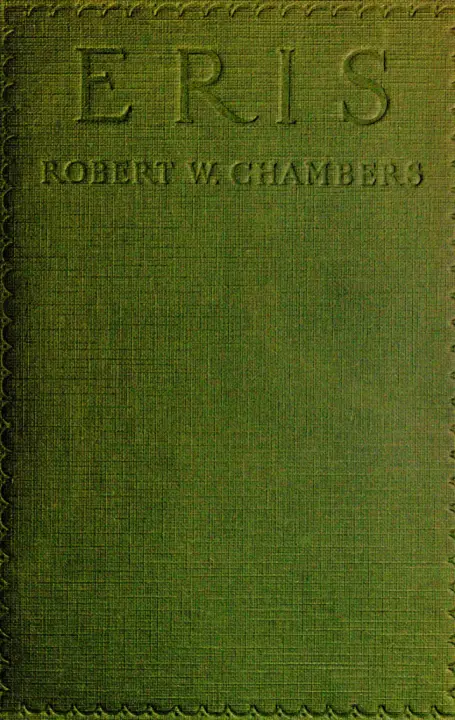
"Eris" by Robert W. Chambers is a novel written in the early 20th century. The narrative follows the life of a girl named Eris, who grapples with her identity and aspirations amidst the backdrop of her family, farm life, and societal expectations. The story begins with her birth and unfolds the tensions and struggles of her parents, particularly her father, Elmer Odell, who yearns for sons to help with the farm instead of the daughter he receives. At the start of the novel, we are introduced to the Odell family as Elmer navigates his disappointment with having a daughter after twenty years of marriage without children. After Fanny, Eris's mother, gives birth under difficult circumstances, she ultimately passes away, and Eris becomes a focal point for her father's frustrations and unfulfilled desires. As Eris grows, she exhibits a keen curiosity about the world beyond her rural life, and an aspiration to pursue the arts—a journey that leads her away from the constricting expectations of her family. The opening portion of the book establishes a tense family dynamic, hints at themes of discord and aspiration, and sets the stage for Eris's struggle between her identity as "the daughter of discord" and her ambition to learn and grow beyond her environment.
Introduction adapted from the source catalogue; source summaries may be automatically generated.
Free to read · English · 87,191 words · No account needed
MAKE TIME FOR A GOOD BOOK
On by default. Untick to stop anonymous reading totals. Each page counts after 10 seconds in view. How this works.
Anonymous counting is on unless you have switched it off.
“Darling--don’t speak that way--even in jest----”
“I want a shrine for myself. I won’t interfere with the other god----”
“--When I tell you you’re the only man in the world!----”
“I want you to engage yourself to me. You can take your time about marrying me if you’re afraid it will spoil your career. But I want the world to know we’re engaged.”
“Why, dear?” she asked in uneasy surprise.
“Because that will place us both, definitely.”
“Goodness,” she murmured uncertainly, “I didn’t suppose that falling in love was so complicated.... Darling! I haven’t time to--to find out how to get rid of that man, now; or do it, either----”
“It will have to be done sooner or later,” he insisted. “And that’s
that, as you say.”
Until coffee was served they spoke rarely and of other matters.
After coffee, in the living-room, she brought out a packet of stills to show him. They went over them, minutely, consulting, criticising, she explaining every picture and its relation to the continuity.
“You should hear Mr. Creevy bellow, ‘Hold it! Hold it! D’ye think I told you to shimmy?’ Oh, he is rough, Barry. The first time I heard him bawl out, ‘Kill that nigger!’ I was terrified: I thought there was going to be a lynching----”
They sat laughing uncontrollably at each other.
“You imitate Creevy’s cracked contralto voice,” said Annan. “I didn’t know you were a mimic, Eris.”
“Didn’t you?” And she laughed adorably. Then, suddenly, Ratford Creevy’s high-pitched, irritated voice came again from her lips: “‘Everybody! Everybody! Yaas, you, too, you poor dumbbell! Get on there.... Eris! Eris! My Gawd, where’s that amateur!... Well, where were you?... Well, stand up next time.... Lights!... Hey, where’s that amateur camera-man.... Where the hell’s Shunk? Emil! Emil!----’”
His laughter and her own checked her and she leaned back, the stills sliding from her lap to the floor.
Together they squatted down like two children to gather the litter of scattered photographs, interrupting to touch lips, lightly; and finally he dumped the stills onto a table and drew her to the lounge and gathered her close.
“You know, sweet, the reasonable goal of real love is marriage. Don’t
you know that?”
“Darling!”
“Isn’t it?”
She looked at him uncertainly.
“Isn’t it?” he insisted.
“Sometimes.”
“Always, ultimately. You realise that, don’t you, Eris?”
“Y-es.... Ultimately it’s the goal. But----”
“You love me enough to marry me, don’t you?”
“Now?”
“No, not now. Ultimately.”
Your reading position is saved on this browser. Take it to another device with a library code. Reading pages adapt to text, rather than matching a printed edition.
Robert W. (Robert William) Chambers
Robert W. (Robert William) Chambers
Robert W. (Robert William) Chambers

Robert W. (Robert William) Chambers
BEHIND THE BOOK
This eBook is for the use of anyone anywhere in the United States and most other parts of the world at no cost and with almost no restrictions whatsoever. You may copy it, give it away or re-use it under the terms of the Project Gutenberg License included with this eBook or online at www.gutenberg.org. If you are not located in the United States, you will have to check the laws of the country where you are located before using this eBook. Read the source licence.
The original source file, including credits and licence, is retained by this library. Request an original-format copy at no charge. Please include the book title and Project Gutenberg identifier #67856.
KEEP YOUR CURIOSITY GOING
Coulson Kernahan

Maurice Baring
Frances Wright
Cécile Tormay

Frederic Jesup Stimson

W. H. P. (William Henry Pope) Jarvis