THE CLASSIC COLLECTION✦The haunts of menCLASSIC FREE BOOKS
The haunts of men
Robert W. (Robert William) Chambers
THE CLASSIC COLLECTION · 1922
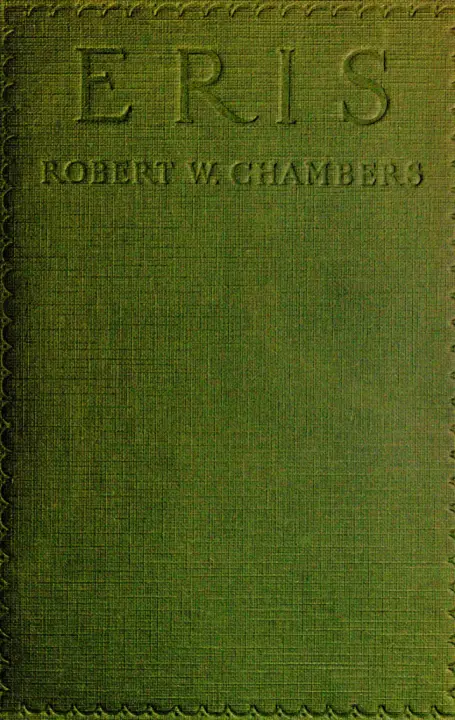
"Eris" by Robert W. Chambers is a novel written in the early 20th century. The narrative follows the life of a girl named Eris, who grapples with her identity and aspirations amidst the backdrop of her family, farm life, and societal expectations. The story begins with her birth and unfolds the tensions and struggles of her parents, particularly her father, Elmer Odell, who yearns for sons to help with the farm instead of the daughter he receives. At the start of the novel, we are introduced to the Odell family as Elmer navigates his disappointment with having a daughter after twenty years of marriage without children. After Fanny, Eris's mother, gives birth under difficult circumstances, she ultimately passes away, and Eris becomes a focal point for her father's frustrations and unfulfilled desires. As Eris grows, she exhibits a keen curiosity about the world beyond her rural life, and an aspiration to pursue the arts—a journey that leads her away from the constricting expectations of her family. The opening portion of the book establishes a tense family dynamic, hints at themes of discord and aspiration, and sets the stage for Eris's struggle between her identity as "the daughter of discord" and her ambition to learn and grow beyond her environment.
Introduction adapted from the source catalogue; source summaries may be automatically generated.
Free to read · English · 87,191 words · No account needed
MAKE TIME FOR A GOOD BOOK
On by default. Untick to stop anonymous reading totals. Each page counts after 10 seconds in view. How this works.
Anonymous counting is on unless you have switched it off.
“Thank you, Mr. Smull----”
The girl turned to Annan: “Mr. Smull wired me that he’d meet our train.... So thank you, too--for asking me.... I’m so sorry you have troubled to keep a taxi waiting for me----”
Smull, always smiling, turned to Annan: “Can’t we drop you somewhere,
old chap?”
Annan said: “Thanks, no.” And, looking at Eris with cool curiosity, he
took off his hat.
“I’m so glad you’re back,” he said. “I hope I may see you while you’re here. Good-night.”
“Good-night,” she replied, as though slightly confused.
Annan bowed pleasantly, including them both, and turned to the left along the rope. The girl went rather slowly away beside Smull, followed by the red-cap with her luggage.
Outside the station, on the ramp above, Annan found his taxi and got into it. All the way home he stared persistently at the chauffeur’s frowsy head; but, whatever his thoughts, nothing on his smoothly composed features betrayed them.
As he entered his house the telephone was ringing, and he went to the lower one in the butler’s pantry.
“Barry!”
“Yes.”
“Are you coming to dinner?”
“I had expected to.”
“Could you come now?”
“Where are you?”
“Why, at home, of course.”
“Alone?”
“Alone!----” she repeated. “Why, yes, of course I am alone. I said seven, but I want you now. I can’t wait. Do you mind?”
“All right,” he said drily. At such moments, in most young men in love, the asinine instinct dominates.
Still chilled by the unpleasant impression of an intimacy, the natural existence of which he had never thought about, he went to his room and got into a dinner jacket, sulkily.
As he was dressing it occurred to him that this was one sample of the sort of thing he was very likely to encounter. A rush of boyish jealousy and resentment flushed his face--irritation that the world should entertain any doubt as to his proprietary right in this girl.
It was high time that the world made no mistake about it. Men of Albert Smull’s sort had better understand what was his status vis-à-vis with Eris.
Intensely annoyed--and without any reason, as he realised--he went out in a characteristically masculine frame of mind, hailed a disreputable taxi on Greenwich Avenue, and drove to Jane Street.
The declining sun, not yet low enough to transmute its ugliness to terms Turneresque, searched out every atom of shabbiness and squalor in the humble street. And it all added to his sullen dissatisfaction.
Your reading position is saved on this browser. Take it to another device with a library code. Reading pages adapt to text, rather than matching a printed edition.
Robert W. (Robert William) Chambers
Robert W. (Robert William) Chambers
Robert W. (Robert William) Chambers

Robert W. (Robert William) Chambers
BEHIND THE BOOK
This eBook is for the use of anyone anywhere in the United States and most other parts of the world at no cost and with almost no restrictions whatsoever. You may copy it, give it away or re-use it under the terms of the Project Gutenberg License included with this eBook or online at www.gutenberg.org. If you are not located in the United States, you will have to check the laws of the country where you are located before using this eBook. Read the source licence.
The original source file, including credits and licence, is retained by this library. Request an original-format copy at no charge. Please include the book title and Project Gutenberg identifier #67856.
KEEP YOUR CURIOSITY GOING
Coulson Kernahan

Maurice Baring
Frances Wright
Cécile Tormay

Frederic Jesup Stimson

W. H. P. (William Henry Pope) Jarvis