THE CLASSIC COLLECTION✦The haunts of menCLASSIC FREE BOOKS
The haunts of men
Robert W. (Robert William) Chambers
THE CLASSIC COLLECTION · 1922
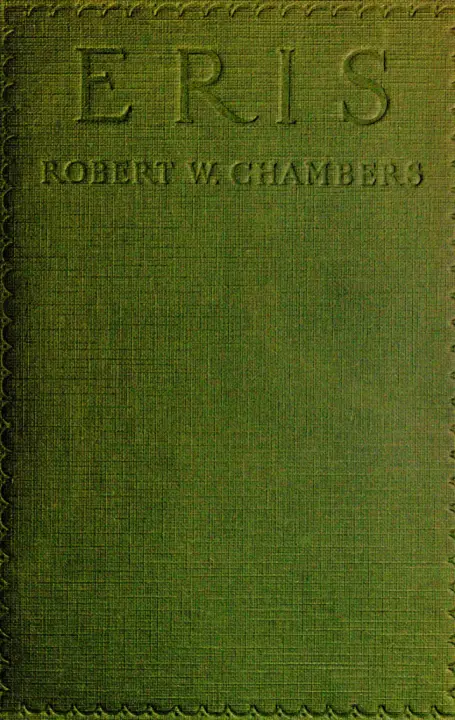
"Eris" by Robert W. Chambers is a novel written in the early 20th century. The narrative follows the life of a girl named Eris, who grapples with her identity and aspirations amidst the backdrop of her family, farm life, and societal expectations. The story begins with her birth and unfolds the tensions and struggles of her parents, particularly her father, Elmer Odell, who yearns for sons to help with the farm instead of the daughter he receives. At the start of the novel, we are introduced to the Odell family as Elmer navigates his disappointment with having a daughter after twenty years of marriage without children. After Fanny, Eris's mother, gives birth under difficult circumstances, she ultimately passes away, and Eris becomes a focal point for her father's frustrations and unfulfilled desires. As Eris grows, she exhibits a keen curiosity about the world beyond her rural life, and an aspiration to pursue the arts—a journey that leads her away from the constricting expectations of her family. The opening portion of the book establishes a tense family dynamic, hints at themes of discord and aspiration, and sets the stage for Eris's struggle between her identity as "the daughter of discord" and her ambition to learn and grow beyond her environment.
Introduction adapted from the source catalogue; source summaries may be automatically generated.
Free to read · English · 87,191 words · No account needed
MAKE TIME FOR A GOOD BOOK
On by default. Untick to stop anonymous reading totals. Each page counts after 10 seconds in view. How this works.
Anonymous counting is on unless you have switched it off.
He picked up the faded clove-pink, looked at it absently, laid it upon
his desk.
“So ‘that’s that,’ as she says sometimes.” He looked up smilingly at Mrs. Sniffen, then his smile degenerated into a grin: “Aunt Cornelia is in town. I’m lunching there.”
At one o’clock Annan sauntered up to the limestone portal.
“Hello, Jennings,” he said genially to a large, severe man who opened the door,--“the three most annoying things in the world are death, hay-fever, and nephews. The last are worst, because more frequent. Kindly prepare Mrs. Grandcourt.”
She was already in the drawing-room. She offered him the celebrated hand once compared to Queen Victoria’s. He saluted the accustomed pearl--the black one:
“Madame my Aunt, your most obedient----”
Her butler, Seaman, announced luncheon with the reverence of a Second-Adventist. Annan offered his arm to the dumpy old woman.
Only her thin, high-bridged, arrogant nose redeemed her features of a retired charwoman. Watery eyes inspected him across the table; a little withered chin tucked between dewlaps, a sagging, discontented mouth, a mottled skin, concluded the ensemble.
White lace collar and cuffs turned over the black gown did what was sartorially possible for Mrs. Magnelius Grandcourt. Otherwise, the famous string of cherry-sized pearls dangled to what should have been her waist.
“It appears,” she said, “that you still inhabit your alley.”
“Yes, Barry-in-our-alley,” he said cheerfully.
“When are you going to move to a suitable neighbourhood?” she inquired with that peculiar pitch of tone usually, in her sex, indicative of displeasure.
“I like to be quaint,” he explained, grinning.
After a pause and a shift to the next course: “I don’t know where you get your taste for squalour,” she said. “You didn’t inherit it.”
“Didn’t one of our ancestors haunt bar-maids?” he enquired guilelessly. “I always understood that was where we acquired our bar-sinister----”
“Come, Barry,” she said sharply; sat staring at him in a cold rage that Seaman’s ears should have been polluted by such a pleasantry.
Annan’s interior was riotous with laughter and his features crimsoned with it. But he only gazed inquiringly at his aunt; and the wretched incident waned.
They went into the library after luncheon. A secretary brought the
necessary papers.
Annan’s was a cheerful nature. There was no greed in it. In all questions, that might properly have become disputes concerning joint income and investment, he yielded good humouredly to her.
There was a more vulgar streak than thrift in Mrs. Magnelius Grandcourt. The majority of rich are infected with it.
However, family matters settled to her satisfaction, she seemed inclined to a more friendly attitude.
Your reading position is saved on this browser. Take it to another device with a library code. Reading pages adapt to text, rather than matching a printed edition.
Robert W. (Robert William) Chambers
Robert W. (Robert William) Chambers
Robert W. (Robert William) Chambers

Robert W. (Robert William) Chambers
BEHIND THE BOOK
This eBook is for the use of anyone anywhere in the United States and most other parts of the world at no cost and with almost no restrictions whatsoever. You may copy it, give it away or re-use it under the terms of the Project Gutenberg License included with this eBook or online at www.gutenberg.org. If you are not located in the United States, you will have to check the laws of the country where you are located before using this eBook. Read the source licence.
The original source file, including credits and licence, is retained by this library. Request an original-format copy at no charge. Please include the book title and Project Gutenberg identifier #67856.
KEEP YOUR CURIOSITY GOING
Coulson Kernahan

Maurice Baring
Frances Wright
Cécile Tormay

Frederic Jesup Stimson

W. H. P. (William Henry Pope) Jarvis