THE CLASSIC COLLECTION✦The haunts of menCLASSIC FREE BOOKS
The haunts of men
Robert W. (Robert William) Chambers
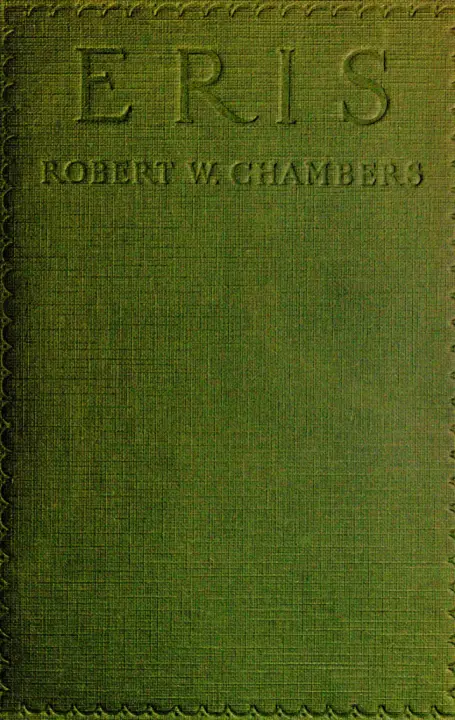
THE CLASSIC COLLECTION · 1922
"Eris" by Robert W. Chambers is a novel written in the early 20th century. The narrative follows the life of a girl named Eris, who grapples with her identity and aspirations amidst the backdrop of her family, farm life, and societal expectations. The story begins with her birth and unfolds the tensions and struggles of her parents, particularly her father, Elmer Odell, who yearns for sons to help with the farm instead of the daughter he receives. At the start of the novel, we are introduced to the Odell family as Elmer navigates his disappointment with having a daughter after twenty years of marriage without children. After Fanny, Eris's mother, gives birth under difficult circumstances, she ultimately passes away, and Eris becomes a focal point for her father's frustrations and unfulfilled desires. As Eris grows, she exhibits a keen curiosity about the world beyond her rural life, and an aspiration to pursue the arts—a journey that leads her away from the constricting expectations of her family. The opening portion of the book establishes a tense family dynamic, hints at themes of discord and aspiration, and sets the stage for Eris's struggle between her identity as "the daughter of discord" and her ambition to learn and grow beyond her environment.
Introduction adapted from the source catalogue; source summaries may be automatically generated.
Free to read · English · 87,191 words · No account needed
MAKE TIME FOR A GOOD BOOK
On by default. Untick to stop anonymous reading totals. Each page counts after 10 seconds in view. How this works.
Anonymous counting is on unless you have switched it off.
After dinner he played cowboy pool with Archie Mallison and Wilkes Bruce, winning as usual. For he did everything with the same facility that characterised his easy speech and manners--accurate without effort, naturally a technician, always graceful.
But a little of his own caste went a long way with Annan. Conversation at The Province, as well as at The Patroons, bored him very soon. So, having neatly disposed of Bruce and Mallison, he retired to the library--the only place he cared about in any club except when some old foozle went to sleep there and snored.
For an hour he dawdled among the great masters of written English, always curious, always charmed, unconsciously aware of a kinship between these immortals and himself.
For perhaps this young man was not unrelated, distantly, to that noble fellowship, though the subtle possibility had never entered his mind.
So he dallied among pages printed when writing was a fine art--and printing and binding, too; and about midnight he went below, put on his hat, and betook himself to The Looking Glass.
In the amusement district the tide of gaiety was still ebbing with the usual back-wash toward cabaret and midnight show.
The Looking Glass was dark and all doors closed, but there were many cars in waiting and a group of gossiping chauffeurs around the private entrance, where a gilded lamp burned.
Through this entrance he sauntered; a lift shot him upward; he disembarked amid a glare of light and a jolly tumult of string-music and laughter.
Somebody took his hat and stick and he walked into the directors’ suite of The Looking Glass.
There were a lot of people dancing in the handsome board-room--flowers, palms, orchestra--all the usual properties.
The supper room adjoining was gay with jewels and dinner-gowns, clink of silver, tinkle of glass, speeding of waiters flying like black shuttles through some rainbow fabric in the making.
Near the door a girl--one of a group--turned as he strolled up.
“Barry!” she exclaimed, and saluted him in Rialto fashion, with both arms on his shoulders and a typical district kiss.
“Thank you for my flowers, ducky,” added Rosalind, “and you’re a darling to come. Here’s Betsy, by the way----”
“Why, Betsy!” he said, taking her outstretched hands, “when did you arrive from the Coast?”
“Yesterday, my dear, and never was I so glad to see this wretched old town. To hear Californians talk you’d think you were buying a ticket to the Coast of Paradise. But I notice the Californians remain here----” She took him by both arms: “The same boy. You don’t look great. Do you feel very great, dear?”
Your reading position is saved on this browser. Take it to another device with a library code. Reading pages adapt to text, rather than matching a printed edition.
Robert W. (Robert William) Chambers
Robert W. (Robert William) Chambers
Robert W. (Robert William) Chambers

Robert W. (Robert William) Chambers
BEHIND THE BOOK
This eBook is for the use of anyone anywhere in the United States and most other parts of the world at no cost and with almost no restrictions whatsoever. You may copy it, give it away or re-use it under the terms of the Project Gutenberg License included with this eBook or online at www.gutenberg.org. If you are not located in the United States, you will have to check the laws of the country where you are located before using this eBook. Read the source licence.
The original source file, including credits and licence, is retained by this library. Request an original-format copy at no charge. Please include the book title and Project Gutenberg identifier #67856.
KEEP YOUR CURIOSITY GOING
Coulson Kernahan

Maurice Baring
Frances Wright
Cécile Tormay

Frederic Jesup Stimson

W. H. P. (William Henry Pope) Jarvis