THE CLASSIC COLLECTION✦The haunts of menCLASSIC FREE BOOKS
The haunts of men
Robert W. (Robert William) Chambers
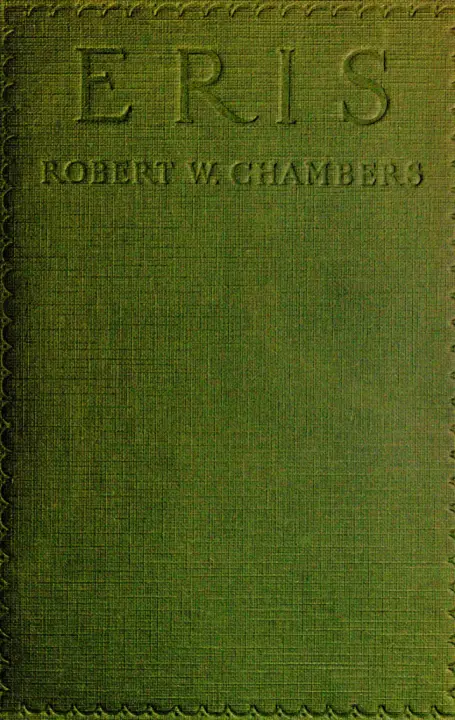
THE CLASSIC COLLECTION · 1922
"Eris" by Robert W. Chambers is a novel written in the early 20th century. The narrative follows the life of a girl named Eris, who grapples with her identity and aspirations amidst the backdrop of her family, farm life, and societal expectations. The story begins with her birth and unfolds the tensions and struggles of her parents, particularly her father, Elmer Odell, who yearns for sons to help with the farm instead of the daughter he receives. At the start of the novel, we are introduced to the Odell family as Elmer navigates his disappointment with having a daughter after twenty years of marriage without children. After Fanny, Eris's mother, gives birth under difficult circumstances, she ultimately passes away, and Eris becomes a focal point for her father's frustrations and unfulfilled desires. As Eris grows, she exhibits a keen curiosity about the world beyond her rural life, and an aspiration to pursue the arts—a journey that leads her away from the constricting expectations of her family. The opening portion of the book establishes a tense family dynamic, hints at themes of discord and aspiration, and sets the stage for Eris's struggle between her identity as "the daughter of discord" and her ambition to learn and grow beyond her environment.
Introduction adapted from the source catalogue; source summaries may be automatically generated.
Free to read · English · 87,191 words · No account needed
MAKE TIME FOR A GOOD BOOK
On by default. Untick to stop anonymous reading totals. Each page counts after 10 seconds in view. How this works.
Anonymous counting is on unless you have switched it off.
“You mean you haven’t a job, Mike?”
“Oh, I’ve got one--one of those stinking magazines which can be bought any day and which always are being ‘revived’ by ‘new blood.’
“I’m supposed to be that fresh and sanguinary reservoir. We may file a petition in bankruptcy or continue. There’s no telling.”
“What an outrage! A man of your calibre----”
“Don’t worry. Somewhere in dusty perspective the job I’m destined to nab is lumbering along the highway of life. I’ll hold it up when it tries to pass by me.”
“You know, Mike, that if ever you’re short----”
“Thanks.... No fear. What sort of fodder do you next hand out to your
famishing public?”
“I’m preparing it.... You won’t like it, Mike.”
“Same graft?”
“What do you mean, graft----”
“You poor fish, are you touchy already?”
Annan reddened very slightly, then laughed:
“Kick my pants hard if ever I’m that, Mike. May the Lord defend me from solemnity and smugness!... Mike, I wish we could see more of each other.... Things worry me a lot sometimes. A fellow has got to believe in himself, yet complacency is destruction.... All this--you know what I mean--disconcerts a man.... I admit it. It’s come to a point where actually I don’t know whether my stuff is worth immortality, or a tinker’s dam, or zero.
“Yet I feel I can deliver the hootch.”
“It’s hootch all right.”
“Well--God knows.... Like the Mad Hatter--or was it the Rabbit?--I’ve used the best ingredient.”
“There were crumbs in it,” said Coltfoot. “Besides, wood-alcohol isn’t
a lubricant.”
Thus from simile to allegory, to inference via insinuation--discourse in terms possible only between old friends of different species born in the same culture among fellow bacilli of their period.
“Hang it all,” insisted Annan, “the world isn’t swimming in syrup!”
“Nor in vinegar, Barry.”
“I can’t see the sugar-candy aspect of a story,” said Annan. “All that lovey-lovey-sweetie-sweetie goo is as dead as Cleopatra.”
“There was a Cleopatra. And she loved. There was beauty, brilliancy, ardour, wit, gaiety, pleasure----”
“--And the asp!”
“Yes, but why star the asp? It bit only once. Why devote the whole story to ominous apprehension, the relentless approach of horror from beyond vast horizons? There were long intervals of sunlight and song in Cleopatra’s day. Why make of your book a monograph on poisons? Why turn it into a history of the asp? Why minutely construct a treatise on serpents?
“Good Lord, Barry, when you’ve a good dinner served you at home, why slink to the nearest ash-can and rummage for putrid bones?”
Your reading position is saved on this browser. Take it to another device with a library code. Reading pages adapt to text, rather than matching a printed edition.
Robert W. (Robert William) Chambers
Robert W. (Robert William) Chambers
Robert W. (Robert William) Chambers
Robert W. (Robert William) Chambers
BEHIND THE BOOK
This eBook is for the use of anyone anywhere in the United States and most other parts of the world at no cost and with almost no restrictions whatsoever. You may copy it, give it away or re-use it under the terms of the Project Gutenberg License included with this eBook or online at www.gutenberg.org. If you are not located in the United States, you will have to check the laws of the country where you are located before using this eBook. Read the source licence.
The original source file, including credits and licence, is retained by this library. Request an original-format copy at no charge. Please include the book title and Project Gutenberg identifier #67856.
KEEP YOUR CURIOSITY GOING
Coulson Kernahan

Maurice Baring
Frances Wright
Cécile Tormay

Frederic Jesup Stimson

W. H. P. (William Henry Pope) Jarvis