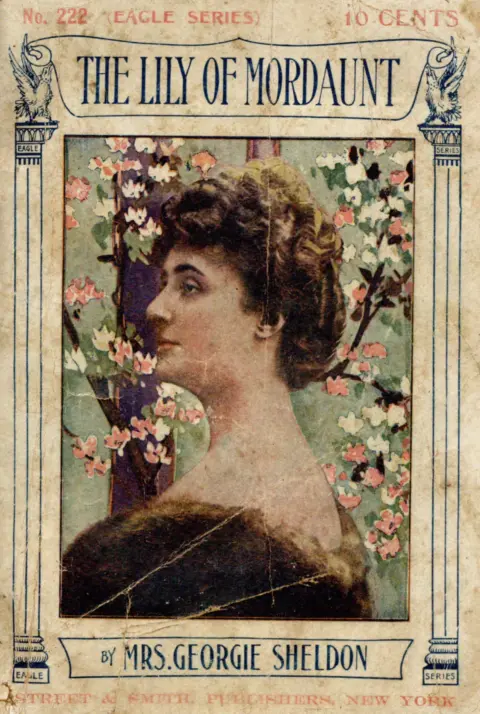
The lily of Mordaunt
Georgie, Mrs. Sheldon
THE CLASSIC COLLECTION · 1880
"Earle Wayne's Nobility" by Mrs. Georgie Sheldon is a novel written in the late 19th century. The story revolves around Earle Wayne, a young man wrongfully convicted of a crime he did not commit, and the struggles he faces as he navigates the trials of prison life and seeks to clear his name. The narrative also highlights Editha Dalton, a devoted friend who believes in his innocence and stands by him, grappling with her own emotions and societal pressures throughout the unfolding drama. At the start of the book, a tense courtroom scene sets the stage for Earle Wayne's conviction, with his solemn declaration of innocence echoing amidst the crowd’s murmurs of sympathy. The chapter introduces Editha Dalton, who passionately pleads for his acquittal, revealing her deep feelings for Earle and her commitment to helping him prove his innocence. As Earle is sentenced to three years of hard labor, the story follows both characters' emotional turmoil, the complexity of their relationship, and the societal constraints they must navigate as the plot unfolds around the themes of nobility, honor, and redemption.
Introduction adapted from the source catalogue; source summaries may be automatically generated.
Free to read · English · 147,272 words · No account needed
MAKE TIME FOR A GOOD BOOK
On by default. Untick to stop anonymous reading totals. Each page counts after 10 seconds in view. How this works.
Anonymous counting is on unless you have switched it off.
But he had no right to speak one word of it to her now—his disgrace clung to him, and would clog him, perhaps, for long years.
Oh! if he could but break the cruel fetters that bound him—if he could but discover the real criminal, and clear his own name, then he might hope to win the respect of the world once more, fame and position, and the right to tell this gentle girl how dear she was to him.
“Yes,” she returned, noticing his emphasis, and fearing she might have wounded him by wording her sentence thus; “and, Earle. I think you are very—very noble now, to bear your trouble so patiently and uncomplainingly, and something tells me that it will not be so very long before all the world will be proud to call you friend.”
She spoke softly, but in a tone that thrilled him through and through.
“And then——”
The words came breathlessly, and before he could stop them. They would
not be stayed.
He bent eagerly toward her, his heart in his eyes, his face full of passion which so nearly mastered him.
But he checked them, biting them off short as he had done before, but growing white even to his lips with the effort it cost him.
Something in his tones made her start and look up, and she read it all as in an open book—all his love for her, all the blighted hopes of the past, the longing and bitterness of the present, wherein he writhed beneath the stigma resting upon him, and the mighty self-control which would not presume upon her sympathy.
A flood of crimson suddenly dyed her face and throat, and even the soft, white hands which lay in her lap, and which were now seized with nervous trembling.
Then a look of resolution gleamed in her eyes, the red lips settled into an expression of firmness, and, though her heart beat like the frightened thing it was, her sweet tones did not falter as she replied:
“And then—Editha Dalton will be very proud also.”
Was ever heaven’s music sweeter than those few low-spoken, unfaltering
words?
There was no mistaking them—they had been uttered with a purpose, and he knew that his love was returned.
Eager brown eyes looked into tender blue for one long, delicious minute. No word was spoken, but both knew that for all time they belonged to each other.
Then Earle Wayne, with a glad, though solemn light illumining his face, lifted the white hand that lay nearest him, touched it reverently with his lips, and then gently laid it back in its place.
Your reading position is saved on this browser. Take it to another device with a library code. Reading pages adapt to text, rather than matching a printed edition.
Georgie, Mrs. Sheldon
Georgie, Mrs. Sheldon
Georgie, Mrs. Sheldon
Georgie, Mrs. Sheldon
BEHIND THE BOOK
This eBook is for the use of anyone anywhere in the United States and most other parts of the world at no cost and with almost no restrictions whatsoever. You may copy it, give it away or re-use it under the terms of the Project Gutenberg License included with this eBook or online at www.gutenberg.org. If you are not located in the United States, you will have to check the laws of the country where you are located before using this eBook. Read the source licence.
The original source file, including credits and licence, is retained by this library. Request an original-format copy at no charge. Please include the book title and Project Gutenberg identifier #70862.
KEEP YOUR CURIOSITY GOING
Coulson Kernahan

Maurice Baring
Frances Wright
Cécile Tormay

Frederic Jesup Stimson

W. H. P. (William Henry Pope) Jarvis