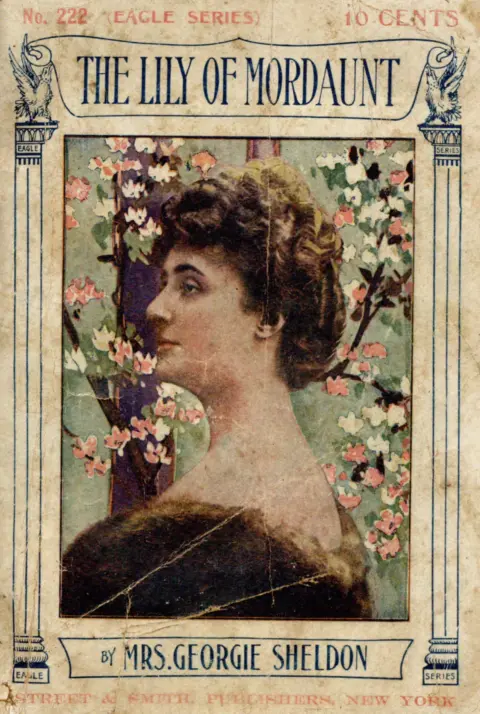
The lily of Mordaunt
Georgie, Mrs. Sheldon
THE CLASSIC COLLECTION · 1880
"Earle Wayne's Nobility" by Mrs. Georgie Sheldon is a novel written in the late 19th century. The story revolves around Earle Wayne, a young man wrongfully convicted of a crime he did not commit, and the struggles he faces as he navigates the trials of prison life and seeks to clear his name. The narrative also highlights Editha Dalton, a devoted friend who believes in his innocence and stands by him, grappling with her own emotions and societal pressures throughout the unfolding drama. At the start of the book, a tense courtroom scene sets the stage for Earle Wayne's conviction, with his solemn declaration of innocence echoing amidst the crowd’s murmurs of sympathy. The chapter introduces Editha Dalton, who passionately pleads for his acquittal, revealing her deep feelings for Earle and her commitment to helping him prove his innocence. As Earle is sentenced to three years of hard labor, the story follows both characters' emotional turmoil, the complexity of their relationship, and the societal constraints they must navigate as the plot unfolds around the themes of nobility, honor, and redemption.
Introduction adapted from the source catalogue; source summaries may be automatically generated.
Free to read · English · 147,272 words · No account needed
MAKE TIME FOR A GOOD BOOK
On by default. Untick to stop anonymous reading totals. Each page counts after 10 seconds in view. How this works.
Anonymous counting is on unless you have switched it off.
Mr. Dalton, however, was exceedingly elated over the prospect, and took no pains to conceal his satisfaction, nor to contradict the gossip regarding an approaching engagement, while, at the same time, he was never weary of recounting Mr. Tressalia’s merits to his daughter.
When at length Editha began to excuse herself from accompanying him upon excursions of pleasure, and to retire to her own rooms upon some slight pretext when he joined them at evening on the piazza, her father became highly incensed, and fumed and fretted himself almost into a fever on account of it.
“Editha, you will oblige me by not being quite so indifferent to Mr. Tressalia’s attentions,” Mr. Dalton said one day, upon their return from a brilliant reception given on board a French man-of-war lying at anchor in the harbor.
The commander was a friend of Mr. Tressalia’s, and had given an elaborate breakfast and reception to him and his friends, together with some distinguished people sojourning at Newport.
Editha and Mr. Dalton had been among the guests, and the former had been perfectly charming, in her dainty lawn, embroidered with rich purple pansies, and her jaunty hat, surrounded with a wreath of the same flowers.
She had attracted marked attention from commander and officers, and also from many of the guests, and in this way had succeeded in saving herself from the usual “pairing off.”
She had been somewhat reserved, too, in her manner toward Mr. Tressalia, and her father swore more than once to himself at her evident avoidance of him.
She blushed at his remark, but said, very quietly:
“I am not aware that I treat Mr. Tressalia indifferently, papa. He is a very pleasant gentleman, and I enjoy his society exceedingly.”
“Then why did you avoid him so persistently to-day?” he demanded.
“I would not appear to avoid any of our friends,” Editha said, with a deepening flush; “but really I do not enjoy being monopolized by one person so entirely as I have been the past two or three weeks.”
“What particular objection have you to Mr. Tressalia?”
“None whatever. I repeat, he is a very cultivated and agreeable gentleman, and I enjoy his society.”
“Then I desire that you may show a little more pleasure in it,” Mr. Dalton returned, impatiently.
“In what way, papa? How shall I show my pleasure in Mr. Tressalia’s society?” Editha asked, looking up at him with a droll expression of innocence.
Your reading position is saved on this browser. Take it to another device with a library code. Reading pages adapt to text, rather than matching a printed edition.
Georgie, Mrs. Sheldon
Georgie, Mrs. Sheldon
Georgie, Mrs. Sheldon
Georgie, Mrs. Sheldon
BEHIND THE BOOK
This eBook is for the use of anyone anywhere in the United States and most other parts of the world at no cost and with almost no restrictions whatsoever. You may copy it, give it away or re-use it under the terms of the Project Gutenberg License included with this eBook or online at www.gutenberg.org. If you are not located in the United States, you will have to check the laws of the country where you are located before using this eBook. Read the source licence.
The original source file, including credits and licence, is retained by this library. Request an original-format copy at no charge. Please include the book title and Project Gutenberg identifier #70862.
KEEP YOUR CURIOSITY GOING
Coulson Kernahan

Maurice Baring
Frances Wright
Cécile Tormay

Frederic Jesup Stimson

W. H. P. (William Henry Pope) Jarvis