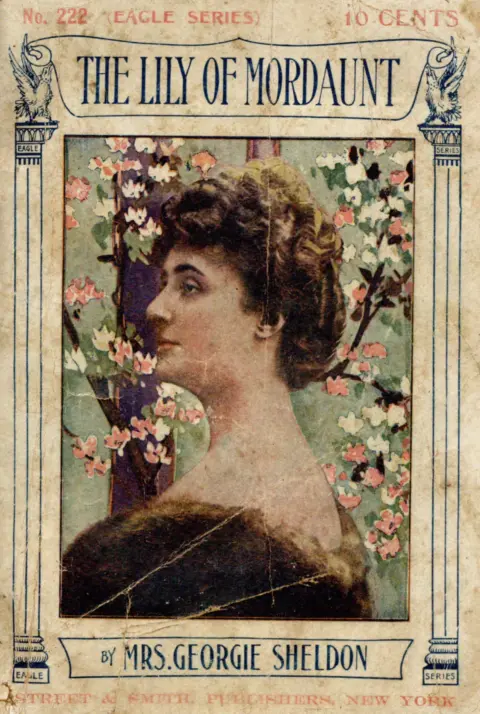
The lily of Mordaunt
Georgie, Mrs. Sheldon
THE CLASSIC COLLECTION · 1880
"Earle Wayne's Nobility" by Mrs. Georgie Sheldon is a novel written in the late 19th century. The story revolves around Earle Wayne, a young man wrongfully convicted of a crime he did not commit, and the struggles he faces as he navigates the trials of prison life and seeks to clear his name. The narrative also highlights Editha Dalton, a devoted friend who believes in his innocence and stands by him, grappling with her own emotions and societal pressures throughout the unfolding drama. At the start of the book, a tense courtroom scene sets the stage for Earle Wayne's conviction, with his solemn declaration of innocence echoing amidst the crowd’s murmurs of sympathy. The chapter introduces Editha Dalton, who passionately pleads for his acquittal, revealing her deep feelings for Earle and her commitment to helping him prove his innocence. As Earle is sentenced to three years of hard labor, the story follows both characters' emotional turmoil, the complexity of their relationship, and the societal constraints they must navigate as the plot unfolds around the themes of nobility, honor, and redemption.
Introduction adapted from the source catalogue; source summaries may be automatically generated.
Free to read · English · 147,272 words · No account needed
MAKE TIME FOR A GOOD BOOK
On by default. Untick to stop anonymous reading totals. Each page counts after 10 seconds in view. How this works.
Anonymous counting is on unless you have switched it off.
“Very well; I am ready to go now, if you wish,” she said, quietly.
Mr. Tressalia and Mr. Sylvester now joined them, and the former made some proposal to madam regarding an excursion for the morrow.
While they were discussing the question Mr. Dalton tried to hurry Editha away, regardless of the propriety of the thing.
“I must bid them good-night, papa,” she said, coldly, and wilfully standing her ground, while she wondered at his extreme haste.
“Be quick about it, then, for I am dused tired,” he said, impatiently.
She then said good-night to them in a general way, and turned to
accompany her father, not very well pleased to be treated so like a
child.
“My dear,” called madam, with an anxious look in her eye, as she saw how pale and weary Editha was looking, “get all the rest you can, and then come to me as soon as you have breakfasted to-morrow, for I have something very particular to say to you. My room is No. 105.”
Editha promised, while Sumner Dalton ground his teeth with inward rage
at this familiar request.
“What you can see in her to admire is more than I can imagine,” he remarked, curtly, on their way out of the park.
“Why, papa, where are your eyes? I think she is the most charming woman I ever met,” Editha replied, with unwise enthusiasm.
“I prefer you should not be quite so free with an entire stranger—it is not proper,” he growled.
She set her little chin, and her eyes flashed with a light which told that she considered herself old enough and capable of judging for herself upon such matters.
“Have you enjoyed the evening?” she asked, avoiding any reply to his
remark.
“Well enough until they came,” was the curt retort.
“I am sorry if you do not like my new friends, papa, but I thought you used to admire Mr. Tressalia,” Editha returned, a little spirit of mischief prompting the last half of her remark.
“He is well enough, only, according to my way of looking at things, it does not seem just the thing for him to be hanging around you all the time and running after you as if you belonged to him,” Mr. Dalton said, crossly.
He was evidently entirely out of sorts, and Editha knew it would be better to let the matter drop, but she could not resist one more little shaft.
“I thought you liked me to receive Mr. Tressalia’s attentions,” she
said, innocently.
“So I did once, but circumstances alter cases sometimes; and—we will not discuss Mr. Tressalia further, if you please.”
Your reading position is saved on this browser. Take it to another device with a library code. Reading pages adapt to text, rather than matching a printed edition.
Georgie, Mrs. Sheldon
Georgie, Mrs. Sheldon
Georgie, Mrs. Sheldon
Georgie, Mrs. Sheldon
BEHIND THE BOOK
This eBook is for the use of anyone anywhere in the United States and most other parts of the world at no cost and with almost no restrictions whatsoever. You may copy it, give it away or re-use it under the terms of the Project Gutenberg License included with this eBook or online at www.gutenberg.org. If you are not located in the United States, you will have to check the laws of the country where you are located before using this eBook. Read the source licence.
The original source file, including credits and licence, is retained by this library. Request an original-format copy at no charge. Please include the book title and Project Gutenberg identifier #70862.
KEEP YOUR CURIOSITY GOING
Coulson Kernahan

Maurice Baring
Frances Wright
Cécile Tormay

Frederic Jesup Stimson

W. H. P. (William Henry Pope) Jarvis