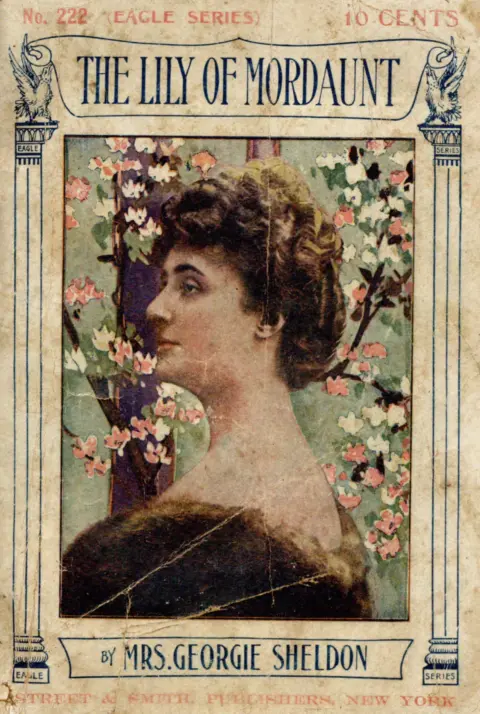
The lily of Mordaunt
Georgie, Mrs. Sheldon
THE CLASSIC COLLECTION · 1880
"Earle Wayne's Nobility" by Mrs. Georgie Sheldon is a novel written in the late 19th century. The story revolves around Earle Wayne, a young man wrongfully convicted of a crime he did not commit, and the struggles he faces as he navigates the trials of prison life and seeks to clear his name. The narrative also highlights Editha Dalton, a devoted friend who believes in his innocence and stands by him, grappling with her own emotions and societal pressures throughout the unfolding drama. At the start of the book, a tense courtroom scene sets the stage for Earle Wayne's conviction, with his solemn declaration of innocence echoing amidst the crowd’s murmurs of sympathy. The chapter introduces Editha Dalton, who passionately pleads for his acquittal, revealing her deep feelings for Earle and her commitment to helping him prove his innocence. As Earle is sentenced to three years of hard labor, the story follows both characters' emotional turmoil, the complexity of their relationship, and the societal constraints they must navigate as the plot unfolds around the themes of nobility, honor, and redemption.
Introduction adapted from the source catalogue; source summaries may be automatically generated.
Free to read · English · 147,272 words · No account needed
MAKE TIME FOR A GOOD BOOK
On by default. Untick to stop anonymous reading totals. Each page counts after 10 seconds in view. How this works.
Anonymous counting is on unless you have switched it off.
It was done, and there was no escape now; but it was a very pale face that Sumner Dalton bent before madam and the steel-like glitter of his eyes repelled her, and made her think of Editha as a poor lamb in the clutches of a wolf.
“She does not look like him; she must resemble her mother; but she has hair and eyes like——” was madam’s inward comment, but which was broken short off at this point with a regretful sigh.
But the next moment she had turned to him again with her usual
graciousness.
“Mr. Dalton,” she said, “I have been telling your daughter how disappointed I was to find her gone so suddenly from Newport. I had only just become acquainted with her, to be sure, but I had promised myself much pleasure in my intercourse with her.”
Mr. Dalton bowed and smiled, and mechanically repeated something stereotyped about “mutual pleasure,” &c., and then turned to be presented to Mr. Gustave Sylvester, but not before madam had noticed again that steel-like glitter in his eyes.
“My dear,” she said to Editha, “I have not yet asked you where you are
stopping?”
“At the Grand Union.”
“That is capital, for we have all secured rooms there also, and I hope we shall see much of each other.”
“I hope so, too,” Editha said, heartily, and thinking how all her life she had longed for just such a friend as she thought madam would be.
“How long do you remain?” she asked.
“I am sure I cannot tell. As long as papa desires, I suppose, as I make my plans conform to his as much as possible,” and Editha cast an anxious glance at Mr. Dalton, whose strange manner she had remarked; and was somewhat troubled by it. He was sustaining rather a forced conversation with Mr. Gustave Sylvester, but his manner was nervous and his brow gloomy and lowering.
“You are looking better than when I saw you at Newport,” madam said, with an admiring glance at her beautiful companion.
“Yes, I think my health is improving,” Editha answered; but she sighed as she said it, and a look of pain crossed her face.
Speaking of her ill-health always reminded her of its cause, and sent her thoughts flying over the sea to Earle.
The sigh touched madam, for she divined its cause; and, drawing the fair girl a little closer within her encircling arm, she laid her lips against her ear and tenderly whispered:
“We must never forget, dear, no matter how dark our lot, that One has said, ‘Thy strength is sufficient for thee.’”
Editha started, and her lip quivered a trifle.
Your reading position is saved on this browser. Take it to another device with a library code. Reading pages adapt to text, rather than matching a printed edition.
Georgie, Mrs. Sheldon
Georgie, Mrs. Sheldon
Georgie, Mrs. Sheldon
Georgie, Mrs. Sheldon
BEHIND THE BOOK
This eBook is for the use of anyone anywhere in the United States and most other parts of the world at no cost and with almost no restrictions whatsoever. You may copy it, give it away or re-use it under the terms of the Project Gutenberg License included with this eBook or online at www.gutenberg.org. If you are not located in the United States, you will have to check the laws of the country where you are located before using this eBook. Read the source licence.
The original source file, including credits and licence, is retained by this library. Request an original-format copy at no charge. Please include the book title and Project Gutenberg identifier #70862.
KEEP YOUR CURIOSITY GOING
Coulson Kernahan

Maurice Baring
Frances Wright
Cécile Tormay

Frederic Jesup Stimson

W. H. P. (William Henry Pope) Jarvis