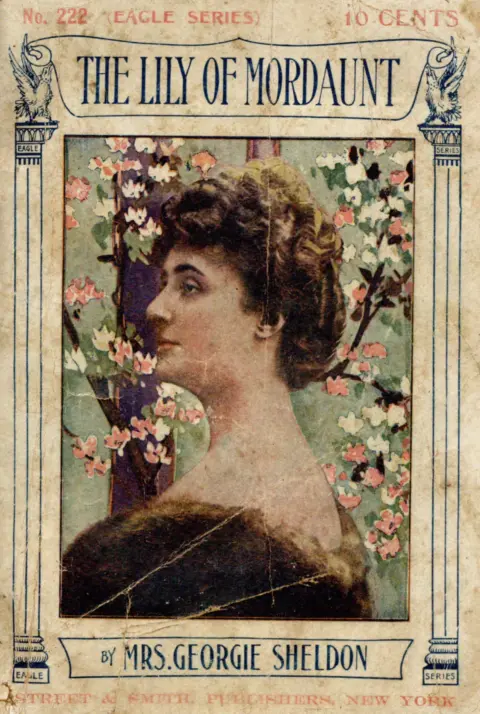
The lily of Mordaunt
Georgie, Mrs. Sheldon
THE CLASSIC COLLECTION · 1880
"Earle Wayne's Nobility" by Mrs. Georgie Sheldon is a novel written in the late 19th century. The story revolves around Earle Wayne, a young man wrongfully convicted of a crime he did not commit, and the struggles he faces as he navigates the trials of prison life and seeks to clear his name. The narrative also highlights Editha Dalton, a devoted friend who believes in his innocence and stands by him, grappling with her own emotions and societal pressures throughout the unfolding drama. At the start of the book, a tense courtroom scene sets the stage for Earle Wayne's conviction, with his solemn declaration of innocence echoing amidst the crowd’s murmurs of sympathy. The chapter introduces Editha Dalton, who passionately pleads for his acquittal, revealing her deep feelings for Earle and her commitment to helping him prove his innocence. As Earle is sentenced to three years of hard labor, the story follows both characters' emotional turmoil, the complexity of their relationship, and the societal constraints they must navigate as the plot unfolds around the themes of nobility, honor, and redemption.
Introduction adapted from the source catalogue; source summaries may be automatically generated.
Free to read · English · 147,272 words · No account needed
MAKE TIME FOR A GOOD BOOK
On by default. Untick to stop anonymous reading totals. Each page counts after 10 seconds in view. How this works.
Anonymous counting is on unless you have switched it off.
“My sister! God forgive me, she is my sister; but I do not love her as such,” Earle groaned, as he wiped the cold sweat from his forehead.
This was music to Sumner Dalton’s ears, but he knew it would not do to trespass too far; so, rising, he said, with the most consummate coolness:
“Since it would not sound well for a man in your position to allow his father to suffer for the necessaries of life, I will consent to accept your offer of that ten thousand, and you can make it over to me with as little delay as possible. And now I will bid you good-morning, leaving you and your sister to talk over your future prospects and comfort one another as best you can.”
With a low, echoing, mocking laugh, he left the room and those two wretched young people were alone.
In the exceeding bitterness of his soul Earle again dropped his head upon the table, and a long, long silence ensued.
Editha lay perfectly still upon the sofa.
At last Earle arose and went and knelt down beside her.
“Editha!” he said; and it is not possible to convey any idea of the pain crowded into the one word.
Only a low moan answered him.
“Editha,” he said again, almost wildly, “I would have saved you from this had it been possible.”
She turned her face up to him at this in speechless misery. She had shed no tears over what she had heard; the horror of it had seemed to scorch and burn them up at their very fountain. Her eyes were heavy, her face perfectly hueless, her lips parched and drawn, her hands hot and burning.
That one look of hers, so piteous and full of anguish, unmanned Earle completely, and, dropping his head upon the pillow beside hers, sob after sob broke from him.
At the sight of his suffering, woman-like, she forgot her own in a
measure.
She put up her hot hand and laid it caressingly against his cheek, and
cried:
“Earle—Earle—don’t! I cannot bear it if you give way so. God will help us; He will send no more upon us than He is willing to give us strength to bear. But, oh!” she added, wildly, “that I should have to call such a man father.”
“My darling, that is a sorrow that we share in common,” Earle answered, with an effort at self-control.
“I am glad mamma is dead. I am glad Uncle Richard is dead. How could they have borne this?” Editha moaned.
Your reading position is saved on this browser. Take it to another device with a library code. Reading pages adapt to text, rather than matching a printed edition.
Georgie, Mrs. Sheldon
Georgie, Mrs. Sheldon
Georgie, Mrs. Sheldon
Georgie, Mrs. Sheldon
BEHIND THE BOOK
This eBook is for the use of anyone anywhere in the United States and most other parts of the world at no cost and with almost no restrictions whatsoever. You may copy it, give it away or re-use it under the terms of the Project Gutenberg License included with this eBook or online at www.gutenberg.org. If you are not located in the United States, you will have to check the laws of the country where you are located before using this eBook. Read the source licence.
The original source file, including credits and licence, is retained by this library. Request an original-format copy at no charge. Please include the book title and Project Gutenberg identifier #70862.
KEEP YOUR CURIOSITY GOING
Coulson Kernahan

Maurice Baring
Frances Wright
Cécile Tormay

Frederic Jesup Stimson

W. H. P. (William Henry Pope) Jarvis