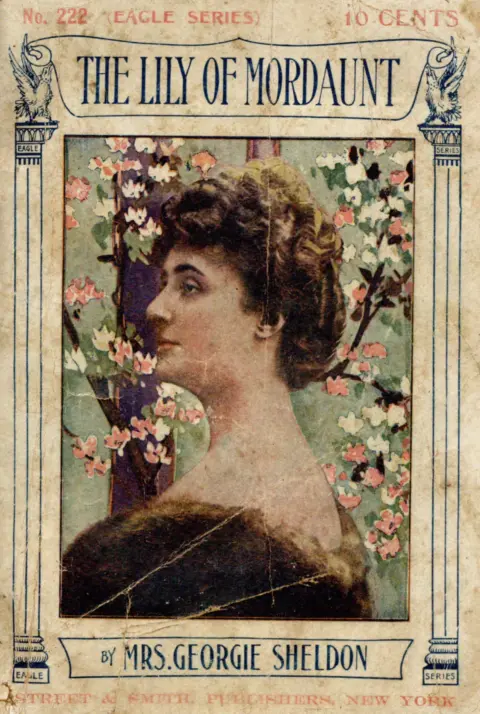
The lily of Mordaunt
Georgie, Mrs. Sheldon
THE CLASSIC COLLECTION · 1880
"Earle Wayne's Nobility" by Mrs. Georgie Sheldon is a novel written in the late 19th century. The story revolves around Earle Wayne, a young man wrongfully convicted of a crime he did not commit, and the struggles he faces as he navigates the trials of prison life and seeks to clear his name. The narrative also highlights Editha Dalton, a devoted friend who believes in his innocence and stands by him, grappling with her own emotions and societal pressures throughout the unfolding drama. At the start of the book, a tense courtroom scene sets the stage for Earle Wayne's conviction, with his solemn declaration of innocence echoing amidst the crowd’s murmurs of sympathy. The chapter introduces Editha Dalton, who passionately pleads for his acquittal, revealing her deep feelings for Earle and her commitment to helping him prove his innocence. As Earle is sentenced to three years of hard labor, the story follows both characters' emotional turmoil, the complexity of their relationship, and the societal constraints they must navigate as the plot unfolds around the themes of nobility, honor, and redemption.
Introduction adapted from the source catalogue; source summaries may be automatically generated.
Free to read · English · 147,272 words · No account needed
MAKE TIME FOR A GOOD BOOK
On by default. Untick to stop anonymous reading totals. Each page counts after 10 seconds in view. How this works.
Anonymous counting is on unless you have switched it off.
“How came you here to-night, Miss Dalton?” he asked.
She explained how it had happened, and he muttered, half to himself:
“Yes, yes, I see; you were sent here that justice might at last be
done.”
“John,” pleaded his wife anxiously, “you are not strong enough to talk
any more.”
She shrank from the disgraceful confession she saw he had determined to
make.
“Maria, you keep still,” he returned, with some show of impatience; “you know how heavy this thing has lain on my conscience ever since that youngster went to prison in my stead; and now that fate has opened a way, I am going to make it right, or as right as I can, if I die the next minute. Miss Dalton cannot stand,” he added, with considerable thoughtfulness; “let her have your chair, and you sit on the bed.”
In obedience to his request, Mrs. Loker arose from the chair, but, instead of sitting upon the bed, she sank down upon the floor beside it and buried her face in the clothes with a groan.
Editha gladly took the seat thus vacated for her, for she, too, was weak and trembling with excitement.
“I suppose you see that I cannot live long,” John Loker said to her; and holding up his thin hand between his eyes and the light, it looked almost transparent.
“You look very ill, sir,” she answered, gently.
“What’s become of that young chap who was sentenced for that robbery?” he demanded, abruptly, after a moment.
“He is in Europe now.”
“He had true grit in him; he never winced nor showed the white feather once during the trial,” he said, in an admiring tone.
“How do you know?” Editha asked, in surprise.
“Tom Drake and I sat by and heard the whole thing through.”
“You did?” she cried out in pain. “How could you?”
Only to think of it—the real criminals so near to justice and Earle convicted instead! It was horrible!
“Yes, we heard the case clear through; we heard the sentence passed upon him; and he stood up so proud, and calm, and handsome, and bore it without a whimper.”
“How could you?” Editha again asked, reproachfully.
“I don’t know, Miss Dalton, but folks get hardened to almost anything nowadays,” he replied, sighing. “It was cheeky, risky business for us to sit there, with some of those very diamonds and trinkets hidden away on our persons, and let another man be tried for what we had done.”
Editha shuddered.
Your reading position is saved on this browser. Take it to another device with a library code. Reading pages adapt to text, rather than matching a printed edition.
Georgie, Mrs. Sheldon
Georgie, Mrs. Sheldon
Georgie, Mrs. Sheldon
Georgie, Mrs. Sheldon
BEHIND THE BOOK
This eBook is for the use of anyone anywhere in the United States and most other parts of the world at no cost and with almost no restrictions whatsoever. You may copy it, give it away or re-use it under the terms of the Project Gutenberg License included with this eBook or online at www.gutenberg.org. If you are not located in the United States, you will have to check the laws of the country where you are located before using this eBook. Read the source licence.
The original source file, including credits and licence, is retained by this library. Request an original-format copy at no charge. Please include the book title and Project Gutenberg identifier #70862.
KEEP YOUR CURIOSITY GOING
Coulson Kernahan

Maurice Baring
Frances Wright
Cécile Tormay

Frederic Jesup Stimson

W. H. P. (William Henry Pope) Jarvis