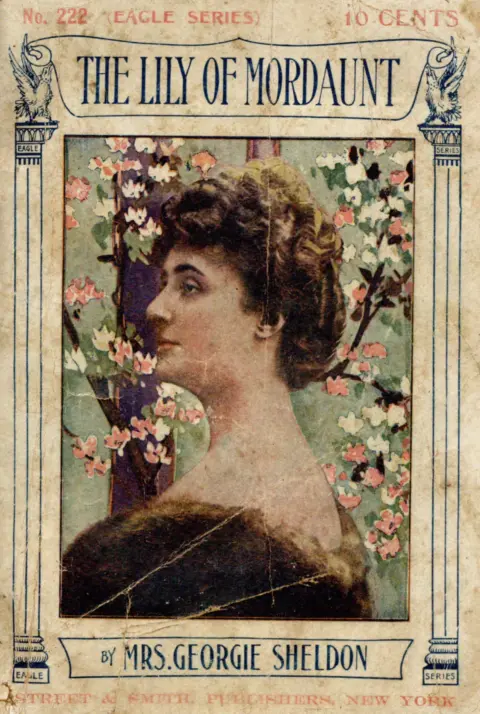
The lily of Mordaunt
Georgie, Mrs. Sheldon
THE CLASSIC COLLECTION · 1880
"Earle Wayne's Nobility" by Mrs. Georgie Sheldon is a novel written in the late 19th century. The story revolves around Earle Wayne, a young man wrongfully convicted of a crime he did not commit, and the struggles he faces as he navigates the trials of prison life and seeks to clear his name. The narrative also highlights Editha Dalton, a devoted friend who believes in his innocence and stands by him, grappling with her own emotions and societal pressures throughout the unfolding drama. At the start of the book, a tense courtroom scene sets the stage for Earle Wayne's conviction, with his solemn declaration of innocence echoing amidst the crowd’s murmurs of sympathy. The chapter introduces Editha Dalton, who passionately pleads for his acquittal, revealing her deep feelings for Earle and her commitment to helping him prove his innocence. As Earle is sentenced to three years of hard labor, the story follows both characters' emotional turmoil, the complexity of their relationship, and the societal constraints they must navigate as the plot unfolds around the themes of nobility, honor, and redemption.
Introduction adapted from the source catalogue; source summaries may be automatically generated.
Free to read · English · 147,272 words · No account needed
MAKE TIME FOR A GOOD BOOK
On by default. Untick to stop anonymous reading totals. Each page counts after 10 seconds in view. How this works.
Anonymous counting is on unless you have switched it off.
A shudder finished the sentence more impressively than words could have done, and then, without taking any further notice of her strange visitor, she relapsed into her former indifference and position.
Editha was appalled at what she saw. She had not dreamed of such misery as this, and her face grew white and grave with sorrow and pity. Drawing her purse from her pocket, she took a bill from it with eager, trembling fingers.
“Milly,” she said, in a low tone, pressing it into her hand, “go quickly and get something with which to make a fire and something to eat; you know what you need better than I can tell you.”
The words were scarcely uttered when the child’s thin fingers clutched the money, and with a smothered cry of thankfulness, she was gone like a flash of light.
Editha then turned her attention to the mother. Going to her side, she touched her gently on the shoulder.
“My poor woman,” she said, kindly, “how long have you been like this?”
She looked up again, with the same vacant stare as before.
“What?” she said, in hollow tones.
Editha repeated her question.
“We’ve had no fire for a week, miss,” she said, with an effort to arouse herself; “but it hasn’t been quite so bad until to-day, for the sun comes in at the window when it’s pleasant, and we could sit in that and keep comfortable.”
Comfortable!
Editha thought of the cheerful fire in her grate at home, while the house was also heated from attic to cellar with steam, and her heart smote her painfully.
“And have you absolutely nothing to eat?” she asked, her eyes filling
with tears.
“We have not been entirely without food until to-day; we ate our last penny’s worth of bread yesterday,” the woman answered, with a deep-drawn sigh, and, from her manner of speaking, Editha instinctively knew that at some previous time in her life she had known “better days.”
“Has your husband been ill long?” she asked, with a glance toward the
ghastly sleeper.
“Two or three months; he had a bad fall awhile ago, and lay out in the rain and cold for several hours. The fall strained him, and that, with the cold he took, threw him into a quick consumption. He will live only a few days longer,” she concluded, with a sigh. “But how do you happen to be here?” she asked a moment after, with a stare of surprise at Editha’s rich garments. It had but just come to her that she was entertaining a very unusual guest.
Your reading position is saved on this browser. Take it to another device with a library code. Reading pages adapt to text, rather than matching a printed edition.
Georgie, Mrs. Sheldon
Georgie, Mrs. Sheldon
Georgie, Mrs. Sheldon
Georgie, Mrs. Sheldon
BEHIND THE BOOK
This eBook is for the use of anyone anywhere in the United States and most other parts of the world at no cost and with almost no restrictions whatsoever. You may copy it, give it away or re-use it under the terms of the Project Gutenberg License included with this eBook or online at www.gutenberg.org. If you are not located in the United States, you will have to check the laws of the country where you are located before using this eBook. Read the source licence.
The original source file, including credits and licence, is retained by this library. Request an original-format copy at no charge. Please include the book title and Project Gutenberg identifier #70862.
KEEP YOUR CURIOSITY GOING
Coulson Kernahan

Maurice Baring
Frances Wright
Cécile Tormay

Frederic Jesup Stimson

W. H. P. (William Henry Pope) Jarvis