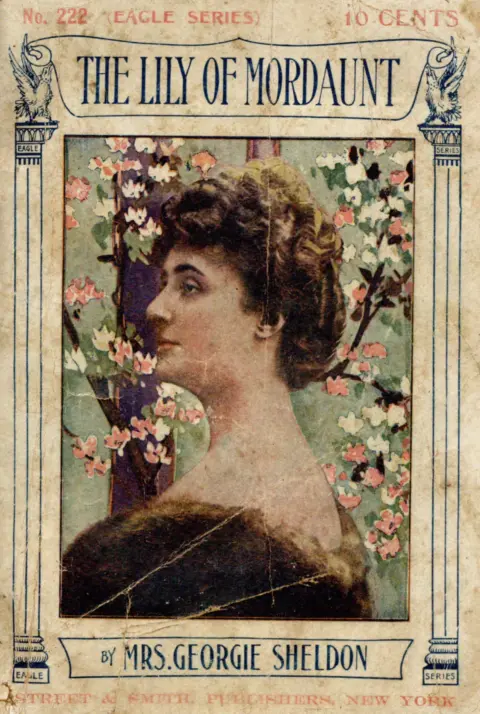
The lily of Mordaunt
Georgie, Mrs. Sheldon
THE CLASSIC COLLECTION · 1880
"Earle Wayne's Nobility" by Mrs. Georgie Sheldon is a novel written in the late 19th century. The story revolves around Earle Wayne, a young man wrongfully convicted of a crime he did not commit, and the struggles he faces as he navigates the trials of prison life and seeks to clear his name. The narrative also highlights Editha Dalton, a devoted friend who believes in his innocence and stands by him, grappling with her own emotions and societal pressures throughout the unfolding drama. At the start of the book, a tense courtroom scene sets the stage for Earle Wayne's conviction, with his solemn declaration of innocence echoing amidst the crowd’s murmurs of sympathy. The chapter introduces Editha Dalton, who passionately pleads for his acquittal, revealing her deep feelings for Earle and her commitment to helping him prove his innocence. As Earle is sentenced to three years of hard labor, the story follows both characters' emotional turmoil, the complexity of their relationship, and the societal constraints they must navigate as the plot unfolds around the themes of nobility, honor, and redemption.
Introduction adapted from the source catalogue; source summaries may be automatically generated.
Free to read · English · 147,272 words · No account needed
MAKE TIME FOR A GOOD BOOK
On by default. Untick to stop anonymous reading totals. Each page counts after 10 seconds in view. How this works.
Anonymous counting is on unless you have switched it off.
“I suppose, practically speaking, you do not even know the meaning of the word,” sneered Mr. Dalton.
“I hope I do not, sir. We are commanded not to hate, but rather to love our enemies, and to do good to those who injure us.”
“I suppose you put that in practice, since you preach it?”
“I desire to practice it most certainly,” was the grave response.
“How would it be if you could find those real thieves, for whom you pretend you have suffered disgrace?” was the searching query.
Earle’s face was very noble and earnest as he returned, thoughtfully:
“Beyond proving my own innocence, and justifying myself in the yes of the world, I believe I can honestly say I wish them no ill.”
“And you would revenge yourself by making them serve a double sentence, if you could?” demanded Mr. Dalton, skeptically.
“It might be necessary for the good of the public that they should be put where they could do no more injury; but it would afford me no personal gratification, I can assure you,” Earle answered, with a sigh, feeling that it would be but sad pleasure to be the cause of another’s serving out a term of weary years in State prison, as he had done.
Then, with a pitying glance at his enemy, he said, even more gently than
he had yet spoken:
“Mr. Dalton, did you never read what Milton says of that ignoble
sentiment of which you speak?
‘Revenge, at first though sweet,
Bitter ere long back on itself recoils.’”
Mr. Dalton laughed, mockingly.
“You should have continued your very apt quotation, for, if I remember rightly, a few lines below read like this:
‘I reck not, so it light well aimed—
Spite then with spite is best repaid.’
I must confess that your creed is beyond both my comprehension and inclination; and, mark my words, you yourself will yet prove it fallacious by practical illustration.”
“I trust not, sir; the world would be a sad place in which to live if such passion ran riot in the hearts of all men,” Earle said, sadly.
“Let an enemy fall into your hands and see; let some one do you a deadly injury—let him crush your hopes, and every prospect for the fulfillment of your ambitious desires, and bar you forever from the one prize you covet most on earth, and then see if you will preach about love to your enemies,” Mr. Dalton said, with a fierceness that was absolutely startling, and Earle wondered more and more what possible connection all this could have with his hatred of him.
Your reading position is saved on this browser. Take it to another device with a library code. Reading pages adapt to text, rather than matching a printed edition.
Georgie, Mrs. Sheldon
Georgie, Mrs. Sheldon
Georgie, Mrs. Sheldon
Georgie, Mrs. Sheldon
BEHIND THE BOOK
This eBook is for the use of anyone anywhere in the United States and most other parts of the world at no cost and with almost no restrictions whatsoever. You may copy it, give it away or re-use it under the terms of the Project Gutenberg License included with this eBook or online at www.gutenberg.org. If you are not located in the United States, you will have to check the laws of the country where you are located before using this eBook. Read the source licence.
The original source file, including credits and licence, is retained by this library. Request an original-format copy at no charge. Please include the book title and Project Gutenberg identifier #70862.
KEEP YOUR CURIOSITY GOING
Coulson Kernahan

Maurice Baring
Frances Wright
Cécile Tormay

Frederic Jesup Stimson

W. H. P. (William Henry Pope) Jarvis