
Little Prudy’s Captain Horace
Sophie May
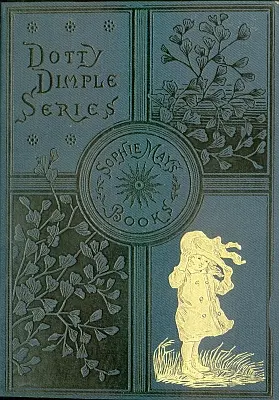
THE CLASSIC COLLECTION · 1868
"Dotty Dimple at Her Grandmother's" by Sophie May is a children's fiction book, likely written in the late 19th century. The story follows a young girl named Dotty, or Alice, as she navigates life with her siblings while spending time at her grandmother's home. The narrative captures the innocence and curiosities of childhood, focusing on Dotty's adventures, interactions with other children, and her moral lessons learned throughout. At the start of the book, the three Parlin siblings are introduced as they arrive at their grandmother's house on a lovely Sunday morning. Dotty Dimple observes the beauty of nature and finds herself grappling with feelings of envy and admiration as she compares herself to another girl, Jennie. The opening reveals Dotty’s innocence and her childlike misunderstanding of social status, wealth, and virtue, particularly as she contemplates the act of giving and the lessons learned in Sunday school. The interactions and discussions amongst the children set the stage for Dotty's adventures and moral growth throughout the story, indicating that themes of generosity, honesty, and childhood imagination will be central to the narrative.
Introduction adapted from the source catalogue; source summaries may be automatically generated.
Free to read · English · 24,521 words · No account needed
MAKE TIME FOR A GOOD BOOK
On by default. Untick to stop anonymous reading totals. Each page counts after 10 seconds in view. How this works.
Anonymous counting is on unless you have switched it off.
"You dear little girl," said grandma, giving her a hearty kiss; "you need not make any such resolve. Your sister Alice must learn to bear disappointments as well as you. You are going to Bloomingdale with us, my child; so bring your blue dress to me, and let me see if it is in order."
Though Prudy's offer to remain at home had been made in all good faith, and though she was really sorry to think of leaving Dotty alone, still I cannot say her heart did not bound with delight on being told she must go.
Thursday morning came clear and bright, and with it Miss Polly, downcast and sad, in a mournful brown bonnet, the front of which, as Prudy said, was "making a courtesy." Miss Polly was, however, in as good spirits as usual, and had come to keep house with Ruth, and help take care of the children for this day and the next.
Till the last minute Prudy and Dotty walked the piazza, their arms
about each other's waist.
"I s'pose," said Dotty, sullenly, "when you are at that old Cousin Lydia's, having good times, you won't think anything about me and Katie, left here all alone."
"Why, little sister!"
"Maybe," continued Dotty, "the ducks will hatch while you're gone. I saw the white hen flying over the fence with one of those eggs in her mouth."
"A piece of the shell?"
"O, no, a whole egg, right in her bill," replied Dotty, who supposed she was telling the truth. "And you know those big strawberries that cost a cent apiece, Prudy; you'll be sorry you couldn't be here to help eat 'em in cream."
Perhaps Dotty hoped, even at this last moment, that Prudy would be induced to stay at home. If so, she was doomed to be disappointed.
"Well," said Prudy, "I'm glad you'll have such nice times, Dotty."
"O, it won't be nice at all. Something will happen; now you see if it don't," said Dotty, determined to be miserable.
After the two carriages, with the horses "Deacon" and "Judge," had driven off, and grandpa had given his last warning about fire, and Horace and the girls had waved their handkerchiefs for the last time, Dotty proceeded to the kitchen to see if she could find anything wherewith to make herself unhappy. Ruth stood by the flour-board kneading bread, and cutting it with a chopping-knife in a brisk, lively way. Polly sat by the stove sighing and rubbing silver.
"Dear me, child, what are you doing with my starch?" said Ruth as she saw Dotty with the bowl at her lips, and a sticky stream tickling down her apron.
Your reading position is saved on this browser. Take it to another device with a library code. Reading pages adapt to text, rather than matching a printed edition.
BEHIND THE BOOK
This eBook is for the use of anyone anywhere in the United States and most other parts of the world at no cost and with almost no restrictions whatsoever. You may copy it, give it away or re-use it under the terms of the Project Gutenberg License included with this eBook or online at www.gutenberg.org. If you are not located in the United States, you will have to check the laws of the country where you are located before using this eBook. Read the source licence.
The original source file, including credits and licence, is retained by this library. Request an original-format copy at no charge. Please include the book title and Project Gutenberg identifier #20699.
KEEP YOUR CURIOSITY GOING
Coulson Kernahan

Maurice Baring
Frances Wright
Cécile Tormay

Frederic Jesup Stimson

W. H. P. (William Henry Pope) Jarvis

