
Little Prudy’s Captain Horace
Sophie May
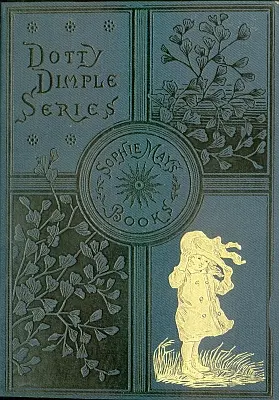
THE CLASSIC COLLECTION · 1868
"Dotty Dimple at Her Grandmother's" by Sophie May is a children's fiction book, likely written in the late 19th century. The story follows a young girl named Dotty, or Alice, as she navigates life with her siblings while spending time at her grandmother's home. The narrative captures the innocence and curiosities of childhood, focusing on Dotty's adventures, interactions with other children, and her moral lessons learned throughout. At the start of the book, the three Parlin siblings are introduced as they arrive at their grandmother's house on a lovely Sunday morning. Dotty Dimple observes the beauty of nature and finds herself grappling with feelings of envy and admiration as she compares herself to another girl, Jennie. The opening reveals Dotty’s innocence and her childlike misunderstanding of social status, wealth, and virtue, particularly as she contemplates the act of giving and the lessons learned in Sunday school. The interactions and discussions amongst the children set the stage for Dotty's adventures and moral growth throughout the story, indicating that themes of generosity, honesty, and childhood imagination will be central to the narrative.
Introduction adapted from the source catalogue; source summaries may be automatically generated.
Free to read · English · 24,521 words · No account needed
MAKE TIME FOR A GOOD BOOK
On by default. Untick to stop anonymous reading totals. Each page counts after 10 seconds in view. How this works.
Anonymous counting is on unless you have switched it off.
But the next afternoon, as the two little girls were walking home together, Dotty said to Jennie, with a very wise face,--
"Grandma has told me what the Bible means. Now I understand every single
thing."
Jennie did not seem as much delighted as had been expected.
"She says God can get that camel through a needle."
"O, I remember," said Jennie; "you mean that Bible camel."
"There isn't anything He can't do," continued Dotty; "the richest men, richer than your father, can get to heaven if God's a mind to take 'em."
"Not bad people," said Jennie, shaking her head.
"I don't know about that; she didn't say," said Dotty, looking puzzled. "O, no, I s'pose not. God wouldn't be a mind to. For don't you see, Jennie Vance, it's just like a camel. There can't anybody go through themselves unless God pulls 'em through."
I don't know what Grandma Parlin would have thought if she had heard her words chopped up in this way; but it made very little difference to Jennie, who paid no attention at all.
"You're father'll get there," added Dotty; "so I thought I'd tell you."
"Your shoestring's untied," said Jennie, coolly.
"And I don't care now if you are the richest," said Dotty, stooping to tie the string; "for God loves me just as well when I wear Prudy's old things; and so do all the good people in this town, and the minister too; grandma said so. I don't care how much you talk about our old Deacon, or our eating molasses. That isn't anything! Grandma says its harder for rich children to be good, and I told her I was real glad I was half-poor."
"You're stepping right in the mud," cried Jennie.
"And then Grandma said that it didn't make any difference any way about that, if I only loved God; but if I didn't love God, it did."
"There," said Jennie, "I haven't heard half you've said; and I guess you've forgotten all about going strawberrying."
"I almost know grandma won't be willing," replied Dotty; "we've got company, too; see those ladies in the window."
"All the better," replied Jennie, cheerily. "You go in and behave as beautifully as ever you can, and your grandma'll be so busy talking, she'll say yes before she thinks. That's the way my mamma does. Say 'Crossman's orchard,' remember, but don't tell which one."
So Jennie staid outside while Dotty entered the parlor softly, and stood by her grandmother's chair, waiting the proper time to speak.
"Strawberrying, did you say?" asked Mrs. Parlin, presently.
"Yes, grandma; the berries are just as thick."
Your reading position is saved on this browser. Take it to another device with a library code. Reading pages adapt to text, rather than matching a printed edition.
BEHIND THE BOOK
This eBook is for the use of anyone anywhere in the United States and most other parts of the world at no cost and with almost no restrictions whatsoever. You may copy it, give it away or re-use it under the terms of the Project Gutenberg License included with this eBook or online at www.gutenberg.org. If you are not located in the United States, you will have to check the laws of the country where you are located before using this eBook. Read the source licence.
The original source file, including credits and licence, is retained by this library. Request an original-format copy at no charge. Please include the book title and Project Gutenberg identifier #20699.
KEEP YOUR CURIOSITY GOING
Coulson Kernahan

Maurice Baring
Frances Wright
Cécile Tormay

Frederic Jesup Stimson

W. H. P. (William Henry Pope) Jarvis

