
Little Prudy’s Captain Horace
Sophie May
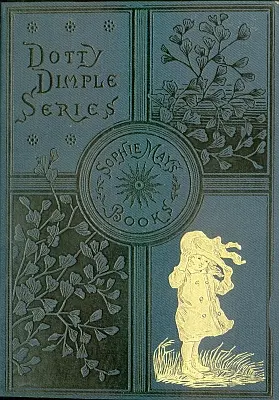
THE CLASSIC COLLECTION · 1868
"Dotty Dimple at Her Grandmother's" by Sophie May is a children's fiction book, likely written in the late 19th century. The story follows a young girl named Dotty, or Alice, as she navigates life with her siblings while spending time at her grandmother's home. The narrative captures the innocence and curiosities of childhood, focusing on Dotty's adventures, interactions with other children, and her moral lessons learned throughout. At the start of the book, the three Parlin siblings are introduced as they arrive at their grandmother's house on a lovely Sunday morning. Dotty Dimple observes the beauty of nature and finds herself grappling with feelings of envy and admiration as she compares herself to another girl, Jennie. The opening reveals Dotty’s innocence and her childlike misunderstanding of social status, wealth, and virtue, particularly as she contemplates the act of giving and the lessons learned in Sunday school. The interactions and discussions amongst the children set the stage for Dotty's adventures and moral growth throughout the story, indicating that themes of generosity, honesty, and childhood imagination will be central to the narrative.
Introduction adapted from the source catalogue; source summaries may be automatically generated.
Free to read · English · 24,521 words · No account needed
MAKE TIME FOR A GOOD BOOK
On by default. Untick to stop anonymous reading totals. Each page counts after 10 seconds in view. How this works.
Anonymous counting is on unless you have switched it off.
Matters were soon set right with Mrs. Gray, who was sorry she had not spoken frankly to Mrs. Parlin in the first place, instead of going secretly to the neighbors and complaining that she did not receive her due allowance of milk. Perhaps it was a good lesson for the doctor's wife; for she ceased to gossip about the Parlins, and even took the pains to correct the wrong story with regard to the pearl breastpin.
After this Dotty and Katie carried the milk as usual; only they never stopped under the acorn tree any more to play "King and Queen." Not that Dotty felt much shame. She held herself in high esteem. She knew she had done wrong, but thought that by telling the truth so nobly she had atoned for all.
"I am almost as good as the little girls in the Sunday school books," said she; "now there's Jennie Vance--I'm afraid she fibs."
Jennie called one day to ask Dotty and Flyaway to go to school with her.
"Jennie," said Miss Dimple, gravely, as they were walking with Katie between them, "do they ever read the Bible to you?"
"Yes; why?"
"O, nothing; only you don't act as if you know anything about it."
"I guess my mother is one of the first ladies in this town, Miss Dimple, and she's told me the story of Joseph's coat till I know it by heart."
"Well," said Dotty, looking very solemn, "it hasn't done you any good, Jennie Vance. Now, I learn verses every Sunday, and one is this: 'Lie not one to another.' What think of that?"
Jennie's black eyes snapped. "I heard that before ever you did."
"Lie not one to another," repeated Dotty, slowly. "Now, I'm one, Jennie, and you're another; and isn't it wicked when we tell the leastest speck of a fib?"
"Of course 'tis," was the prompt reply; "but I don't tell 'em."
"O, Jennie, who told your step-mother that Charlie Gray was tied up in a meal-bag? I'm afraid," said Dotty, laying her hand solemnly on little Katie's head as if it had been a pulpit-cushion, and she a minister preaching,--"I'm afraid, Jennie, you lie one to another."
"One to anudder," echoed Katie, breaking away and running after a toad. Jennie knitted her brows. "It doesn't look very well for such a small child as you are to preach to me, Dot Parlin!"
"But I always tell the white truth myself, Jennie, because God hears me. Do you think much about God?"
"No, I don't know as I do; nobody does, He's so far off," said Jennie, stooping to pluck an innocent flower.
Your reading position is saved on this browser. Take it to another device with a library code. Reading pages adapt to text, rather than matching a printed edition.
BEHIND THE BOOK
This eBook is for the use of anyone anywhere in the United States and most other parts of the world at no cost and with almost no restrictions whatsoever. You may copy it, give it away or re-use it under the terms of the Project Gutenberg License included with this eBook or online at www.gutenberg.org. If you are not located in the United States, you will have to check the laws of the country where you are located before using this eBook. Read the source licence.
The original source file, including credits and licence, is retained by this library. Request an original-format copy at no charge. Please include the book title and Project Gutenberg identifier #20699.
KEEP YOUR CURIOSITY GOING
Coulson Kernahan

Maurice Baring
Frances Wright
Cécile Tormay

Frederic Jesup Stimson

W. H. P. (William Henry Pope) Jarvis

