
Uncle Sam’s Boys on Field Duty; or, Winning Corporal’s Chevrons
H. Irving (Harrie Irving) Hancock
THE CLASSIC COLLECTION · 1919
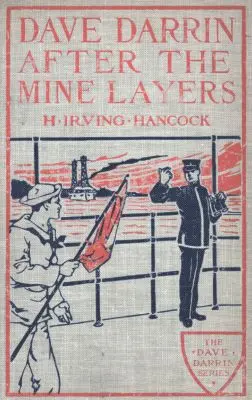
"Dave Darrin After the Mine Layers; Or, Hitting the Enemy a Hard Naval Blow" by H. Irving Hancock is a naval adventure novel written in the early 20th century. The story follows Lieutenant Commander Dave Darrin as he embarks on a dangerous mission involving mine warfare during World War I. Along with his close friend Dan Dalzell, Darrin navigates perilous waters while combating German naval forces and dealing with the complexities of war on the high seas. The opening of the novel sets the stage for an intense and suspenseful journey as Darrin receives orders to protect British mine-sweepers from German threats while also seeking to counter enemy mine-laying activities. As he and his crew prepare to weigh anchor, we see Darrin’s leadership and determination in high-stakes situations. The narrative features a critical moment where Darrin is hurled overboard during a storm, heightening the tension and establishing the potential for both personal heroism and tragedy in the face of naval combat. This opening portion effectively engages readers with its action-packed scenes and camaraderie among the crew, promising an exciting read filled with adventure and moral dilemmas.
Introduction adapted from the source catalogue; source summaries may be automatically generated.
Free to read · English · 50,828 words · No account needed
MAKE TIME FOR A GOOD BOOK
On by default. Untick to stop anonymous reading totals. Each page counts after 10 seconds in view. How this works.
Anonymous counting is on unless you have switched it off.
JUST behind the conning tower a jointed steel mast was raised and stepped by three seamen who came at the petty officer's order.
Farther astern a narrow, ledge-like trapdoor of steel was raised, and from this was taken and stepped another steel jointed mast. The seamen now worked quickly in rigging aerial wires in place. In a very short time the work was completed, and the petty officer saluted von Schellen.
"You cannot fail to understand what we are doing," hinted the young
German officer.
"You are about to send or receive radio messages, I take it," Dave
replied.
"You have been told, of course, that we always report our whereabouts
after dark?"
"Yes, it is common knowledge with the Allies," Dave admitted. "And also that you receive instructions from the home offices of your Admiralty."
There was a crackling sound on the aerials, followed by others, some
short, some long.
"A wonderful invention, is it not?" asked von Schellen, with
satisfaction.
"Yes, and first developed outside of Germany," Dave bantered,
good-humoredly.
"True enough, but we have known how to take the radio and adapt it to all our needs," retorted von Schellen.
"Your operator is now reporting your whereabouts, of course."
"That would seem likely, wouldn't it?" the other demanded.
"And then you will receive information."
"Yes; and sometimes we have even messages for our men from their homes," laughed von Schellen. "More! I have even had tender messages from my sweetheart! And have answered them in kind!"
For a moment Dave stared in astonishment. He knew von Schellen for a truly heartless brute. The idea that any woman could love this fellow came almost as a shock. And that Schellen could have any tender feelings! Wonders would never cease.
"Of what are you thinking, if I may ask?" the German went on.
"After information coming to you," Darrin hinted, "it almost goes without saying that you receive your orders."
"Surely we receive them," nodded the German, "if we happen to need any. But in our line of professional work, after we have received information we do not often need orders. We know how to use our information."
"Of course," Dave went on, "any other radio operator who is within hearing distance can pick up your messages, so you do not send them in open German but use a code, or rather, a series of codes."
"If your radio men have ever picked up any of our messages," retorted the young German, "you must know that you were not able to decipher their meaning."
"We could not always decipher them," Darrin admitted.
"What do you mean by that?"
Your reading position is saved on this browser. Take it to another device with a library code. Reading pages adapt to text, rather than matching a printed edition.
H. Irving (Harrie Irving) Hancock

H. Irving (Harrie Irving) Hancock

H. Irving (Harrie Irving) Hancock

H. Irving (Harrie Irving) Hancock
BEHIND THE BOOK
This eBook is for the use of anyone anywhere in the United States and most other parts of the world at no cost and with almost no restrictions whatsoever. You may copy it, give it away or re-use it under the terms of the Project Gutenberg License included with this eBook or online at www.gutenberg.org. If you are not located in the United States, you will have to check the laws of the country where you are located before using this eBook. Read the source licence.
The original source file, including credits and licence, is retained by this library. Request an original-format copy at no charge. Please include the book title and Project Gutenberg identifier #23036.
KEEP YOUR CURIOSITY GOING
Cécile Tormay

Moritz Busch
Coulson Kernahan
John L. Ransom

Maurice Baring
Frances Wright