
Uncle Sam’s Boys on Field Duty; or, Winning Corporal’s Chevrons
H. Irving (Harrie Irving) Hancock
THE CLASSIC COLLECTION · 1919
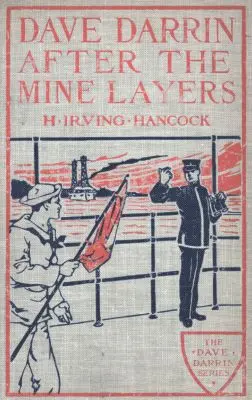
"Dave Darrin After the Mine Layers; Or, Hitting the Enemy a Hard Naval Blow" by H. Irving Hancock is a naval adventure novel written in the early 20th century. The story follows Lieutenant Commander Dave Darrin as he embarks on a dangerous mission involving mine warfare during World War I. Along with his close friend Dan Dalzell, Darrin navigates perilous waters while combating German naval forces and dealing with the complexities of war on the high seas. The opening of the novel sets the stage for an intense and suspenseful journey as Darrin receives orders to protect British mine-sweepers from German threats while also seeking to counter enemy mine-laying activities. As he and his crew prepare to weigh anchor, we see Darrin’s leadership and determination in high-stakes situations. The narrative features a critical moment where Darrin is hurled overboard during a storm, heightening the tension and establishing the potential for both personal heroism and tragedy in the face of naval combat. This opening portion effectively engages readers with its action-packed scenes and camaraderie among the crew, promising an exciting read filled with adventure and moral dilemmas.
Introduction adapted from the source catalogue; source summaries may be automatically generated.
Free to read · English · 50,828 words · No account needed
MAKE TIME FOR A GOOD BOOK
On by default. Untick to stop anonymous reading totals. Each page counts after 10 seconds in view. How this works.
Anonymous counting is on unless you have switched it off.
"GIVE us a rocket signal if you need help," Dave signalled the attendant
mine-sweeper.
Then to the officer of the watch:
"Give us full speed, and we'll run down to see if the 'Reed' has work enough for two of our kind."
A little further south he signalled same orders to the patrol boat that he had given to the mine-sweeper.
Then the "Grigsby" rushed onward as if she scented something of which she did not wish her crew to be deprived.
As soon as Darrin discovered that Dalzell was using his searchlight he ordered the "Grigsby's" also to be used. Over the waters the bar of light swept until it picked up a sight that made the officers on the bridge gasp for sheer astonishment.
Two submarines, some five hundred yards apart, lay on the surface of the
sea.
Strangest part of all, neither craft was serving its guns. Why they neither fought nor dived puzzled the "Grigsby's" officers until the "Reed's" guns ceased firing and her blinkers signalled to Dave:
"Don't fire on them unless I do. They're helpless."
The "Reed," first to approach the submarines, steamed in between them. Then as the "Grigsby" raced up, she received this message from Dalzell:
"Wish you would take charge of the nearer submarine. I'll handle the
other."
On both enemy craft, as seen under the searchlight, the German crews had come out on deck. It was clear that they wished to surrender without further loss of life.
So Dave ordered a launch cleared away, with a prize crew armed to the teeth, Ensign Andrews in command.
"You men get as far forward as possible," Andrews shouted to the huddled enemy. "Be careful not to have any weapons about you. We'll accept you as prisoners of war, but any attempt at treachery will be sternly punished!"
As he spoke the ensign rested one hand on the barrel of a machine gun in the launch's bow. Instantly the Germans began to move forward, only their four officers remaining near the conning tower.
"Stand by to catch a line and make fast," called the ensign, as the launch, under headway, lay in close.
Though they plainly understood, not one of the German officers made a move to catch a rope. Instead, one of them called to the huddled seamen, two of whom came back to take the line.
Making fast, Andrews stepped aboard, followed by some of his armed crew.
"You are the only officers of this craft?" Andrews demanded.
"Yes," sullenly replied the ober-lieutenant.
"Be good enough to hold up your hands while we search you."
Your reading position is saved on this browser. Take it to another device with a library code. Reading pages adapt to text, rather than matching a printed edition.
H. Irving (Harrie Irving) Hancock

H. Irving (Harrie Irving) Hancock

H. Irving (Harrie Irving) Hancock

H. Irving (Harrie Irving) Hancock
BEHIND THE BOOK
This eBook is for the use of anyone anywhere in the United States and most other parts of the world at no cost and with almost no restrictions whatsoever. You may copy it, give it away or re-use it under the terms of the Project Gutenberg License included with this eBook or online at www.gutenberg.org. If you are not located in the United States, you will have to check the laws of the country where you are located before using this eBook. Read the source licence.
The original source file, including credits and licence, is retained by this library. Request an original-format copy at no charge. Please include the book title and Project Gutenberg identifier #23036.
KEEP YOUR CURIOSITY GOING
Cécile Tormay

Moritz Busch
Coulson Kernahan
John L. Ransom

Maurice Baring
Frances Wright