
Uncle Sam’s Boys on Field Duty; or, Winning Corporal’s Chevrons
H. Irving (Harrie Irving) Hancock
THE CLASSIC COLLECTION · 1919
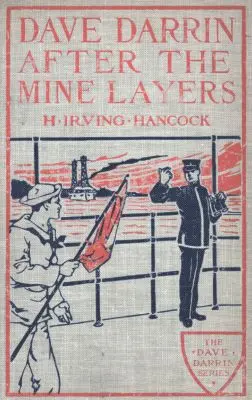
"Dave Darrin After the Mine Layers; Or, Hitting the Enemy a Hard Naval Blow" by H. Irving Hancock is a naval adventure novel written in the early 20th century. The story follows Lieutenant Commander Dave Darrin as he embarks on a dangerous mission involving mine warfare during World War I. Along with his close friend Dan Dalzell, Darrin navigates perilous waters while combating German naval forces and dealing with the complexities of war on the high seas. The opening of the novel sets the stage for an intense and suspenseful journey as Darrin receives orders to protect British mine-sweepers from German threats while also seeking to counter enemy mine-laying activities. As he and his crew prepare to weigh anchor, we see Darrin’s leadership and determination in high-stakes situations. The narrative features a critical moment where Darrin is hurled overboard during a storm, heightening the tension and establishing the potential for both personal heroism and tragedy in the face of naval combat. This opening portion effectively engages readers with its action-packed scenes and camaraderie among the crew, promising an exciting read filled with adventure and moral dilemmas.
Introduction adapted from the source catalogue; source summaries may be automatically generated.
Free to read · English · 50,828 words · No account needed
MAKE TIME FOR A GOOD BOOK
On by default. Untick to stop anonymous reading totals. Each page counts after 10 seconds in view. How this works.
Anonymous counting is on unless you have switched it off.
DAWN found the two destroyers cruising slowly northward, a little more
than a mile apart.
Within sight of the bridges of the two craft were eight small, snub-nosed mine-sweepers. Frequently changing their course, these little craft were doing their utmost to pick up any mine that may have been planted just far enough under water to be struck below the water line by passing vessels.
"I suppose we're of the few who have ever seen the flash of an exploding floating mine," Dave remarked to Lieutenant Fernald. "The sea was so rough and choppy, last night, that the mine, at the instant of impact, happened to be in the trough of the sea and partly above water."
"Yes," nodded Fernald. "Had the waves been longer, the mine would have sunk to its usual depth. Had it not cost lives and a good ship, it would have been a sight worth seeing. As it was, since the lives and the ship had to be lost, I am glad that I was there to see it."
It was broad daylight now. Red streaks off in the east indicated that the sun would soon appear. But from the southwest something of at least equal interest appeared in the sky.
At the lookout's call Fernald turned to study the object in the sky
through his glass.
"It's an airship, a dirigible," announced the executive officer.
"If an English dirigible, then it's all right," Dave nodded. "But, if it happens to be a German Zeppelin returning from a raid over England, then it will become our solemn duty to get the anti-aircraft gun in position and pray for a chance to take a fair shot."
"It's a craft of the smaller English dirigible pattern," Fernald announced, still studying the distant speck in the sky, which, of course, looked much larger in the field of his glass. "Yes, it's an unmistakable 'blimp'."
This latter is the slang name given to the British dirigibles.
"Better have the air-craft gun men at their station," advised Dave, and
this was done.
Ten minutes later, however, the "blimp" was so close at hand that there could be no mistaking its identity. It belonged, beyond a question, to one of the squadrons of the Royal Naval Air Service.
"Radio message from the 'blimp,' sir," called a messenger, darting from the doorway of the wireless room. "Do you wish a written copy, sir?"
Lieutenant Fernald glanced at Dave, who shook his head.
"Let's have the message orally," Fernald called down to the deck.
"'Blimp' wants to know, sir, if these two craft are the 'Grigsby' and
'Reed.'"
Your reading position is saved on this browser. Take it to another device with a library code. Reading pages adapt to text, rather than matching a printed edition.
H. Irving (Harrie Irving) Hancock

H. Irving (Harrie Irving) Hancock

H. Irving (Harrie Irving) Hancock

H. Irving (Harrie Irving) Hancock
BEHIND THE BOOK
This eBook is for the use of anyone anywhere in the United States and most other parts of the world at no cost and with almost no restrictions whatsoever. You may copy it, give it away or re-use it under the terms of the Project Gutenberg License included with this eBook or online at www.gutenberg.org. If you are not located in the United States, you will have to check the laws of the country where you are located before using this eBook. Read the source licence.
The original source file, including credits and licence, is retained by this library. Request an original-format copy at no charge. Please include the book title and Project Gutenberg identifier #23036.
KEEP YOUR CURIOSITY GOING
Cécile Tormay

Moritz Busch
Coulson Kernahan
John L. Ransom

Maurice Baring
Frances Wright