
Uncle Sam’s Boys on Field Duty; or, Winning Corporal’s Chevrons
H. Irving (Harrie Irving) Hancock
THE CLASSIC COLLECTION · 1919
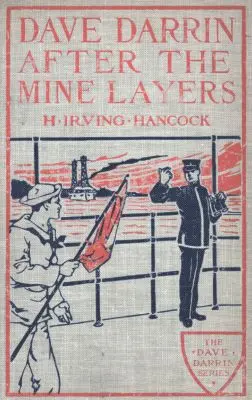
"Dave Darrin After the Mine Layers; Or, Hitting the Enemy a Hard Naval Blow" by H. Irving Hancock is a naval adventure novel written in the early 20th century. The story follows Lieutenant Commander Dave Darrin as he embarks on a dangerous mission involving mine warfare during World War I. Along with his close friend Dan Dalzell, Darrin navigates perilous waters while combating German naval forces and dealing with the complexities of war on the high seas. The opening of the novel sets the stage for an intense and suspenseful journey as Darrin receives orders to protect British mine-sweepers from German threats while also seeking to counter enemy mine-laying activities. As he and his crew prepare to weigh anchor, we see Darrin’s leadership and determination in high-stakes situations. The narrative features a critical moment where Darrin is hurled overboard during a storm, heightening the tension and establishing the potential for both personal heroism and tragedy in the face of naval combat. This opening portion effectively engages readers with its action-packed scenes and camaraderie among the crew, promising an exciting read filled with adventure and moral dilemmas.
Introduction adapted from the source catalogue; source summaries may be automatically generated.
Free to read · English · 50,828 words · No account needed
MAKE TIME FOR A GOOD BOOK
On by default. Untick to stop anonymous reading totals. Each page counts after 10 seconds in view. How this works.
Anonymous counting is on unless you have switched it off.
"Why, it is possible, of course, that sometimes we and our Allies have some keys to the German use of code messages."
"You assert that?" questioned von Schellen, rather eagerly.
"No, and I do not deny it, either," Dave smiled.
"You are interesting, but discreet," complained the German, banteringly.
"And I may say as much of you," Dave continued. "Naturally, you know some things that you would not tell me, and I know a few things that I would not dream of telling you."
"And, instead, you hint at things that are not so, and perhaps I do about the same thing," returned von Schellen.
After that silence fell for some minutes. Dave walked back and forth, the junior officer watching him keenly.
Overhead the crackling at the aerials continued, with occasional intervals of silence when the operator below was busy receiving messages.
Again a petty officer approached von Schellen, saluting and reporting in
an undertone.
"It is time for you to go below," announced von Schellen, turning to
Dave.
"I appreciate very much this opportunity to take the fresh air," Dave said, politely, as he turned toward the conning tower.
"Oh, I guess you're welcome," said the lieutenant, shortly, and with a meaning smile, "though sometimes there is such a thing as too much outdoor life."
To Darrin's mild astonishment, as he stepped below, a folding table had been set up, and around this were seated the ober-lieutenant and two other officers, one of them an engineer. Von Schellen, at a nod from his chief, made the fourth at the table.
Into this cabin were brought the English couple and the Danish master. Several sailors stood about. The occasion began to take on a formal look, which was heightened when the ober-lieutenant laid on the table a small sheaf of papers.
"First of all, you, Herr Darrin," began the ober-lieutenant. "There can be no doubt that you are Darrin?"
Dave thrust a hand in under his sheepskin, bringing to light a card-case. From it he withdrew a pasteboard which he laid on the table.
"That is my card," he said.
The ober-lieutenant studied it deliberately, then passed it to another
officer as he continued:
"And you do not deny that it was you who captured Ober-Lieutenant von Bechtold of the Imperial German Navy. You were the principal witness against him when he was tried in Britain for being a spy?"
"I do not deny it, sir."
"That is all. You may step back."
As Darrin drew back he could not escape the feeling that two of the seamen near him regarded him as being their especial prisoner.
"And now, the Earl and Countess of Denby," called the ober-lieutenant.
Your reading position is saved on this browser. Take it to another device with a library code. Reading pages adapt to text, rather than matching a printed edition.
H. Irving (Harrie Irving) Hancock

H. Irving (Harrie Irving) Hancock

H. Irving (Harrie Irving) Hancock

H. Irving (Harrie Irving) Hancock
BEHIND THE BOOK
This eBook is for the use of anyone anywhere in the United States and most other parts of the world at no cost and with almost no restrictions whatsoever. You may copy it, give it away or re-use it under the terms of the Project Gutenberg License included with this eBook or online at www.gutenberg.org. If you are not located in the United States, you will have to check the laws of the country where you are located before using this eBook. Read the source licence.
The original source file, including credits and licence, is retained by this library. Request an original-format copy at no charge. Please include the book title and Project Gutenberg identifier #23036.
KEEP YOUR CURIOSITY GOING
Cécile Tormay

Moritz Busch
Coulson Kernahan
John L. Ransom

Maurice Baring
Frances Wright