THE CLASSIC COLLECTION✦My diaries, being a personal narrative of events 1888-1914, Part 2 (1900-1914)CLASSIC FREE BOOKS
My diaries, being a personal narrative of events 1888-1914, Part 2 (1900-1914)
Wilfrid Scawen Blunt
THE CLASSIC COLLECTION · 1874
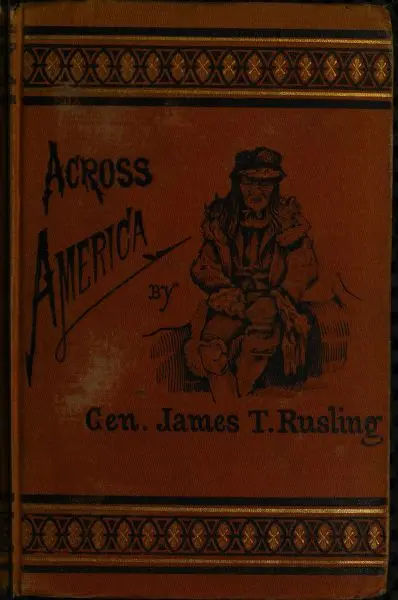
"Across America; Or, The Great West and the Pacific Coast" by James Fowler Rusling is a historical account written in the mid-19th century. The work details the author's extensive journey across America, specifically focusing on the exploration and inspection of military posts from Fort Leavenworth to the Pacific Coast, including his observations of the people, landscapes, and changing cultures he encounters along the way. At the start of the narrative, Rusling sets the stage for his journey with a description of his orders to inspect various military posts in the West following the Civil War. He describes the logistical aspects of his travels, including the modes of transportation, the people he travels with, and his initial impressions of the landscapes he traverses. The opening chapters cover his departure from New York, passage through multiple states, and his encounter with both settlers and Indigenous peoples, illustrating the rich and often challenging realities of the American frontier during that era. The author employs a vivid and engaging style, inviting readers into the world of 1866 America as he navigates varied terrains and unfamiliar cultures.
Introduction adapted from the source catalogue; source summaries may be automatically generated.
Free to read · English · 147,892 words · No account needed
MAKE TIME FOR A GOOD BOOK
On by default. Untick to stop anonymous reading totals. Each page counts after 10 seconds in view. How this works.
Anonymous counting is on unless you have switched it off.
As to the wagoning, I need scarcely say, it well exemplified, with abounding emphasis, "Jordan's a hard road to travel!" The roads, indeed, as a whole, after we got up into the Mountains, were simply execrable, and our ride in that respect anything but romantic. All along the route, we found freight-trains, bound for Boisè City and the Mines, hopelessly "stalled." Some of the wagons with a broken wheel or axle, had already been abandoned. Others were being watched over by their drivers, stretched on their blankets around huge fires by the roadside, smoking or sleeping, patiently awaiting their comrades, who had taken their oxen or mules to double-up on some team ahead, and would return with double teams for them to-morrow or next day, or the day after--whenever they themselves got through. Snow had already fallen on the Mountains, once or twice that season; we found several inches of it still in various places, and the air and sky both threatened more, as the day wore on. Yet these rough freighters looked upon the "situation" very philosophically, and appeared quite indifferent whether they got on or stayed. If it snowed, the forest afforded plenty of wood, their wagons plenty of provisions, and their wages went on just the same; so where was the use of worrying? This seemed to be about the way they philosophized, and accustomed to the rude life of the Border, they did not mind "roughing it" a little. An old army friend used often to parade a pet theory of his, that a man could not associate much with horses, without directly deteriorating. "The horse," he would say, "may gain largely, but it will only be at the expense of the man. Our cavalry and artillery officers always were the wickedest men in the service, and all because of their equine associations. The animals, indeed, become almost human; but in the same proportion, the men become animals!" I always thought him about half-right; but if this be true as to intimacy with horses, what must be the effect on men of long and constant association with mules or oxen! I thought I saw a good deal of this in mule-drivers in the army, in Virginia and Tennessee; but a harder or rougher set, than the ox-men or "bull-whackers" (as they call themselves) of the Plains and Mountains, it would be difficult perhaps to find, or even imagine. On the road here in the Blue Mountains, with their many-yoked teams struggling through the mud and rocks, of course, they were in their element. Outré, red-shirted, big-booted, brigand-looking ruffians, with the inseparable bowie-knife and revolver buckled around their waists, they swung and cracked their great whips like fiends, and beat their poor oxen along, as if they had no faith in the law of kindness here, nor belief in a place of punishment hereafter. And when they came to a really bad place--in crossing a stream, or when they struck a stump or foundered in a mud-hole--it is hard to say whether their prodigious, multiplied, and many-headed oaths were more grotesque or horrible. To say "they swore till all was blue," would be but a feeble comparison; the whole Mountains corruscated with sulphur! Some few of the trains consisted only of horse and mule teams; but ox-teams seemed most in favor, and slow as they were, we took quite a fancy to them--they appeared so reliable. When the roads were good, they averaged ten or twelve miles per day, and subsisted by grazing; when they became bad, they managed to flounder through any how--some way or other. At extra bad places, the teams were doubled or trebled up, and then the wagon was bound to come, if the wood and iron only held together. Twenty or thirty yoke of oxen straining to the chains, with the "bull-whackers" all pounding and yelling like mad, their huge whip-lashes thick as one's wrist cracking like pistols, was a sight to see--"muscular," indeed, in all its parts. The noise and confusion, the oaths and thwacks and splashing of the mud, made it indeed the very hell of animals; but, for all that, the wagon was sure to reach terra firma at last, no matter how heavily loaded, or pull to pieces. We had great sympathy for the patient, faithful oxen, and wished for Mr. Henry Bergh and his Cruelty-Prevention Society many a time that day. Here, indeed, was some explanation of the high rates of freight from the Columbia to Boisè; and Idaho would find it to her interest to improve such routes of transportation forthwith.
Your reading position is saved on this browser. Take it to another device with a library code. Reading pages adapt to text, rather than matching a printed edition.
BEHIND THE BOOK
This eBook is for the use of anyone anywhere in the United States and most other parts of the world at no cost and with almost no restrictions whatsoever. You may copy it, give it away or re-use it under the terms of the Project Gutenberg License included with this eBook or online at www.gutenberg.org. If you are not located in the United States, you will have to check the laws of the country where you are located before using this eBook. Read the source licence.
The original source file, including credits and licence, is retained by this library. Request an original-format copy at no charge. Please include the book title and Project Gutenberg identifier #42706.
KEEP YOUR CURIOSITY GOING
Wilfrid Scawen Blunt
Wilfrid Scawen Blunt

E. W. (Edgar Watson) Howe
Cécile Tormay

Moritz Busch
John L. Ransom